I still remember the first time my little mage cast a spell that wasn't just a sad sparkle. The screen exploded into a kaleidoscopic tantrum of light, and I felt like a wizard who had accidentally swallowed a firework while riding a disco ball through a thunderstorm. In RPGs, flashy spells aren't just visual treats—they're the soul's reward for grinding through yet another dozen slime battles. Some of us crave that over-the-top, retina-scorching spectacle, that moment when your carefully built sorcerer turns a battlefield into a cathedral of chaos. Even in 2026, as we juggle neural VR interfaces and holographic companions, I find myself returning to the classics that still make my pupils dilate like a cat seeing a laser pointer for the first time.
Spell animations are the campfire stories of the digital age; each fiery explosion and orbital laser is a tale of power. A truly great spell feels less like a combat action and more like a divine brushstroke—a fleeting painting that screams, “I just rearranged the local laws of physics for fun.” Below is my wildly subjective, deeply nostalgic, and utterly flash-blindness-inducing list of RPGs whose magic can still make a 2026 gamer weep in awe.
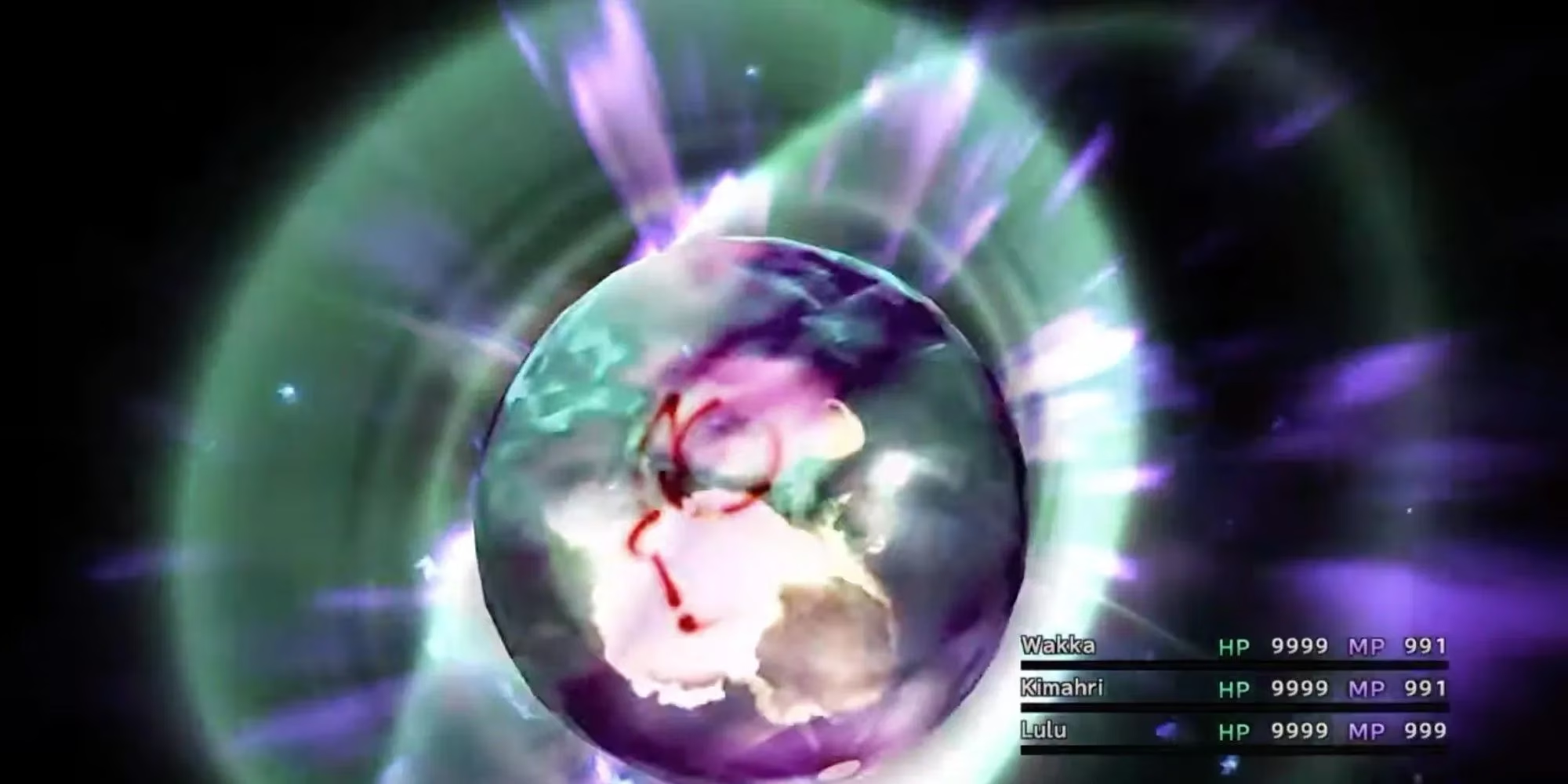
Final Fantasy X: The Original Screen-Dominating Spectacle
When Yuna summoned her first Aeon, I’m pretty sure my CRT television filed a complaint for excessive radiance. The low-tier spells are polite little visitors—a spark here, an ice cube there—but once you climb to Firaga, Blizzaga, and the god-tier Ultima, the game turns into an intergalactic rave. The animations practically push enemies off the screen, as if the spell itself is saying, “Pardon me, I need all the pixels.” In a 2026 world of minimalistic UI design, FFX’s unapologetic maximalism feels like finding a gold-plated toaster that also sings opera. The spell Ultima especially remains a benchmark: a swirling, multi-layered vortex of destruction that I’d describe as a dying star doing a final pirouette before it gobbles up everything you once loved.
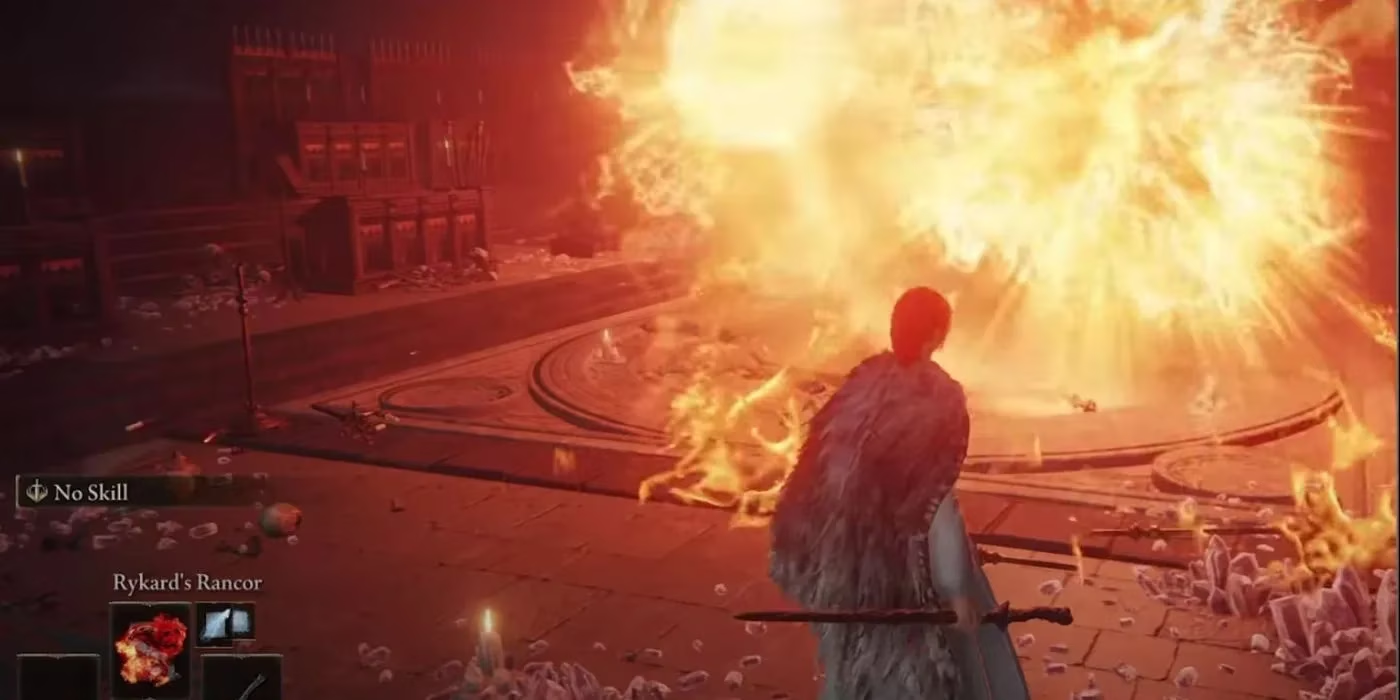
Elden Ring: Where Flash Meets Existential Dread
FromSoftware’s magic often feels as much an archaeological discovery as a weapon. Elden Ring takes this to absurdly beautiful heights. Adula’s Moonblade swings a massive spectral greatsword that makes you feel like a dark god wielding a shard of frozen moonlight—a sensation akin to using a glacier as a letter opener. Then there’s Comet Azur, a sustained beam of concentrated blue fury that looks like the universe’s worst laser pointer accident. But my personal favorite is Ancient Death Rancor, where a swarm of vengeful skulls slow-crawls toward the enemy like a family of morbid helium balloons. These spells don’t just burn retina; they make you question why you ever thought a basic fireball was impressive.
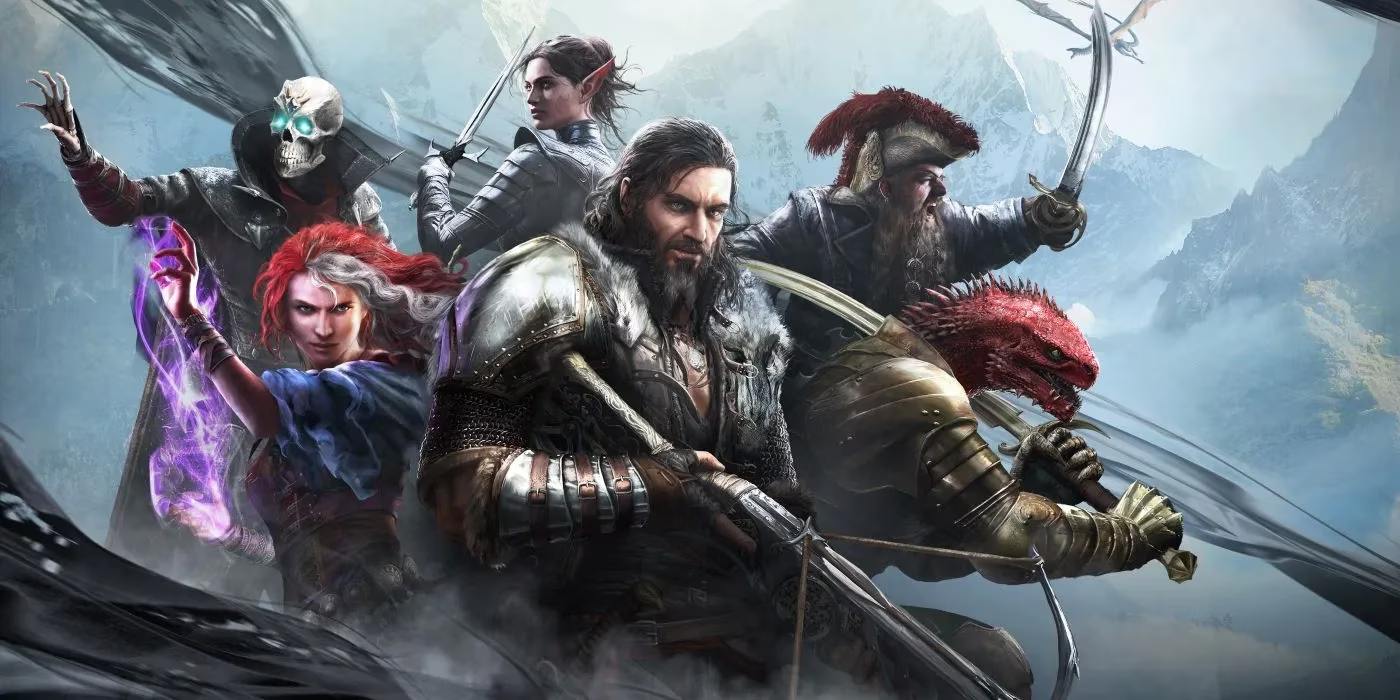
Divinity: Original Sin 2—Channeling Your Inner Pyrotechnic Demigod
At first glance, Divinity’s isometric perspective might seem too demure for flashy spells. That lie dissolves the moment you set an entire oil-drenched battlefield into a chain reaction of screaming, lava-like hell. Pyrokinetic spells in this game don’t just ignite enemies; they orchestrate a symphony of chaos where every barrel, poison cloud, and unfortunate chicken becomes part of the light show. I still recall a fight where one meteor shower turned an innocent conversation into a post-apocalyptic cookout. The elaborate geometry of elemental combinations feels like weaving a rug made of explosions—each thread a carefully chosen catastrophe.
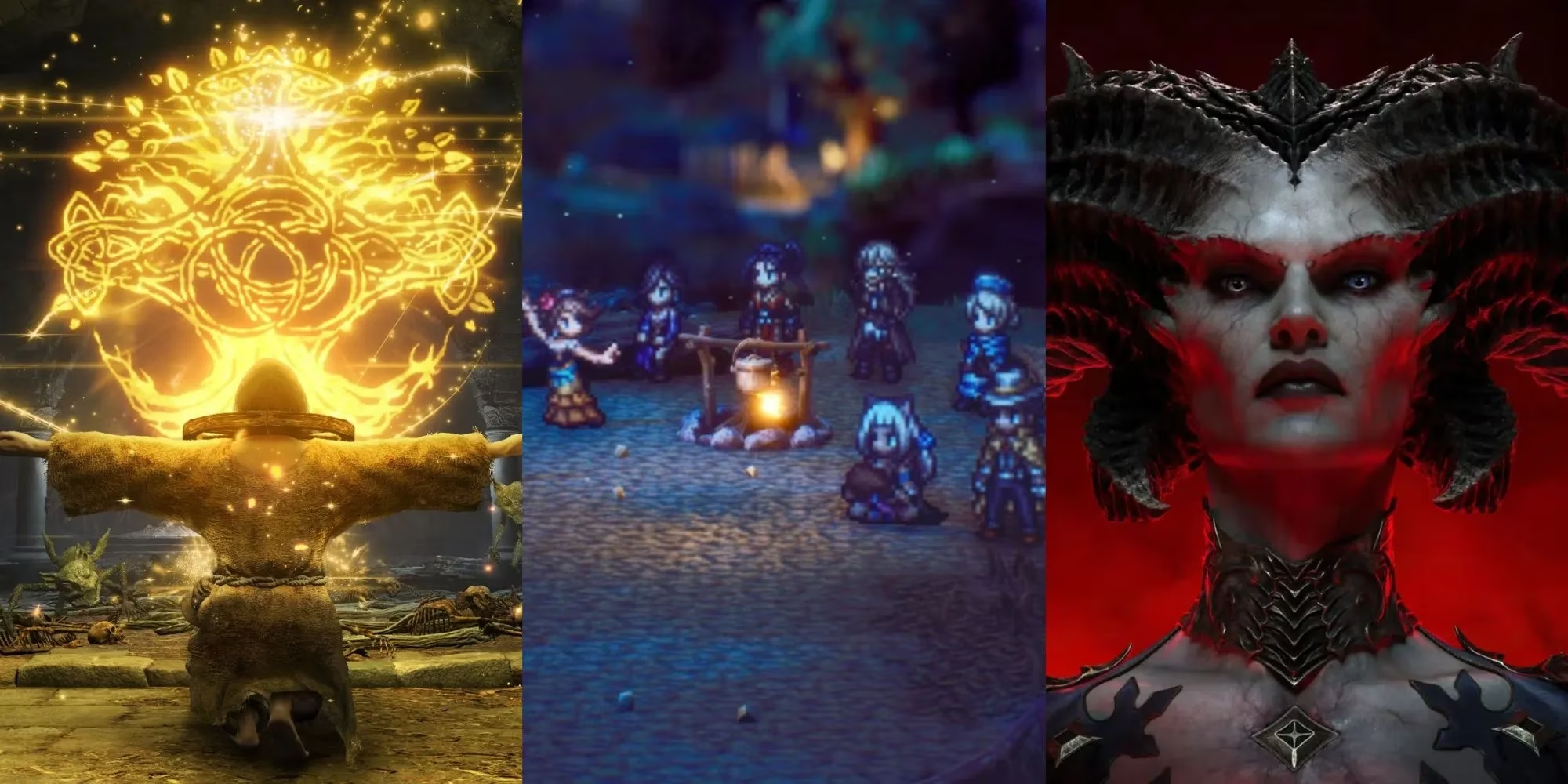
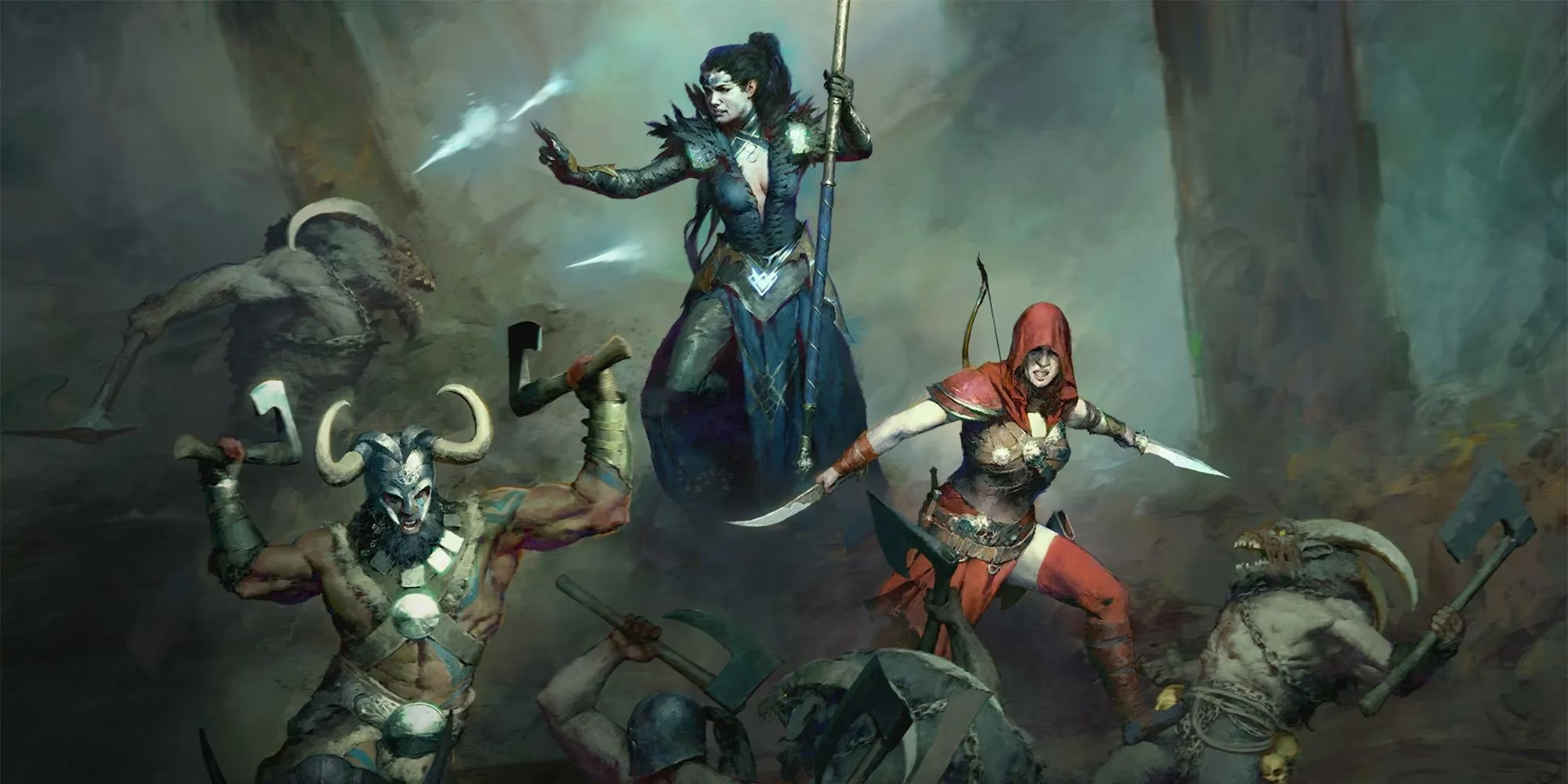
Diablo 4: Ice Shards and Fire Serpents as Therapy
Diablo 4 arrived and reminded us that clicking frantically can be a form of high art. While lightning magic is reliably flashy, the true standouts here are frost and fire spells that turn your screen into a moving tapestry of carnage. Deep Freeze sheds glacial shards like a walking ice cathedral, and Firewall creates a burning barrier that hisses with malicious intent. Playing a Sorcerer in 2026 still means your downtime consists of watching enemies pop into a cloud of icy confetti or charred dust, a cathartic visual loop that’s part therapy, part pyrotechnic masterpiece.
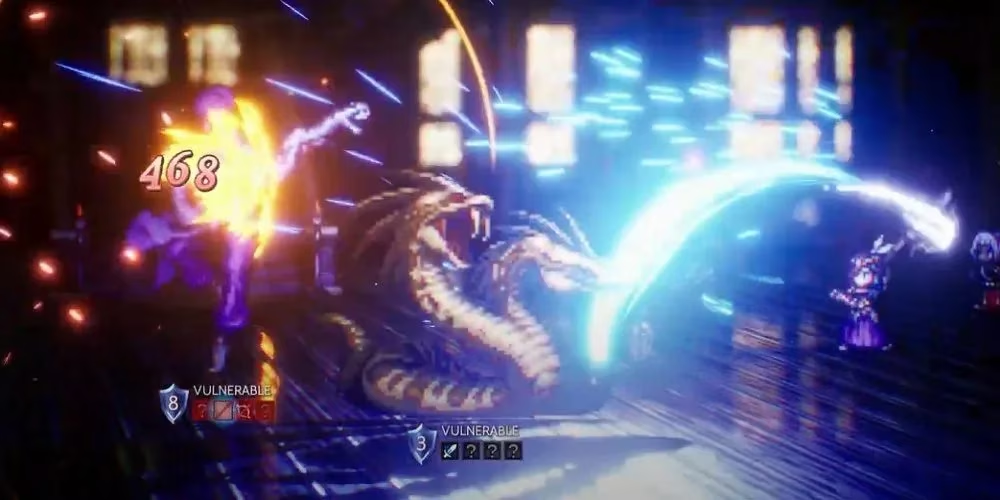
Octopath Traveler 2: Divine Skills as Baroque Paintings
Octopath Traveler 2 combines HD-2D charm with spell effects so elegant they should be framed in a museum. The Divine Skills, in particular, turn every battle into a diorama of extravagant destruction. Alephan’s Wisdom darkens the environment to a moody, sacred stillness, as if the world itself is holding its breath before a sermon of annihilation. And then there’s One True Magic, a gorgeous Arcadian lightning strike that doesn’t just hit—it composes a visual sonnet. These attacks feel like a Baroque painter decided to illustrate what it means to delete an enemy in the most aesthetic way possible.
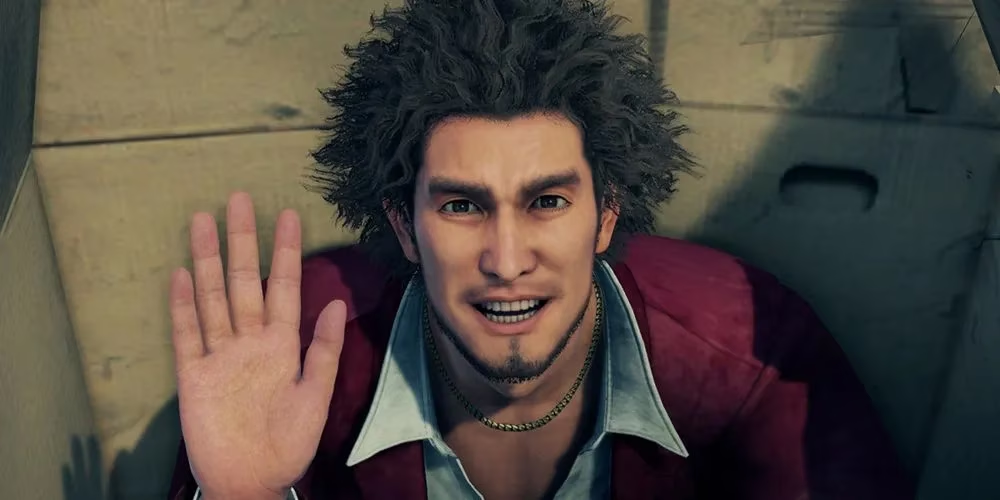
Yakuza: Like A Dragon—Reality-Bending “Magic”
Technically, Ichiban’s skills aren’t magic, but when a middle-aged man summons a space laser or dispatches enemies via pigeon-fed orbital strike, we’re deep in the realm of “my imagination is better than your spellbook.” The animations lean into live-action cutscenes that parody JRPG tropes with such joyful absurdity that your ribs hurt from laughing. Nanba’s pyromaniac tendencies produce fire attacks that feel illegally satisfying, and the Essence of Orbital Laser is a masterpiece—imagine a businessman ordering Amazon Prime for the apocalypse and getting same-day delivery. In 2026, it’s a reminder that flash doesn’t require particle effects; it just requires game developers who aren’t afraid to be gloriously unhinged.
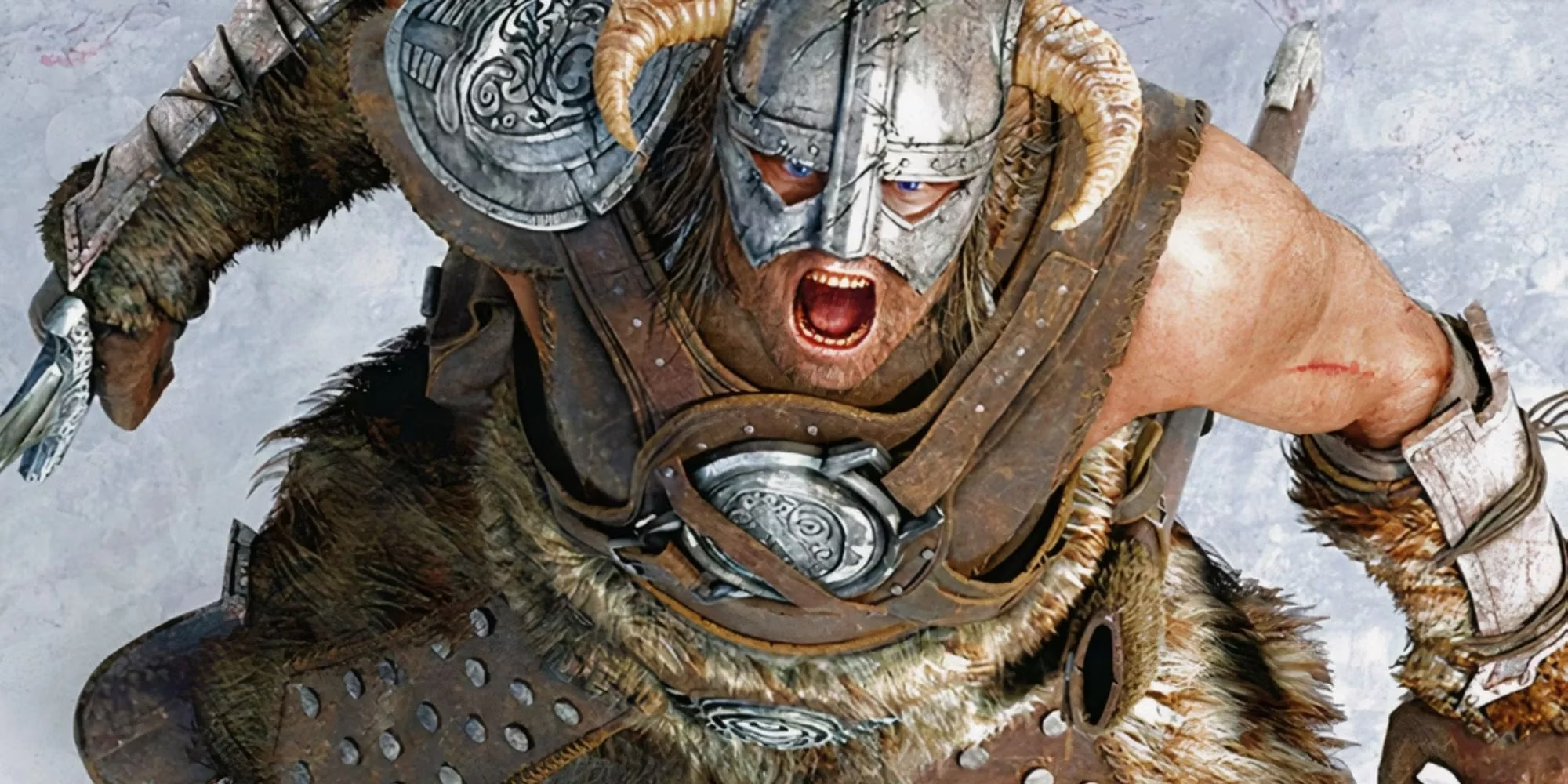
Skyrim: Shouts That Shake the Snow
Over a decade later, I still catch myself shouting “Fus Ro Dah” in empty rooms for the sheer dopamine hit. Skyrim’s spells often get dismissed as functional, but the Dragon Shouts are pure auditory-visual theater. Storm Call turns a peaceful mountainside into an angry electric god’s playground, while summoning a spectral weapon feels like pulling Excalibur from a glowing puddle. The explosions from fire runes and the slow-motion disintegration of lightning Storm are classic visual punches. Even now, modded Skyrim VR makes each spell feel like you’re lobbing miniature Viking raves at enemies.
Fire Emblem: Three Houses—Critical Hits as Cinematic Letter Openers
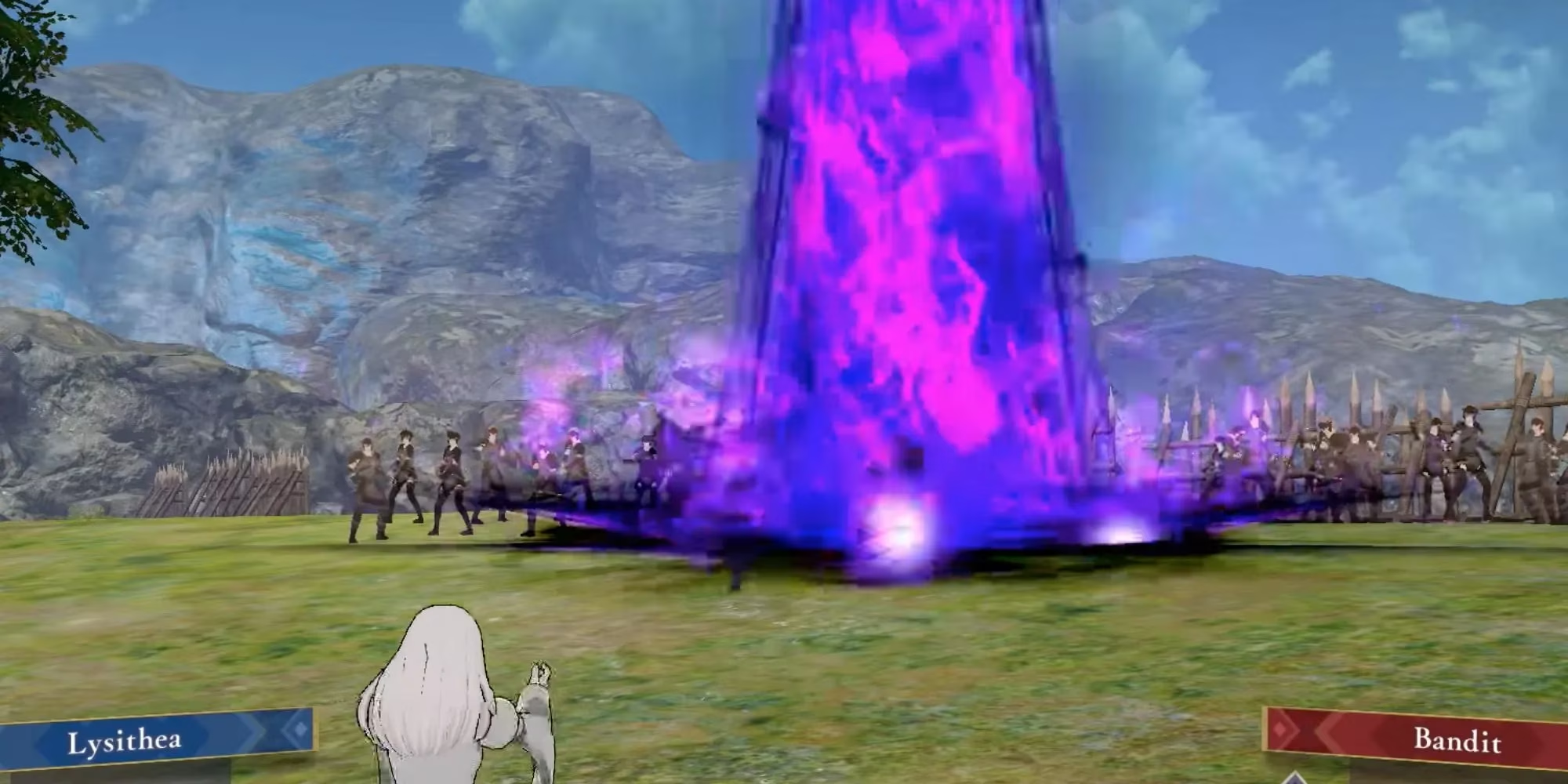
Critical hits in Three Houses don’t just deal extra damage; they snap the camera into a dramatic finisher sequence that makes your heart skip. Dark magic like Hades Ω and Luna take this to godlike levels, with Lysithea conjuring skull-shaped voids and spectral moons that treat armor as a mild suggestion. But even standard spells like Bolganone and Meteor erupt with a satisfying visual heft, turning a tactical chessboard into an arena of cinematic violence. Every time a crit lands, it’s as if the spell itself has been practicing a speech in the mirror just for that moment.
Chrono Trigger: SNES Limitations, Timeless Flair
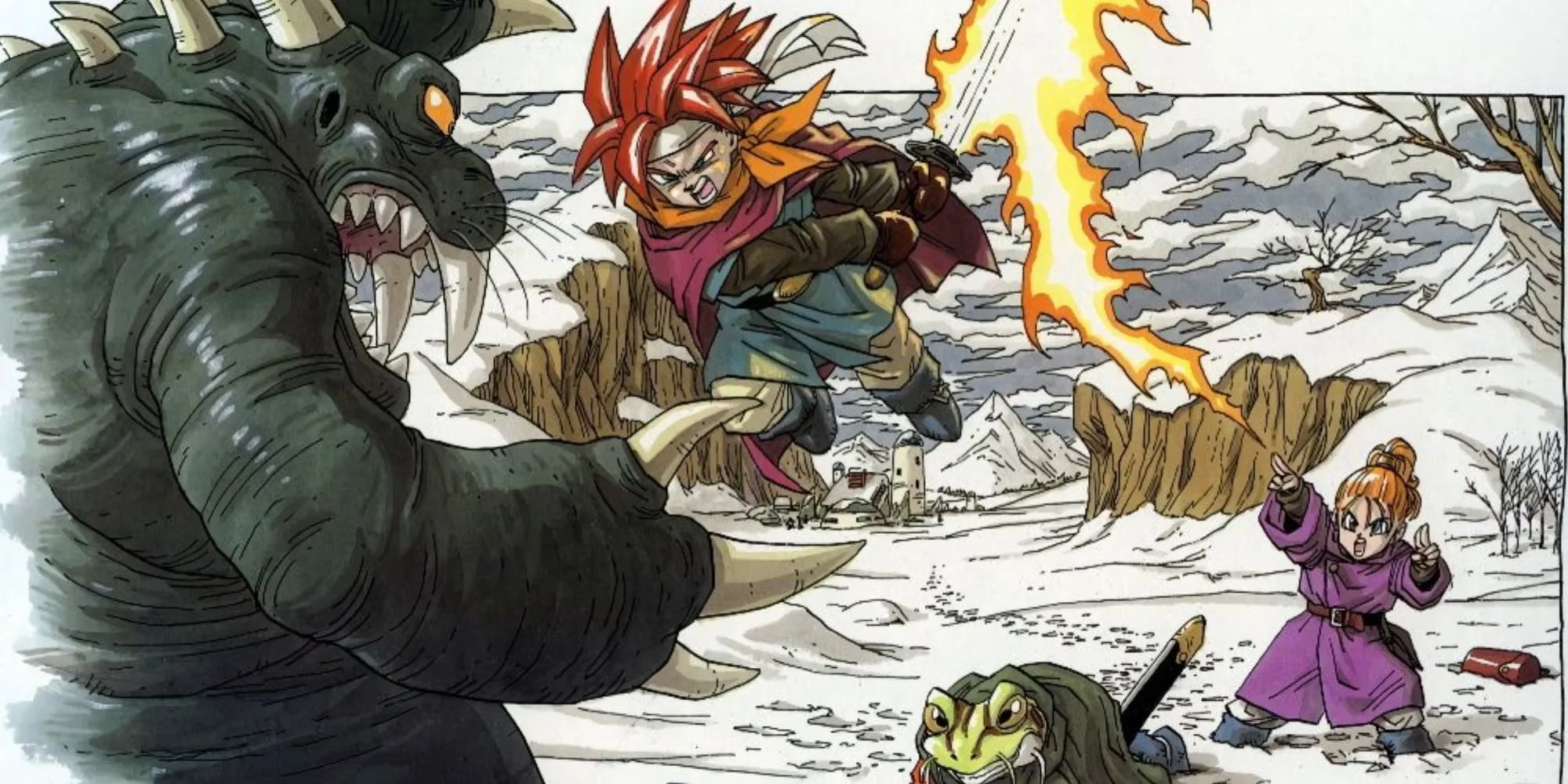
Chrono Trigger’s “techs” are magic in overalls. Despite being an SNES relic, triple techs like Omega Flare and Dark Eternal feel like the console is about to achieve sentience and ascend to a higher plane. Delta Force creates a geometric light show that defies its 16-bit birth, while Twister whips up a storm that would make modern GPUs blush. These spells are a masterclass in doing more with less—like painting a galaxy using only a handful of glitter and a courageous imagination. In 2026, when I see those chunky pixels still evoking genuine awe, I realize true flash is eternal.
World of Warcraft: Two Decades of Spellcasting Grandeur
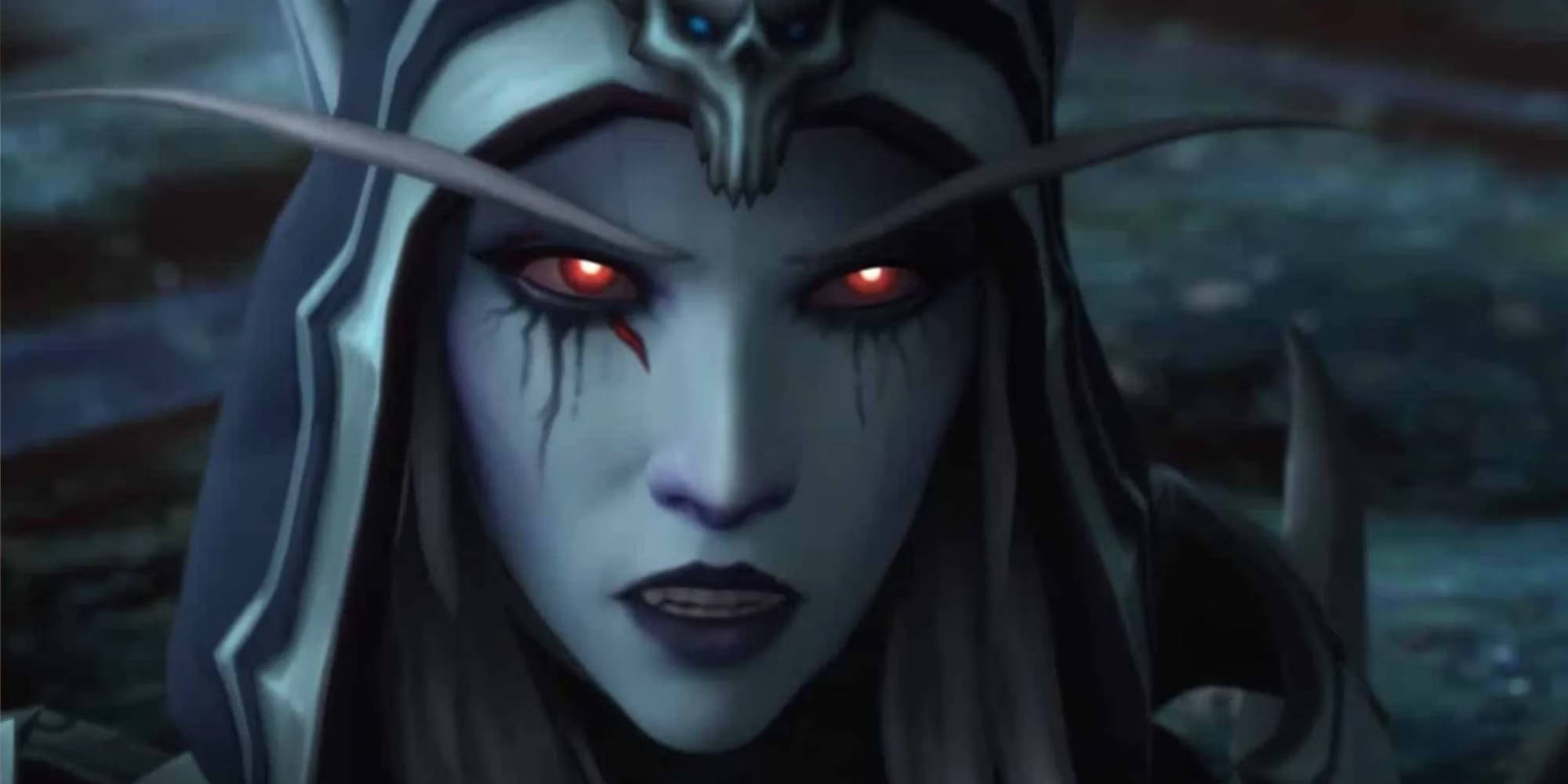
Even now, logging into Azeroth and casting a full rotation brings a festival of visual effects that makes my screen look like a stained-glass window during an earthquake. From the protective shimmer of Power Word: Barrier to the shadowy summons of an Abyssal, WoW’s spellbook is a museum of particle effects. The game’s long history means the animation team has basically turned spell design into a competitive sport. In 2026, the sheer variety—from nature’s wrath to fel incineration—keeps every combat encounter feeling like a private fireworks show funded by an admirably reckless billionaire.
Flashy spells are more than digital eye candy; they’re the heartbeat of why many of us fell in love with RPGs in the first place. They transform the mundane act of reducing HP to zero into a celebratory ritual, a tiny festival of uncontrollable light and sound that whispers, “You earned this.” Even in 2026, when games can simulate every photon, I keep coming back to these titles because a beautifully animated spell is like a perfectly told joke—it never gets old, it just keeps igniting the same childish wonder, one pixel at a time.
The following breakdown is based on coverage from Giant Bomb, and it helps explain why “flashy spells” endure beyond raw graphics upgrades: the spectacle becomes part of a game’s identity loop, not just a damage animation. From screen-filling JRPG ultimates to MMO spell rotations that stack particle effects into a readable rhythm, the most memorable magic tends to balance over-the-top presentation with clear timing, impact, and feedback—so even in 2026, players keep chasing that same dopamine hit of a battlefield briefly turning into a light-show cathedral.