I started playing JRPGs when I was just a kid. My older brother would sit by my side and help me understand the systems I couldn't grasp, which was, basically, all of them. As an anime fan, it didn't take long for JRPGs to become my favorite genre, and to this day, I always try to explore them to the fullest. The difference is that 8-year-old me had all the free time in the world, whereas my present self does not. With this reality in perspective, as well as the current state of the game industry itself, I tend to lean toward JRPGs that incorporate quality-of-life features that optimize my gameplay time without sacrificing the fun factor. But that's not always possible. There are some JRPGs that don't respect your time, either for overstaying their welcome, for having mechanics that are more a chore than fun, or simply because of design choices that make me wonder if it's really worth skipping quality time with my family just to grind one more day. And no, it's never worth it.
1. Sea of Stars: The True Ending Dilemma
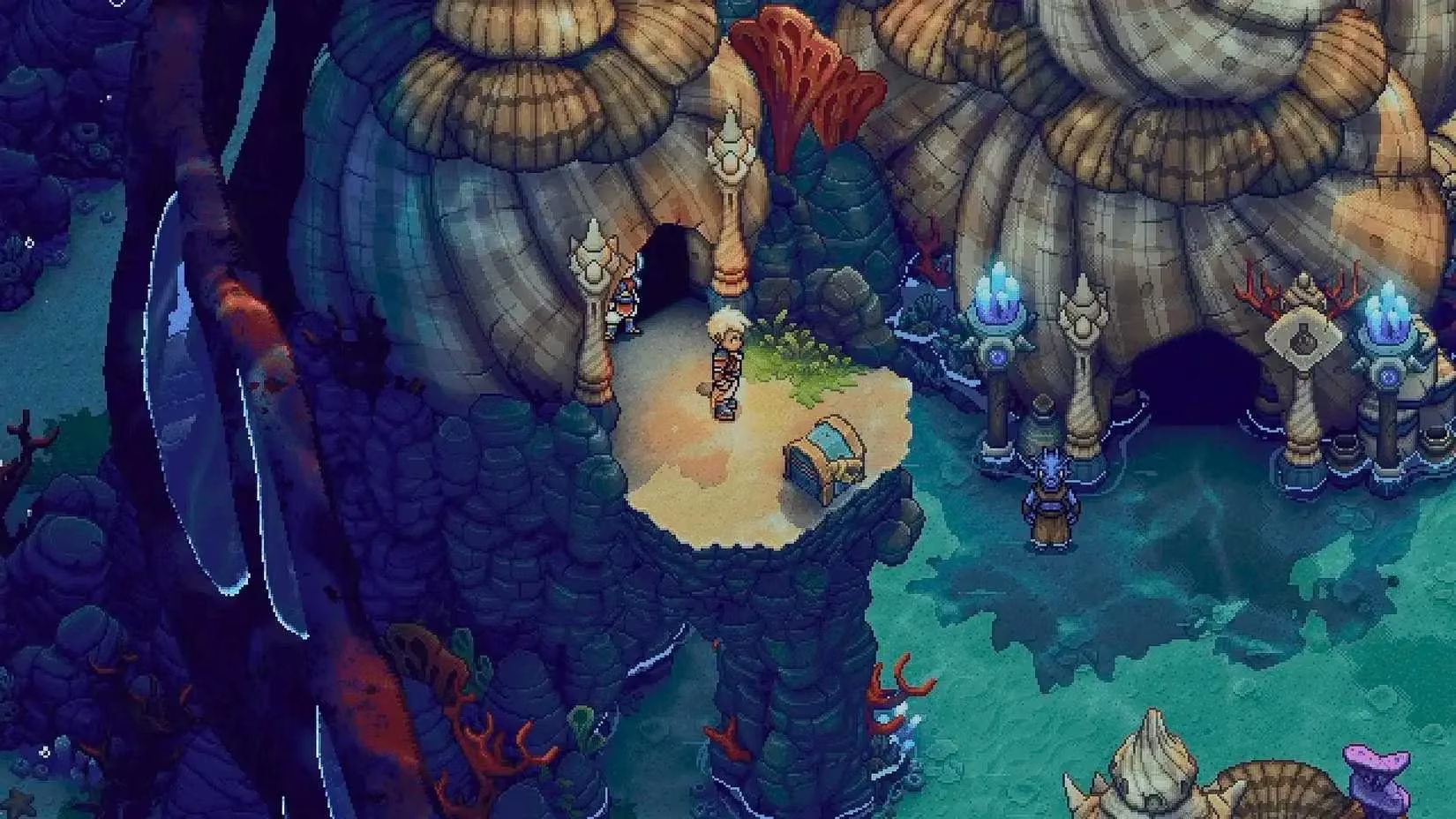
Sea of Stars is a masterpiece. It's such a cozy, heartwarming, welcoming indie JRPG that I feel bad putting it on a list meant to criticize some games. But there's a good reason why I did so. The main campaign and everything around it has superb pacing. Zale and Valere start their journey, go step by step through rising stakes, meet new party members, grow stronger, and face the big baddie. Standard JRPG, right? But after beating the game, you'll chat with your friends about your experience, and they'll ask you, "Did you get the true ending?" 😬
That's where my complaint lies about why Sea of Stars disrespects your time. If you're a completionist, fine, you probably got the True Ending naturally. However, for those who aren't, I suggest watching it on YouTube. First, you need to complete all party members' sidequests, which contribute immensely to the worldbuilding. The issue here is that you also need to collect all 60 Rainbow Conches. If you weren't actively hunting them, you'd need to backtrack through almost every map to find them, and we all know that's incredibly annoying. I get that the developers wanted players to engage with everything the JRPG offers, but locking the canon story behind such a menial task was an odd choice.
2. The Legend of Heroes: Trails in the Sky - A Wordy Beginning
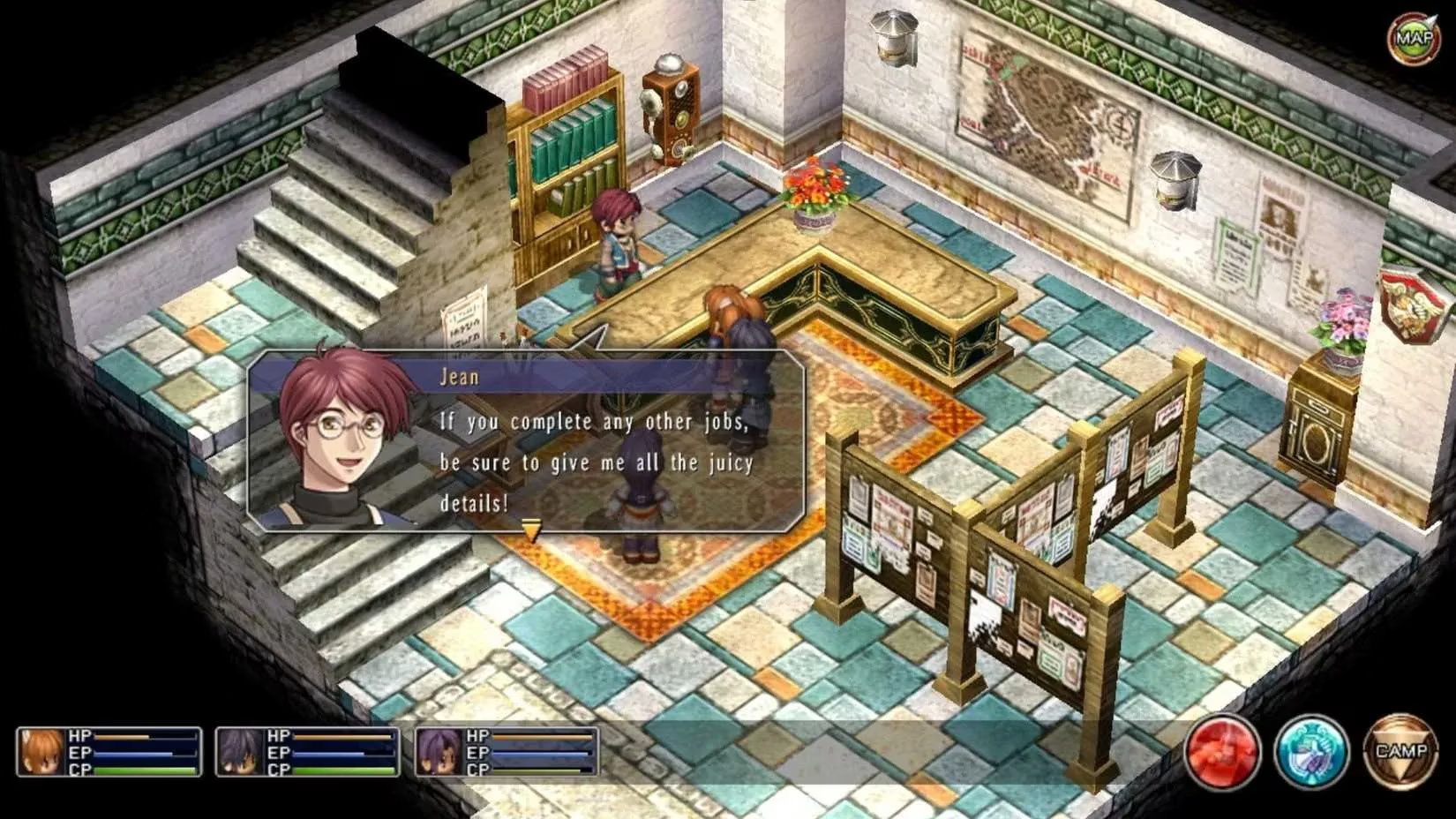
I think I could put any entry in the Trails series here, but I'll start with the very first one. If you don't know, the whole Trails series is a gigantic-interconnected narrative. While you can play each subseries on its own, you'll get the best experience if you play them in release order. And come on, if that doesn't count as a colossal time investment — thus, not respecting your time — I don't know what does. 😅 Plus, many Trails games are extremely verbose, both in the main quest and the sidequests.
For example, one of the first sidequests in Trails in the Sky has us fixing a lamppost on the road. When I went to talk to the NPC who gave the quest, he explained all the engineering and science behind how the post and its circuits work, which could have been summed up in one line. I enjoy worldbuilding, but sometimes, less is more. This verbosity permeates the entire experience, turning what could be a brisk adventure into a marathon of dialogue.
3. Dragon Quest XI: Echoes of an Elusive Age - The Divisive Third Act
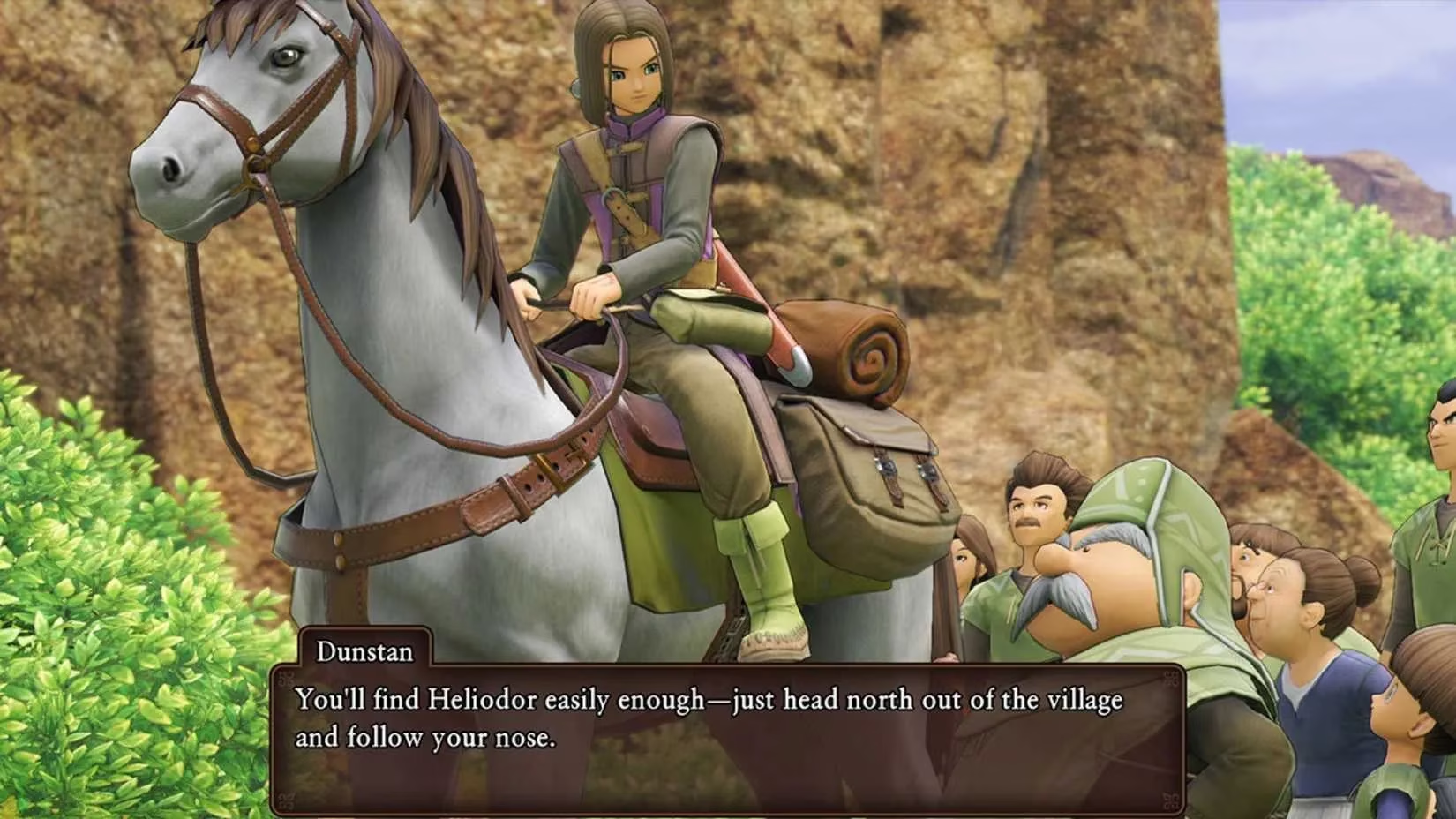
Don't get me wrong, I love Dragon Quest XI. I know it's the comfort food of JRPGs. Still, I don't think we needed Act 3. To this day, it's hard to pinpoint what counts as post-game in Dragon Quest XI. Some say Act 3 is optional, while others, possibly even the developers, claim it's canon. Personally, I consider the end of Act 2 to be the canonical story. Not only do I prefer that ending, but it's reachable in about 40-50 hours of the main campaign. Act 3 is not only more sluggish in its pacing, but it also removes all the weight of the previous plot points, leaving me with that feeling of "What's the point?" 🤔
All it did was make me invest more of my time to get less payoff in return. Maybe scrapping the narrative of the last act and leaving only the optional dungeons would've streamlined this wonderful JRPG as a whole, and I wouldn't include it here in this list.
4. Eiyuden Chronicle: Hundred Heroes - Nostalgia Without Modern Convenience
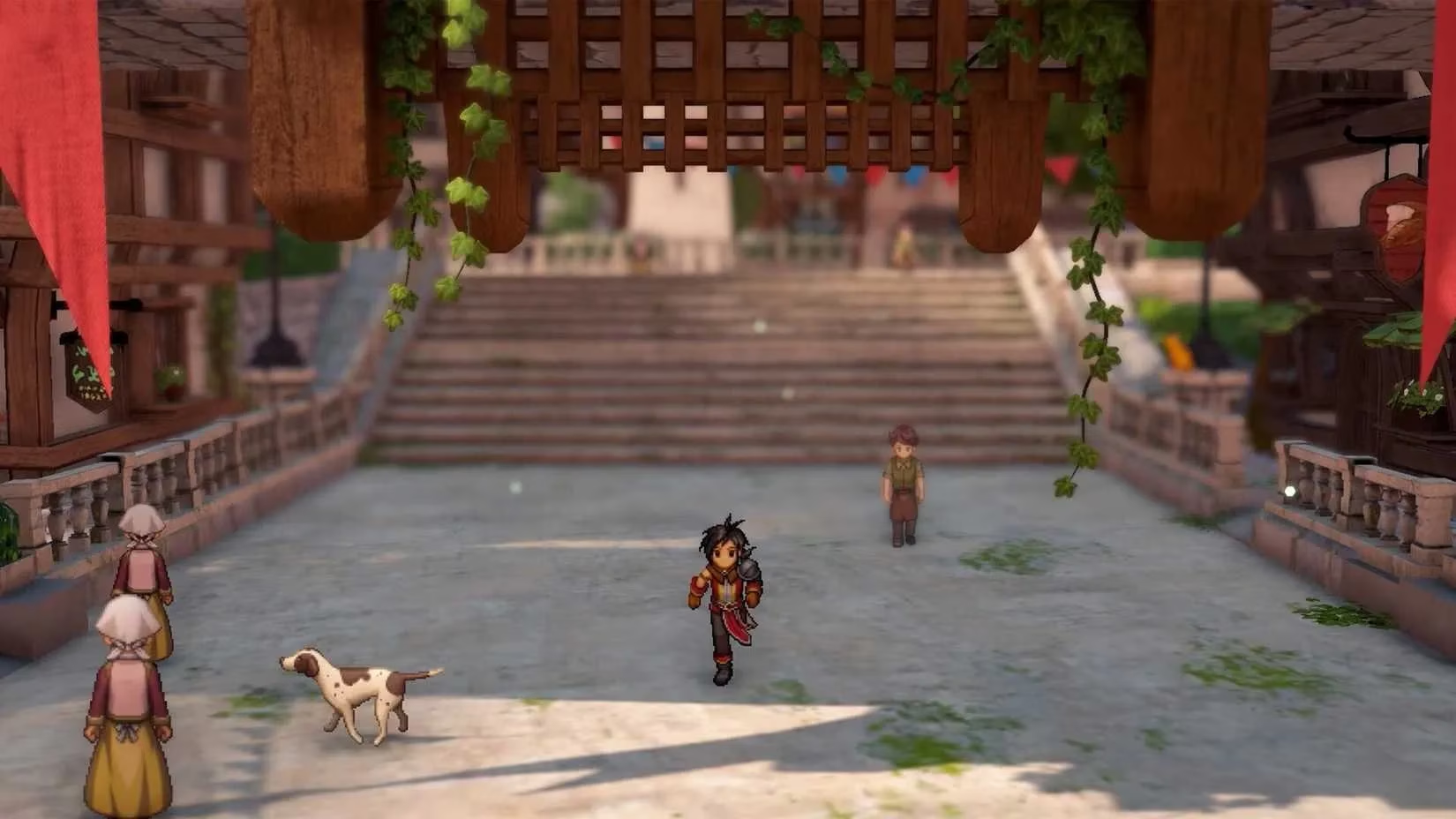
Why do you think most remasters or remakes add quality-of-life stuff like removing random encounters, boosting experience, fast travel, or auto-save? Because the gaming industry has evolved, and so have the players. We don't want to waste our time due to a technicality. When Eiyuden Chronicle was announced as a spiritual successor to Suikoden, I was overjoyed. However, apparently, the developers forgot about the "modern" part.
I get the whole "recruit a new character and unlock a new feature" mechanic, like fast travel or… auto-escape. But honestly, it felt more like a bit of laziness than actual motivation to hunt down all 120 members. The game has no sidequest markers, random encounters, no speed-up battles, and fast travel is only unlocked in the midgame. Not that every JRPG needs these mechanics, but if the gameplay loop is repetitive, then they help ease the repetition. Also, to get the True Ending, you need to recruit all the characters. I did mention there are 120 of them, yeah? Yeah. 😫
5. Bravely Default: The Tedious Timeloop
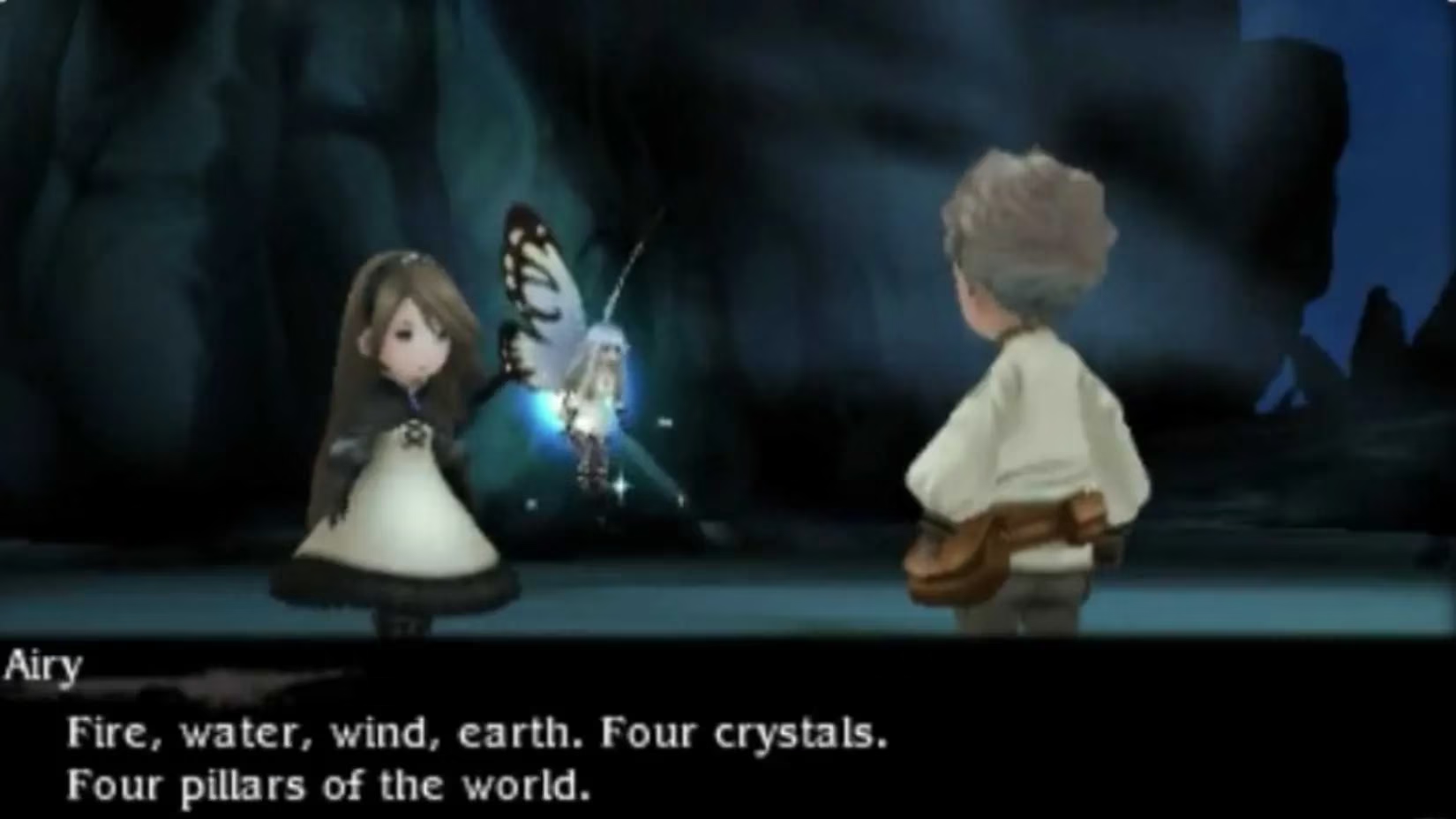
At first, Bravely Default is glorious. Job system, turn-based combat featuring a twist, flawed characters with a pinch of humor, and a narrative whose main plot revolves around crystals. I was loving every second of it until I got to Chapter 5. Spoilers ahead. After you awaken all the crystals, you get stuck in a timeloop. All the bosses resurrect, and you need to awaken all the crystals again. You do that once again, and it's back to Groundhog Day. I was about to throw my 3DS out the window by the third timeloop when I decided to look for a walkthrough.
In truth, you must destroy a crystal. Doing so will reveal the true villain and break the timeloop. The concept is amazing, and the plot twist is too, but by the time I reached that point, I was so frustrated with the repetition that the twists lost all their impact. Great idea, bad execution that demanded far more patience than it deserved.
6. Xenoblade Chronicles 2: A Gacha of Inconvenience
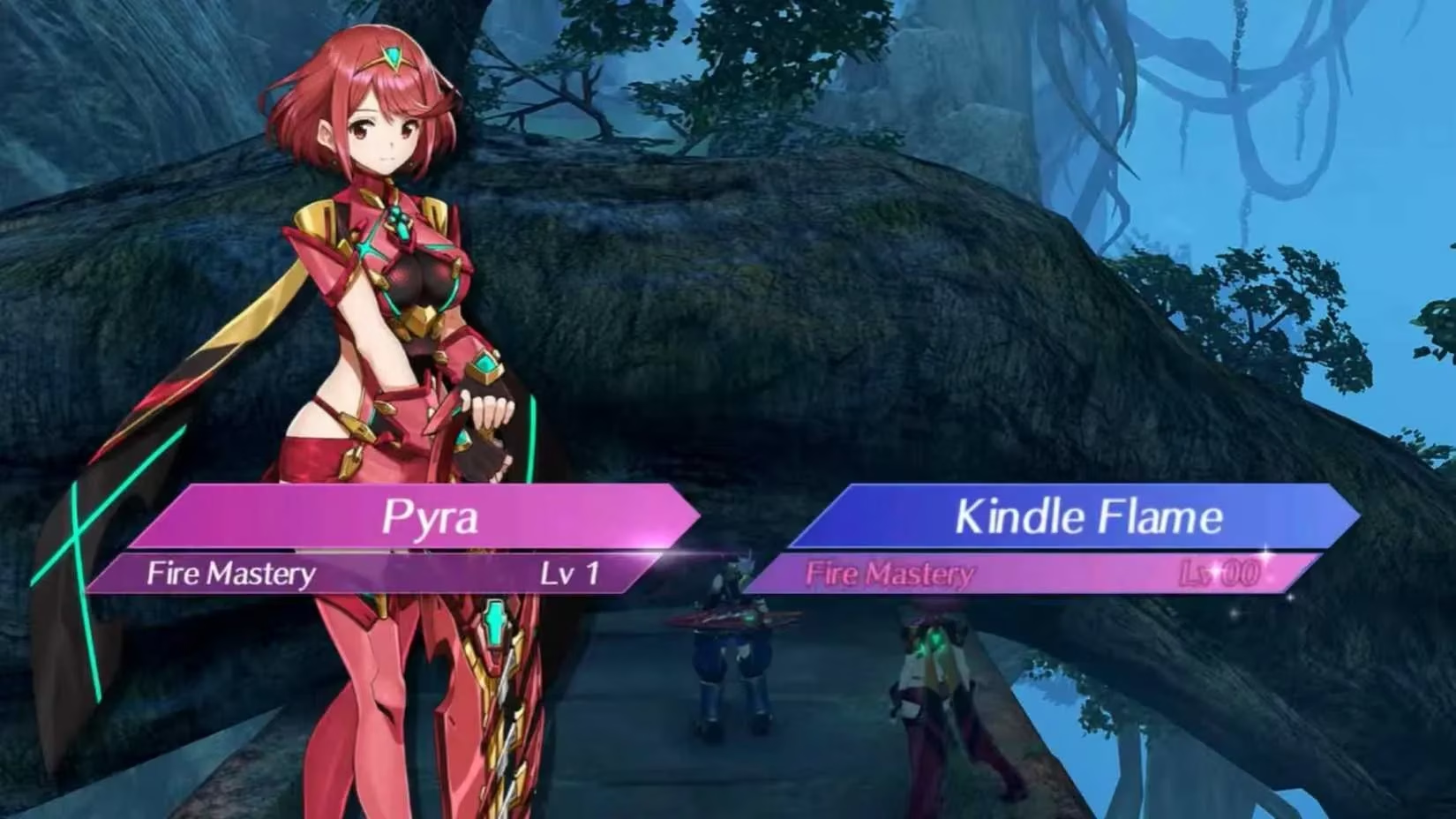
All four Xenoblade games are extremely long, but they manage to be engaging enough to hide their playtime. However, Xenoblade Chronicles 2 slips here because of its Blade and Field Skills system. Blades are, essentially, party members acquired in a gacha-like system. Each Blade comes with a set of Field Skills, and these skills are needed to do activities on the map like opening treasures, reaching new areas, and unlocking paths.
However, the interface involving the Blades is extremely clunky. Instead of considering all the Blades we have in the inventory, we need to switch them in the active party manually all the freaking time. I spent more time going through menus, filtering Blades, tallying my Field Skills, and sometimes leveling up these specific skills than actually watching the story unfold. It turned exploration into a tedious managerial task.
7. Persona 5: A Masterpiece with a Hefty Price Tag (Time)
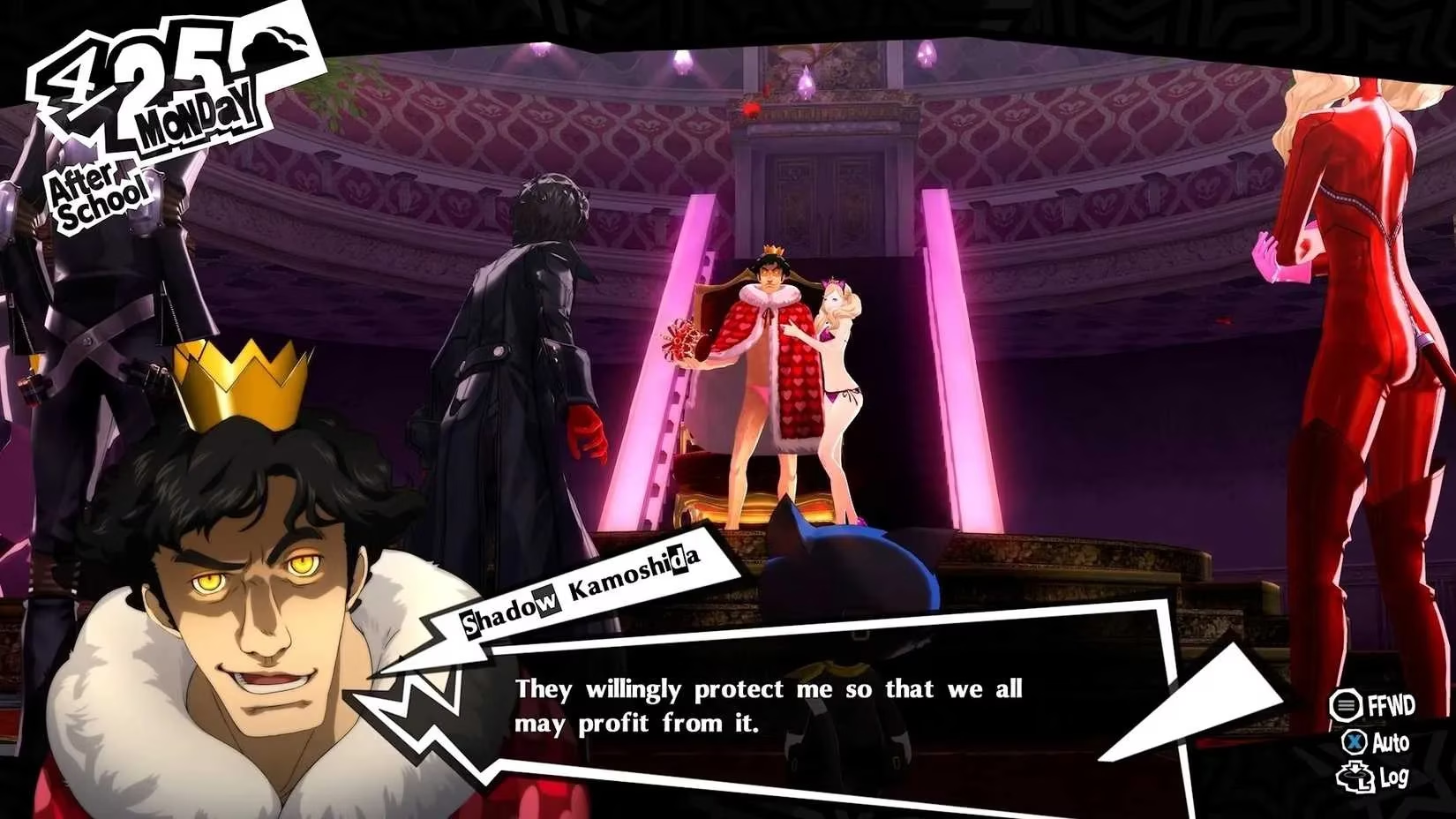
Persona 5 is one of my all-time favorite JRPGs. And even though P5 is an excellent game with an impeccable plot, creative turn-based gameplay, and memorable characters, I rarely recommend it to other players. According to HowLongToBeat, it takes almost 100 hours to finish the main campaign of Persona 5. The Royal version exceeds one hundred. That's the sole definition of a game not respecting your time, even though it deserves every bit of that investment. ⏳
I played Persona 5 at a time when I lived alone, was single, and had every night free for myself. These days, being married, with a kid, and more responsibilities, I know I'd have to reorganize my schedule if I wanted to start the JRPG and finish it in a decent amount of time. Ultimately, it's totally worth it. Persona 5 is a masterpiece that every JRPG fan should try at least once. At the same time, I understand anyone who's not ready for that monumental time commitment.
8. Fire Emblem: Three Houses - The Monastery Grind
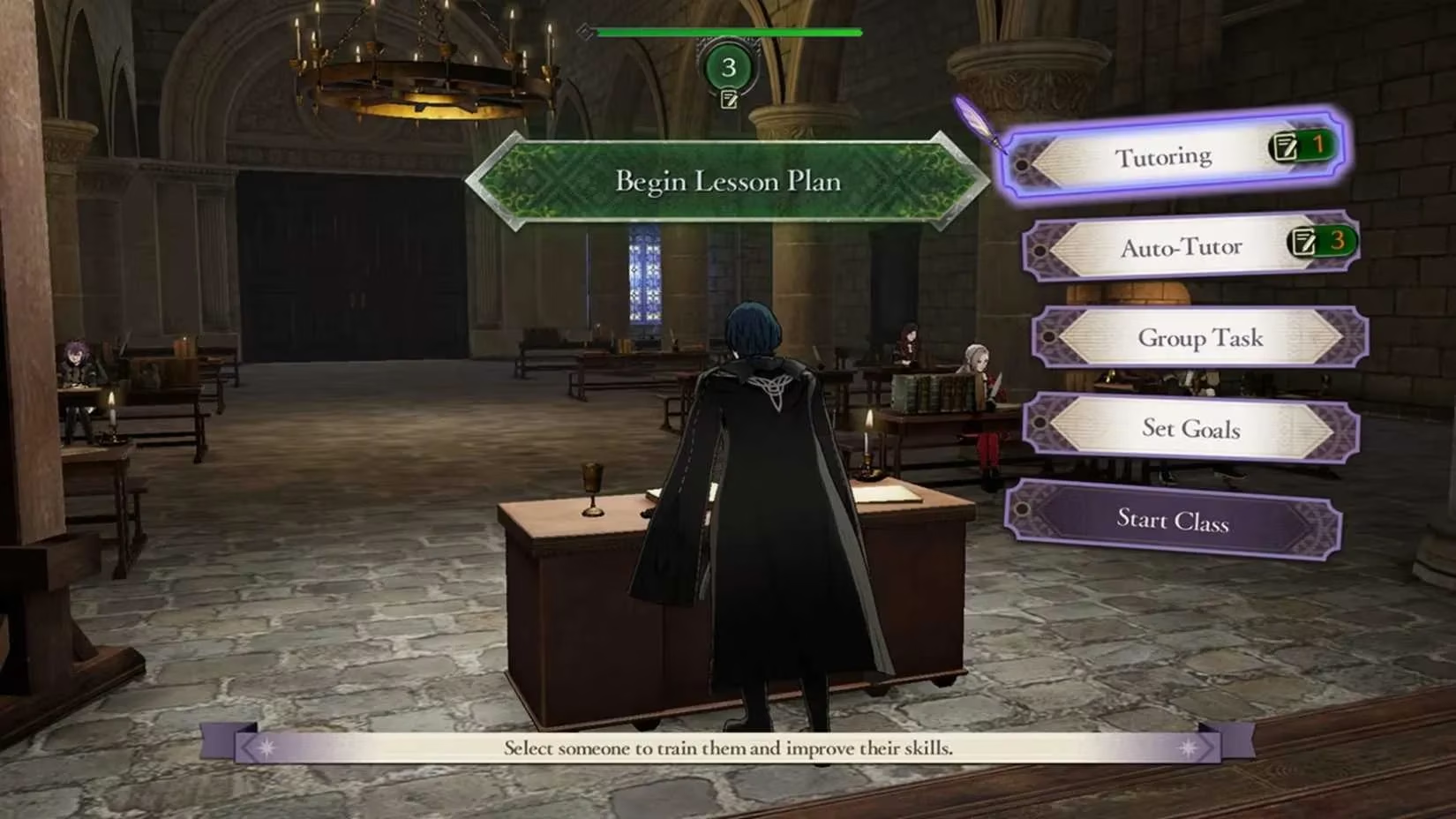
I know JRPGs are long. The problem isn't the games being long, but when they feel longer than they should. That's the case with Fire Emblem: Three Houses. First, we have the MMO-esque Monastery, where you will spend most of your time training your students, holding seminars, fishing, gardening, and engaging in numerous other activities that are a blast initially but quickly become tedious.
But the worst offender in Three Houses is that the game makes you repeat three distinct campaigns for each house if you want to absorb everything the main story has to offer. At some point, there's a timeskip, and the story shifts depending on which of the three houses you pick. However, until you reach that point, you'll repeat the same initial missions, which require a significant time investment. There's a New Game+ and Skip button, but even so, it's not the ideal way of optimizing a player's playtime and feels like padding.
9. Digimon World 3: The Backtracking Simulator
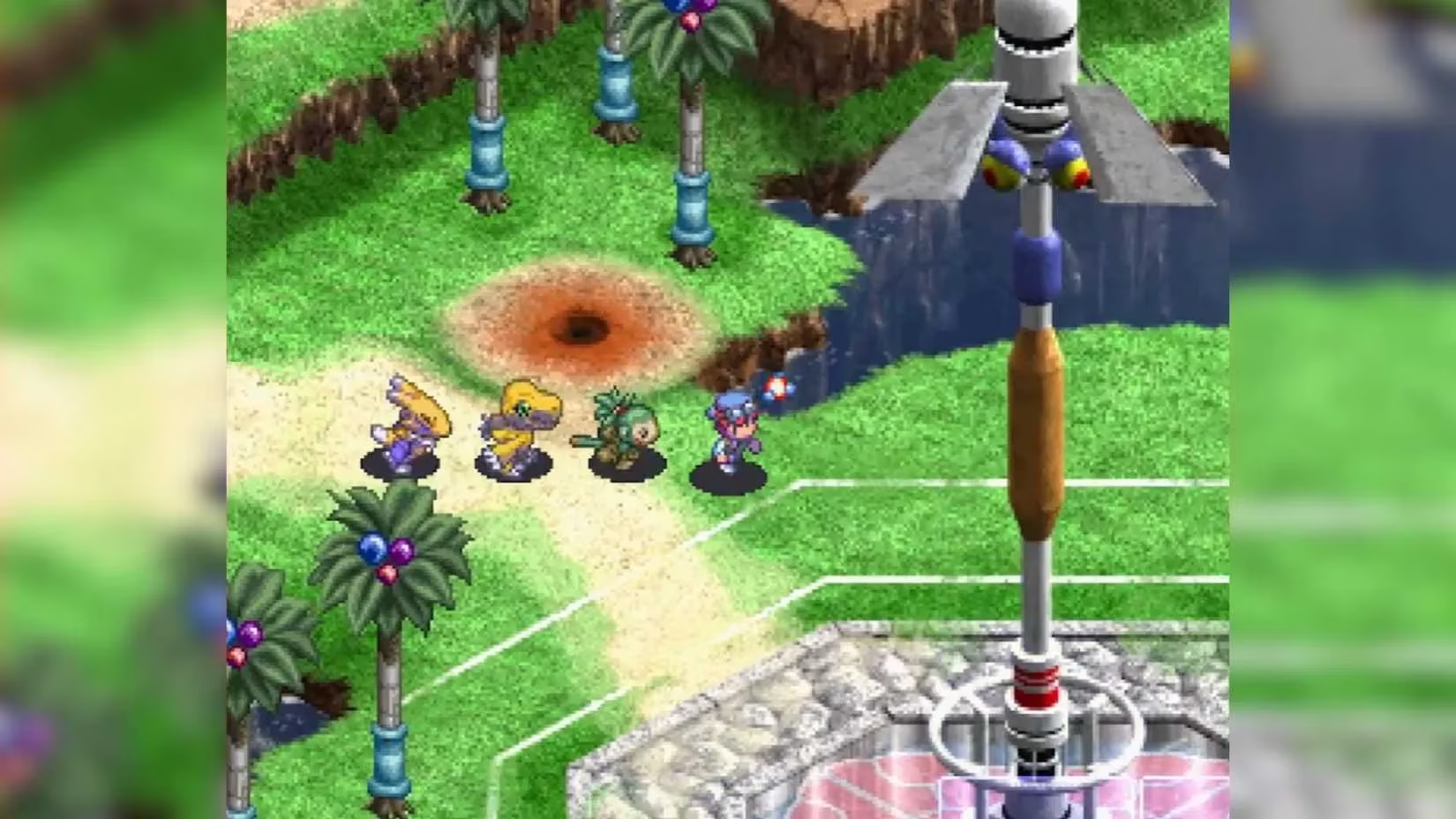
I was always one of the few weird kids in school who preferred Digimon to Pokémon. When I played the third Digimon World game, it was snappier than its predecessors, and I was having a good time. That is until the Arc of Backtracking started. I don't know who had that brilliant idea, but at some point, Digimon World 3 requires an insane amount of backtracking for no apparent reason. Since the JRPG doesn't have fast travel, you just have to endure. 🚶♂️➡️🚶♂️⬅️🚶♂️
If at least it had quality-of-life features from later games, we could make use of the random encounters, but not even that. The constant retreading of old ground with no meaningful payoff turned a potentially charming adventure into a slog.
10. Record of Agarest War: Bloat for the Sake of Bloat
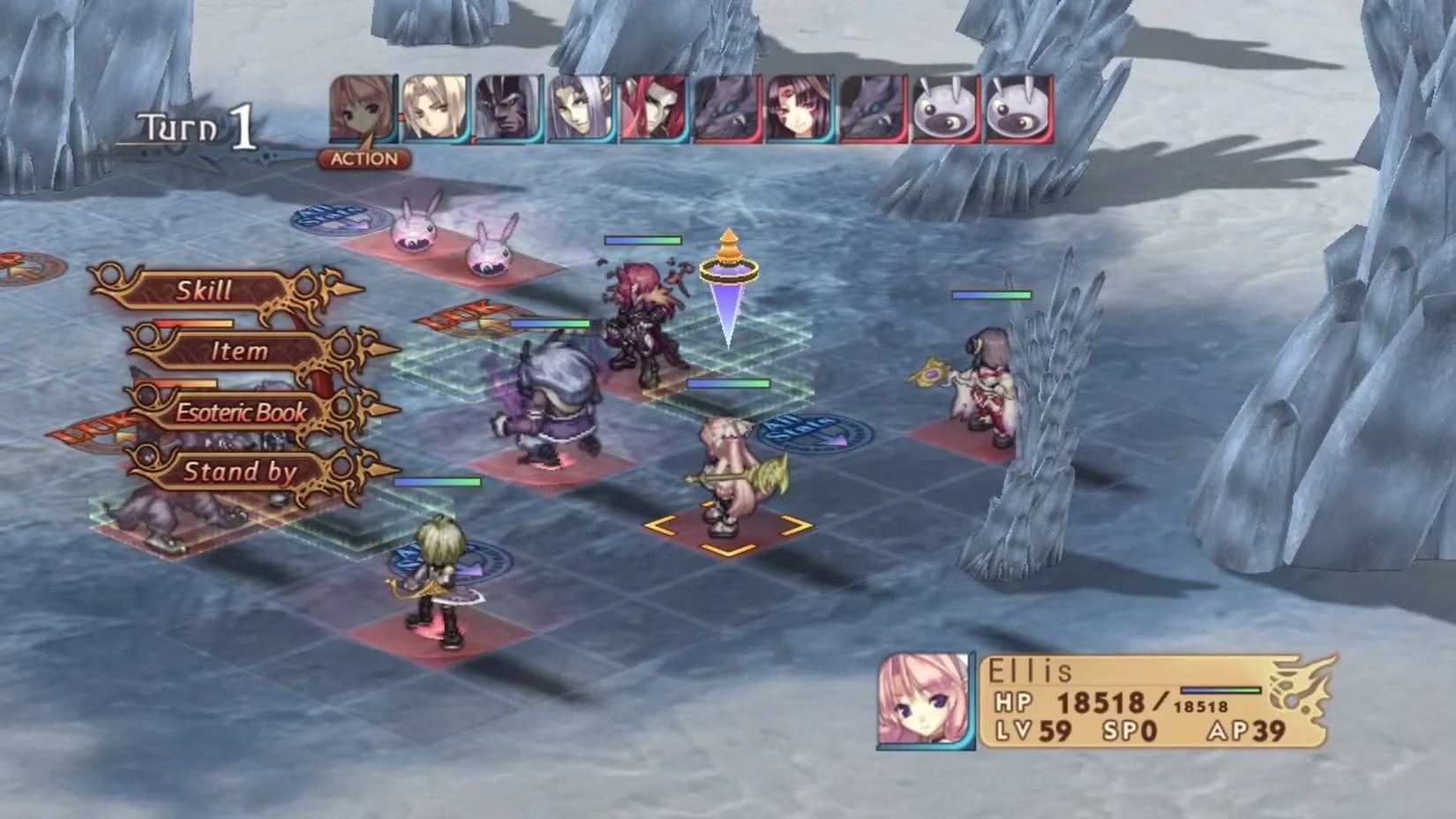
While I always tried to find a silver lining in other entries, I'm unable to do the same for Record of Agarest War. The game is simply bloated just because. It tries to be interesting and bring some unusual mechanics to the table, like the generational system where your choices of romance affect your descendant's traits, but even that isn't enough to make it an appealing tactical JRPG.
Record of Agarest War is a mix of tactical JRPG and dating sim. The grid-based combat also becomes repetitive from the start, and in a game with over 60 hours of campaign, that's not ideal. While the timeskip introduces some interesting plot points, they weren't enough to hold my attention and stop me from dropping the game for something else. It felt like it was wasting my time without offering sufficient depth or engagement in return.
Looking back at 2026, the gaming landscape continues to evolve. We see more and more titles incorporating robust accessibility and quality-of-life options from the start. My hope is that developers of these sprawling, narrative-rich genres remember that our time is precious. We want to be swept away by epic tales and complex systems, but not at the cost of feeling like we've signed up for a second job. A great JRPG respects its player's time by making every hour feel meaningful, not just numerous.