The narrative arc of Nintendo in the mid-2010s was one painted in shades of uncertainty. Emerging from the commercial twilight of the Wii U, a console that seemed to misread the very pulse of its audience, the future felt like a vast, uncharted expanse. Yet, from that crucible of perceived missteps arose a phoenix, not with a whisper, but with the resonant chime of a console sliding into its dock. The Nintendo Switch, in a stunning reversal of fortune, became more than a device; it became a canvas for a renaissance, a hybrid haven that would host a library of experiences as diverse as they were defining. Over seven luminous years, it curated a collection of digital chronicles that did not merely entertain but sculpted the very identity of an era. These are the ten titles that, like celestial bodies in a shared constellation, illuminated the Switch's journey from hopeful inception to legendary status.
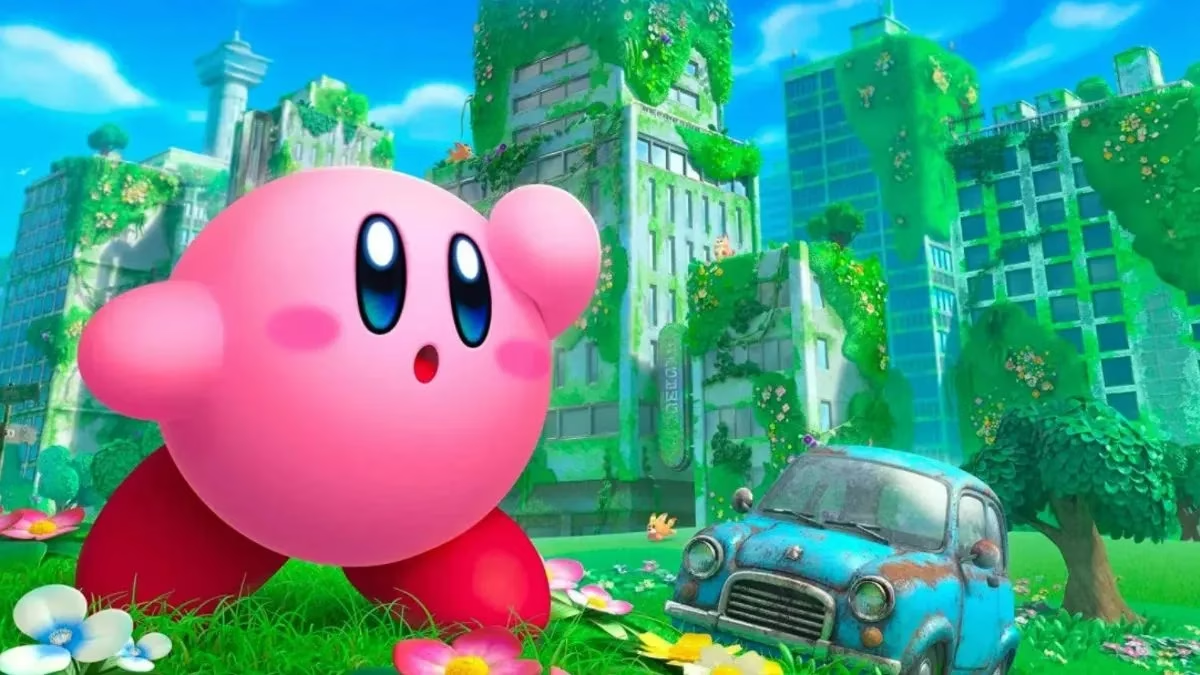
10. Kirby and the Forgotten Land: A Puffball's Paradigm Shift
For decades, the pink hero's adventures were charmingly confined to two dimensions. Kirby and the Forgotten Land shattered that mold, launching the beloved character into a fully realized three-dimensional world. This was not merely a graphical upgrade; it was a philosophical leap. The game traded familiar plains for the eerie, overgrown ruins of a forgotten civilization, wrapping its signature, approachable copy-ability gameplay in a new layer of exploration and discovery. The introduction of the hilariously inventive Mouthful Mode—allowing Kirby to consume cars, vending machines, and traffic cones to solve puzzles—epitomized the game's creative audacity. It proved that even the most established franchises could find fresh, wondrous avenues for growth, transforming a cute platformer into a poignant expedition through a beautifully desolate landscape.
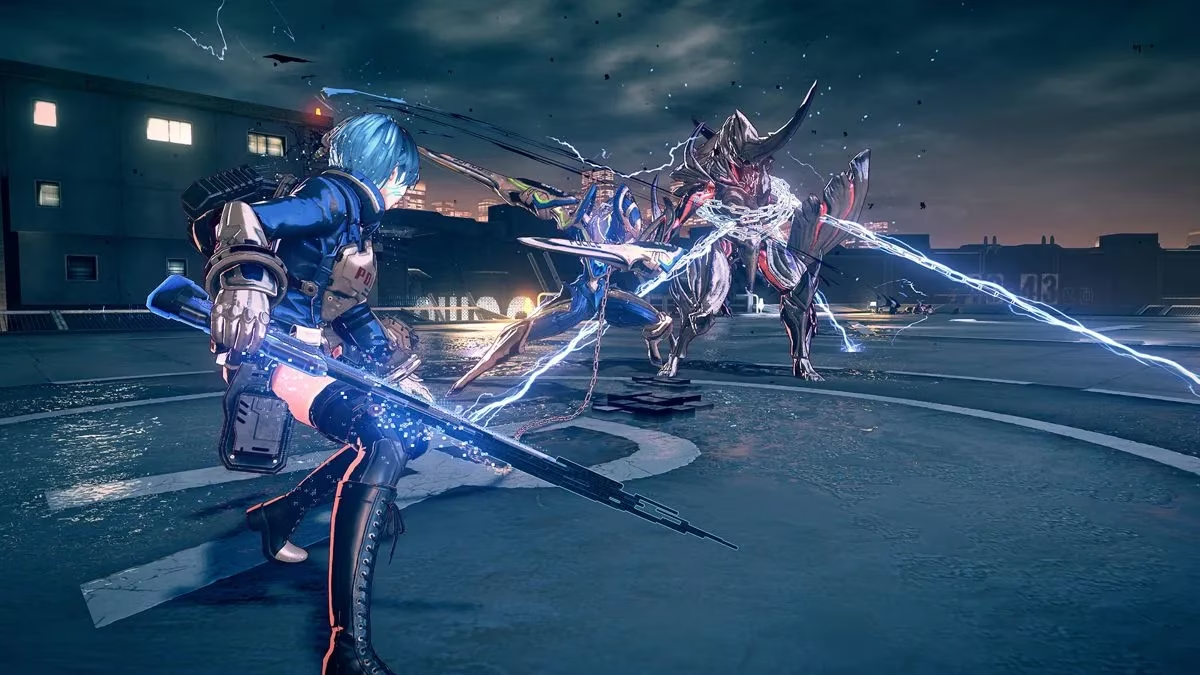
9. Astral Chain: Platinum's Symphony of Style
When PlatinumGames speaks, action aficionados listen. Astral Chain was their virtuosic answer to the question of how to evolve character-action combat. Set in a cyberpunk metropolis besieged by interdimensional beings, the game introduced a revolutionary dual-control system. Players commanded not just a human officer in the Neuron task force, but also a tethered alien entity known as a Legion. This created a breathtaking dance of synchronized combat, a kinetic ballet where chaining attacks between the two yielded spectacular, screen-filling results. The narrative, brimming with anime-inspired flair and a pulsating synth-wave soundtrack, provided the perfect backdrop for this mechanical marvel. It was a title that screamed confidence, a testament to Platinum's unwavering commitment to making players feel both powerful and stylishly cool.
8. Fire Emblem: Three Houses: Where Strategy Meets Soul
Fire Emblem: Three Houses masterfully wove grand political intrigue with intimate personal drama. Set in the continent of Fódlan, the game cast players as a professor at the Officers Academy, tasked with guiding one of three noble houses. This premise blossomed into a rich, hundred-hour tapestry where tactical, turn-based warfare on grid-based maps was only half the story. The other half unfolded in the monastery, where building relationships, managing schedules, and uncovering the nuanced backstories of a deeply memorable cast became equally compelling. The game’s brilliance lay in its moral ambiguity; there was no clear "right" house, only perspectives forged by history and trauma. Its impactful narrative, combined with refined strategic gameplay and an orchestral score of soaring emotion, elevated the tactical RPG to a new echelon of narrative depth.
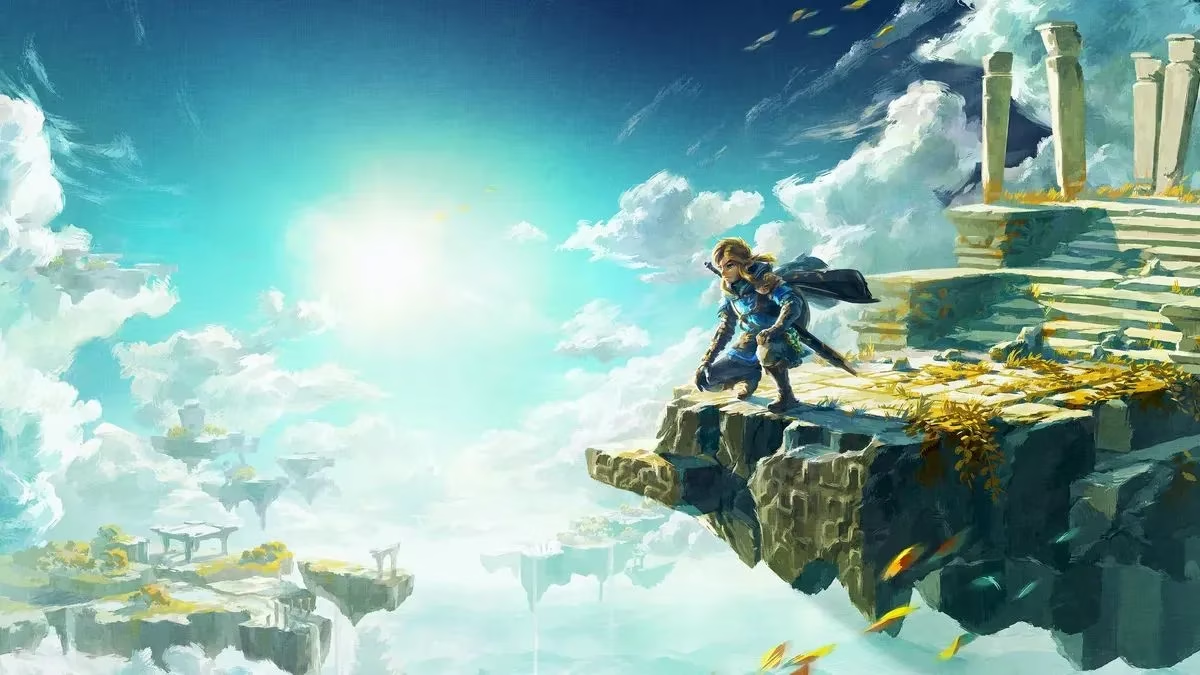
7. The Legend of Zelda: Tears of the Kingdom: Engineering Wonder
How does one follow a masterpiece? For Nintendo, the answer was not to reinvent the wheel, but to give players the tools to build entirely new vehicles with it. The Legend of Zelda: Tears of the Kingdom took the boundless freedom of its predecessor and infused it with a new dimension of pure, unadulterated creativity. The introduction of the Ultrahand, Fuse, Ascend, and Recall abilities transformed Hyrule into the ultimate physics playground. The game whispered a simple, empowering mantra: "Yes, you can."
-
Want to build a flying machine from spare parts to reach a distant sky island? Yes, you can.
-
Need to fuse a mushroom to your shield for a bouncy defense? Yes, you can.
-
Can you solve a shrine puzzle in a way the developers never intended? Absolutely, you can.
Coupled with the vast, mysterious Depths beneath Hyrule and the floating archipelagos above, the game felt less like a sequel and more like a revelation of latent potential. It was a celebration of emergent gameplay, where the greatest story was the one each player authored through their own ingenious, often absurd, creations.
6. Hades: A Roguelike with a Heart
Supergiant Games has always been synonymous with exquisite artistry, but Hades fused that signature style with roguelike mechanics to create something transcendent. Cast as Zagreus, the rebellious son of Hades, players embarked on endless escape attempts from the Underworld. Each failure was not a setback, but a narrative progression, as Zagreus returned to a bustling House of Hades to converse with a pantheon of vividly written Greek gods, each dripping with personality and bearing gifts (in the form of Boons) for the next run. The game’s genius was its seamless integration of story and structure. The compelling, character-driven narrative provided the motivation to endure the punishingly excellent combat, while the ever-changing combinations of divine powers made every escape attempt feel unique and empowering. It was a masterclass in design, proving that even in a genre built on repetition, there could be endless novelty and profound emotional connection.
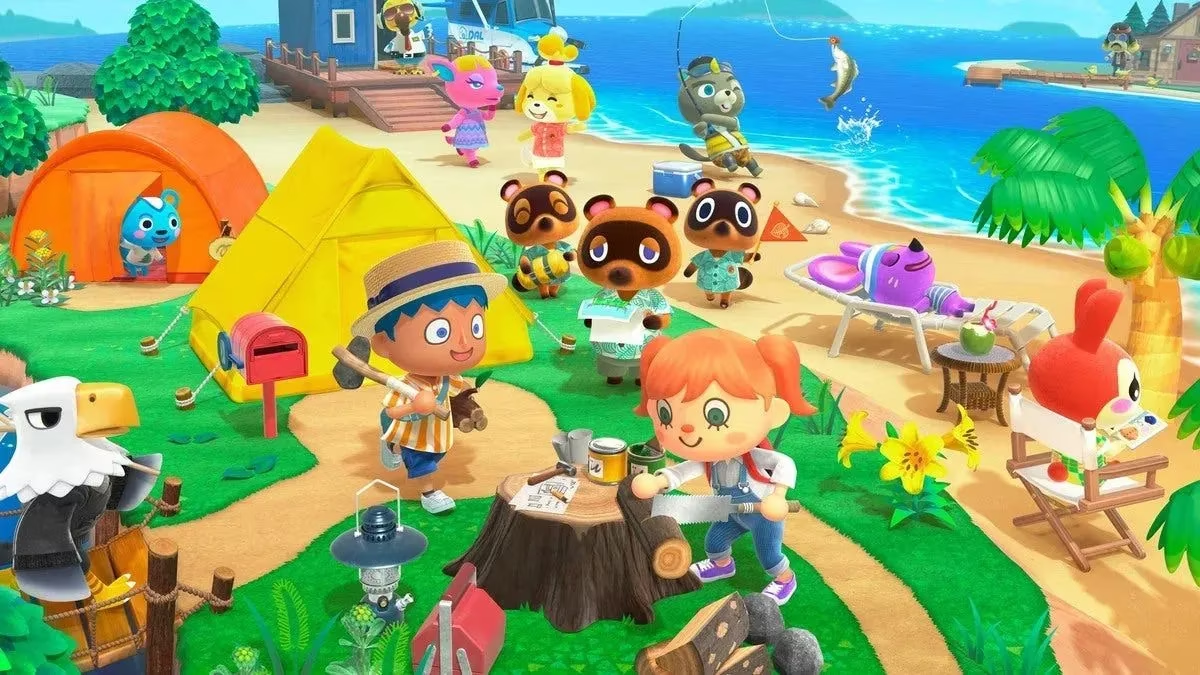
5. Animal Crossing: New Horizons: A Sanctuary in Stormy Times
Timing, as they say, is everything. Animal Crossing: New Horizons arrived in March 2020, as the world retreated indoors. This serene life-simulation game about crafting a community on a deserted island became a global sanctuary. It was a digital exhale, a place of gentle routine, creative expression, and social connection when the real world felt fraught. The game’s extensive customization—from terraforming the very landscape to decorating every inch of one's home—offered a profound sense of control and calm. It was a shared experience, where visiting a friend's island felt like a genuine social event. More than just a game, New Horizons became a cultural touchstone, a peaceful, pastel-colored world where the only urgency was paying off a loan to a tanuki in a leisurely fashion.
4. The Legend of Zelda: Breath of the Wild: The Sound of Breaking Conventions
It began with a whisper of wind across a vast field. The Legend of Zelda: Breath of the Wild didn't just open a world; it shattered the very conventions of its series and genre. Thrust onto the Great Plateau with little guidance, players were gifted with something rare: pure, unfettered agency. Hyrule was no longer a sequence of dungeons to conquer, but a magnificent, systemic puzzle to be understood. Every mountain was scalable, every puzzle had multiple solutions, and the journey to defeat Ganon could literally begin from the moment the title screen faded. The game traded linear storytelling for intimate, personal tales of discovery—stumbling upon a hidden Korok, paragliding onto the back of a sleeping dragon, or simply watching the sunset paint the sky over Lake Hylia. It was a quiet revolution, one that redefined adventure for a generation and whose echo would shape open-world design for years to come.
3. Super Smash Bros. Ultimate: The Ultimate Celebration
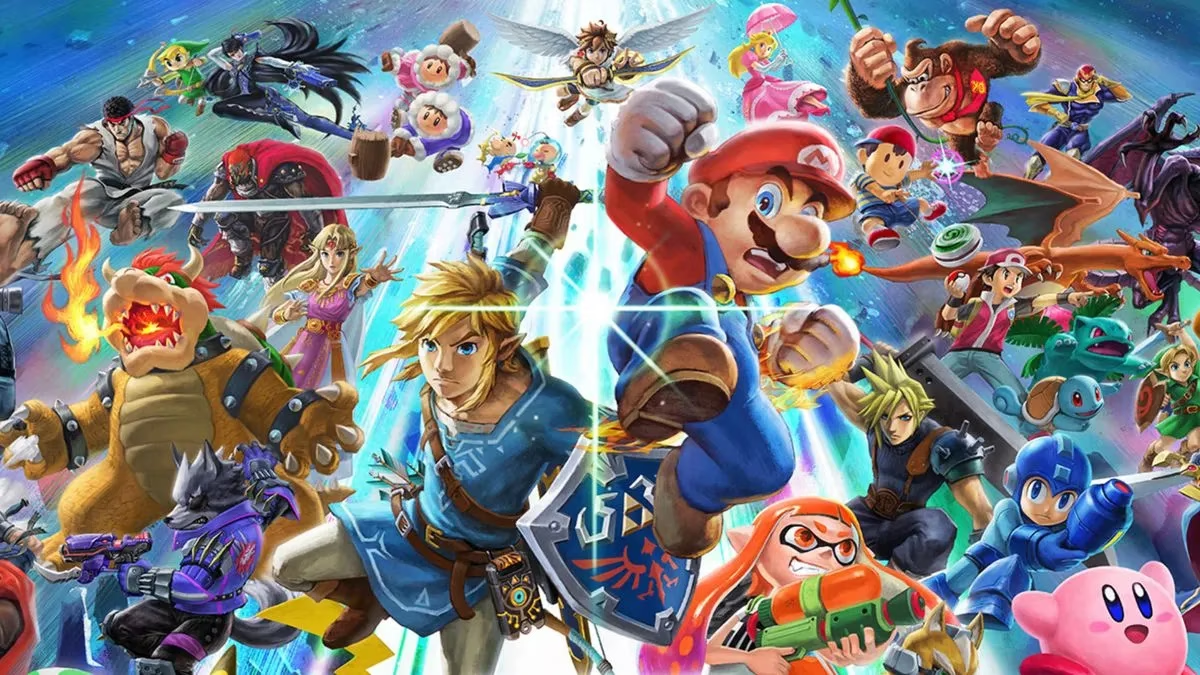
Its tagline was a promise: "Everyone Is Here!" Super Smash Bros. Ultimate took that promise and built a monument with it. This was not merely a fighting game; it was a ludicrous, joyful, and impossibly ambitious museum of gaming history. Every veteran fighter from the series' past returned, joined by a cavalcade of shocking newcomers that turned crossover dreams into reality. The roster became a who's-who of digital icons:
| Iconic Franchise | New Challenger(s) |
|---|---|
| Minecraft | Steve & Alex |
| Banjo-Kazooie | Banjo & Kazooie |
| Fatal Fury | Terry Bogard |
| Kingdom Hearts | Sora |
| Persona 5 | Joker |
| Final Fantasy VII | Sephiroth |
With over 80 fighters, hundreds of music tracks, and a spirit system that paid homage to countless other series, Ultimate was a love letter written in polygons and particle effects. It was chaotic, overwhelming, and utterly magnificent—a platform where the impossible clashes of childhood imaginations could finally, gloriously, be played out.
2. Metroid Dread: The Hunter's Triumphant Return
For years, "Metroid Dread" was a whispered legend, a canceled project haunting the series' lore. Its arrival on Switch felt like a myth made manifest. Developed by MercurySteam, Metroid Dread was a masterful synthesis of the series' 2D heritage and modern design sensibilities. It delivered the taut, atmospheric exploration the franchise is known for, with silky-smooth movement and intricately interconnected environments. The terror came in the form of the E.M.M.I., relentless robotic hunters that turned sections of the map into tense, heart-pounding sequences of flight and evasion. This cat-and-mouse dynamic provided a brilliant counterpoint to Samus's usual power fantasy. With sleek visuals, brutally satisfying boss fights, and a narrative that paid off decades of storyline, Dread was more than a return to form; it was a definitive statement that the hunter, after a long silence, was back at the peak of her powers.
1. Super Mario Odyssey: A Globe-Trotting Ode to Joy
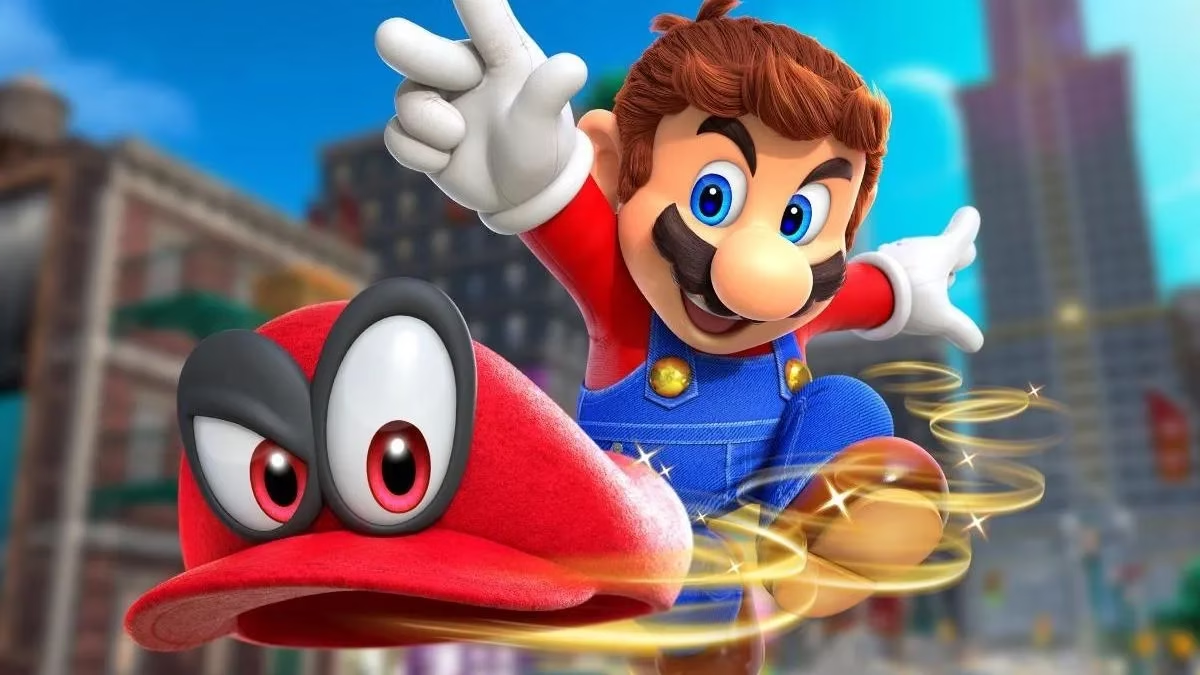
If the Switch needed a single game to encapsulate its spirit of boundless creativity and portable delight, Super Mario Odyssey was that luminous beacon. Throwing off the linear constraints of prior entries, it launched Mario into a series of sprawling, inventive kingdoms—from the urban sprawl of New Donk City to the gusty cliffs of the Luncheon Kingdom. Its central mechanic, Cappy, was a stroke of genius. By capturing enemies and objects, Mario could transform into a towering T-Rex, a slithering Cheep Cheep, or even a piece of electrical wire. This wasn't just a gimmick; it was a key that unlocked a thousand playful interactions within each world.
The game was a jubilant, globe-trotting celebration of Mario's entire history, packed with nostalgic references yet fiercely innovative. It distilled the pure, kinetic joy of movement into its essence. Every leap, every roll, every hat throw felt perfect. Super Mario Odyssey understood that the core fantasy wasn't just about saving a princess; it was about the unbridled exhilaration of exploration and the childlike wonder of discovery. It was Nintendo operating at the zenith of its craft, a masterpiece that didn't just define the Switch's early life but continues to shine as its most quintessential, and perhaps greatest, adventure.
Together, these ten journeys form the mosaic of the Switch's legacy. They are stories of innovation born from necessity, of franchises reborn, and of new legends forged. They are testaments to a console that, against all odds, did not just turn a company's fortunes around but reignited a universal sense of play, proving that in the right hands, a screen—whether on a TV or held in the palms—could become a window to countless worlds of wonder.