Even three years after its release, the conversation around Fire Emblem Engage continues to evolve, particularly when fans reflect on the design choices that shaped its identity. While the title served as a vibrant celebration of the series' history through Emblems and classic heroes, it also stirred debate over the mechanics it left behind. One of the most discussed omissions remains the Certification Exam system from its immediate predecessor, Fire Emblem: Three Houses. The absence of this feature may have simplified the experience for some, but for many, it stripped away a layer of tension and achievement that made class changing feel truly earned.
In Fire Emblem Engage, transforming a unit's role is a purely transactional affair. As long as a character meets the necessary weapon proficiency requirements, a simple application of a Master Seal or Second Seal instantly reclasses them. There is no test, no chance of failure, and no moment of suspense. The game does offer indirect ways to influence proficiency—such as bonding with an Emblem Ring like Sigurd to gain lance aptitude—but this passive approach merely expedites a menu-based decision. The result is a system that functions efficiently but lacks the dramatic weight that once turned a mundane upgrade into a memorable milestone.

By contrast, Fire Emblem: Three Houses used the Academy setting to brilliantly recontextualize class progression. Units didn't just unlock new jobs; they had to earn them through Certification Exams. Players would first invest time in faculty training and tutoring to raise a student's skill ranks, then schedule an exam. The outcome wasn't guaranteed—higher proficiency increased the odds, but even a 70% chance could fail, wasting a seal and often forcing the player to wait for another free day. That small risk introduced a thrilling gamble. Did Byleth dare attempt the Assassin exam with a 65% success rate, or should she wait another week? These moments made each successful certification feel like a personal victory, tightly woven into the game's life-sim rhythm.
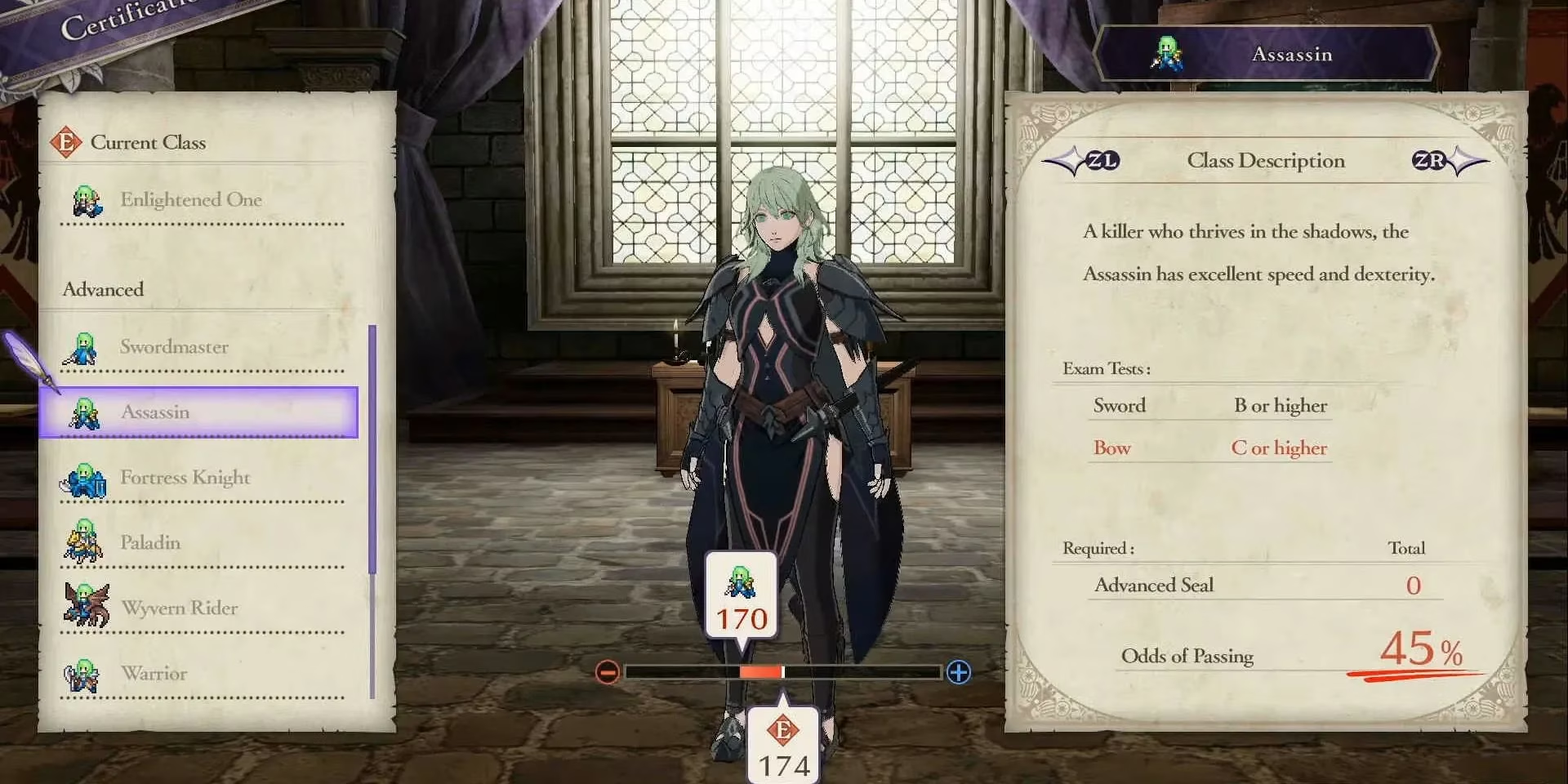
It's fair to ask: could Fire Emblem Engage really have supported such a mechanic without the calendar structure or school theme? The answer is a resounding yes, and the game itself provides the narrative seeds. Brodia's martial culture, Elusia's mystical pursuits, and Firene's reverence for the Divine Dragon all offer in-universe justifications for a testing system. A Brodian warrior might need to demonstrate raw strength in a tournament before being trusted with the General class; a Firenese mage could be required to meditate at a sacred shrine to prove worthiness of wielding Sage magic. Even a simple "Proving Grounds" area at the Somniel could have hosted mock battles or skill challenges, reintroducing meaningful risk while deepening worldbuilding. Without these elements, class changes become just another checkbox—efficient, but forgettable.
Some defenders of the current system argue that removing the gamble respects the player's time and avoids frustration. After all, who hasn't save-scummed a failed exam in Three Houses? However, that criticism overlooks a vital aspect of game design: friction can be a tool. The possibility of failure raises the stakes and forces players to consider resource management more carefully. It also humanizes the units; watching a character overcome a tough exam creates a narrative arc on its own, even without a support conversation. The question isn't whether failure ever annoys players, but whether its presence makes success sweeter. And in a tactical RPG where decisions already carry permanent consequences, adding a layer of uncertainty to promotion feels perfectly at home.
Looking ahead to the inevitable next mainline Fire Emblem title—perhaps slated for the Switch successor—the series stands at a crossroads. Three Houses demonstrated that new mechanics could coexist with classic strategy, while Engage proved that nostalgia alone can't satisfy every craving. The ideal middle ground would preserve the accessibility of modern games without sanding down every edge. Imagine a future entry where Certification Exams return, but they are integrated into the exploration phase: find a hidden temple, defeat a guardian spirit, and earn the right to reclass. Such an approach honors both the streamlined convenience of Engage and the immersive role-playing of Three Houses.
After all, Fire Emblem has always been about building bonds with your army and experiencing their growth. That emotional investment dims when every Brigand can become a Warrior by simply feeding them a seal. The series owes it to its players—and its characters—to make every step of that journey feel significant. As the community continues to celebrate Engage's high points, the conversation about what was lost remains a powerful reminder that mechanics are not just functions; they are feelings. And sometimes, a test you can fail is exactly what a game needs to succeed.