Alear stood on the floating island of the Somniel, watching Sommie scamper across the plaza. Outside, the Fell Dragon's forces were marching, yet the Divine Dragon was feeding a small creature and deciding whether to lift weights. It was a strange rhythm for a war story, and it repeated after nearly every major battle.
Fire Emblem Engage returned to the series' classic structure of linear story progression through map traversal, leaving behind the time-management academy framework of Fire Emblem: Three Houses. In that earlier entry, the calendar was part of the narrative: lectures, meals, choir practice, and tea time were woven into the identity of Garreg Mach Monastery. Engage trimmed many of those social features, but it still included the Somniel as a home base. Players could attend to units through optional activities and mini-games. The problem was that these optional elements often pulled attention away from the story rather than supporting it.

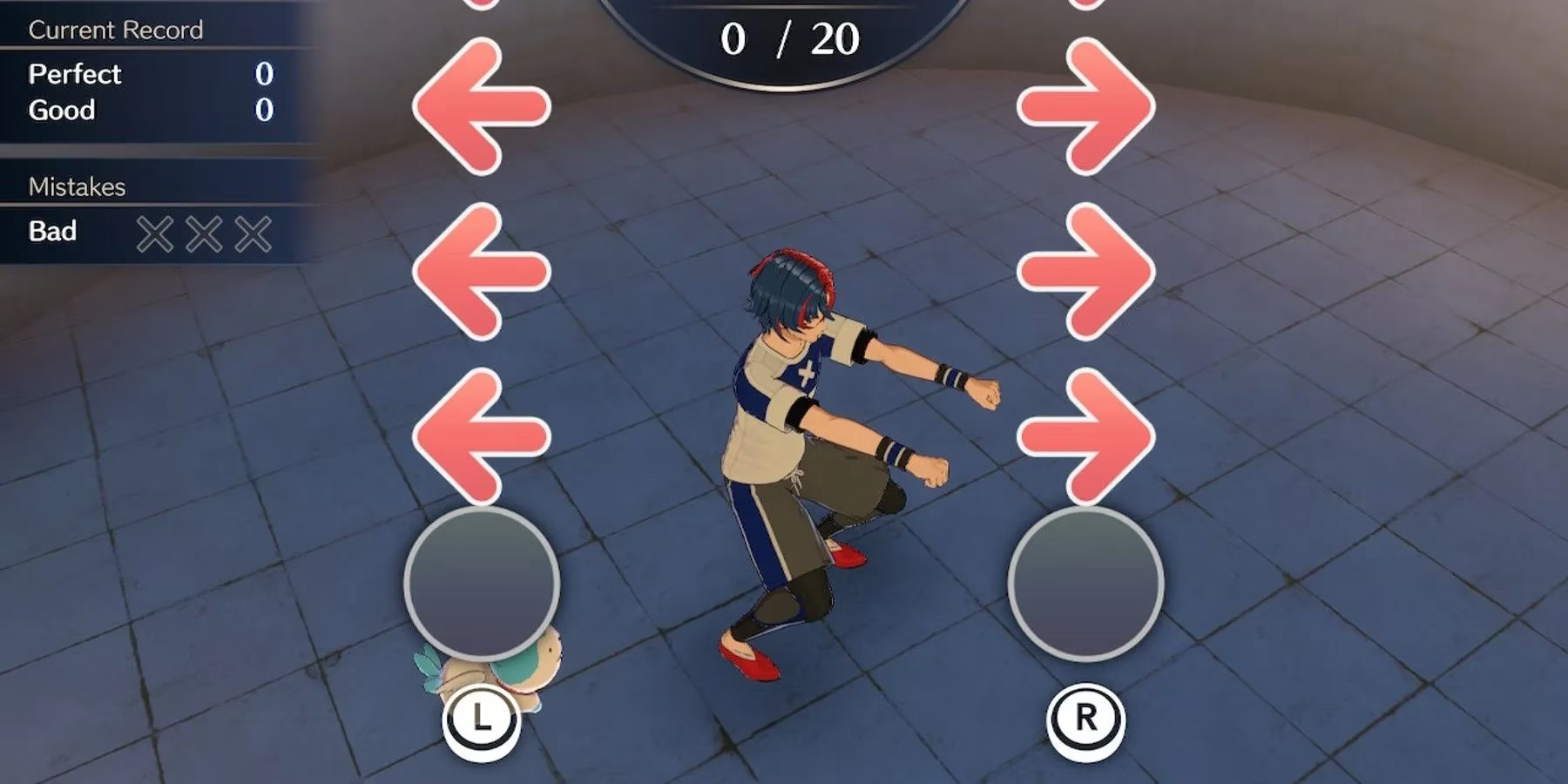
Some activities in the Somniel were genuinely valuable. At the Ring Chamber, units could inherit Emblem Skills. In the Arena, training could sharpen their combat potential. Other tasks offered far less. Strength Training in the Training Yard granted only a temporary stat boost to the Divine Dragon, yet it required a fair amount of effort for little lasting gain. Wyvern Riding worked as a breezy on-rails shooter mini-game, but it rarely rewarded players with anything that mattered on the battlefield. A few activities could raise support levels between units, which was helpful, but many of them still felt unnecessary. They existed as playful distractions in a story that was supposed to be urgent.
Fire Emblem: Three Houses had much more room for these social loops because of its structure. Missions occurred at the end of each month, and the academy setting gave every tea party and fishing trip a natural place in the world. Weekly instruction was tied to the core loop, so time spent with students did not feel disconnected from the war that gradually unfolded later. Even so, repeated playthroughs could make those same tasks feel like a slog. Players who wanted to see every house route had to clean stables, return lost items, and share meals again and again. At least the calendar made those moments coherent.
Engage lacked that coherence. Its classic chapter-to-chapter progression meant there was no built-in downtime. Returning to the Somniel to perform squats and eat a meal while villages in Firene were under attack created an awkward gap in the narrative. Some units even commented on the strange timing when spoken to between pivotal chapters. The game seemed to know the problem. It blocked access to the Somniel during the crucial events between Chapter 10 and Chapter 11, as if to preserve immersion during the most dramatic stretch of the campaign. Yet that restriction was inconsistent. At other moments, players felt almost forced to return for training, skill inheritance, or support building before a difficult fight.

This inconsistent usage made the Somniel feel less like a meaningful part of the game's identity and more like an afterthought. In Three Houses, the monastery was the story. In Engage, the floating island existed alongside the story, sometimes quietly helpful and sometimes comically at odds with the stakes. A tactical campaign about reclaiming rings and stopping a resurrected dragon did not always need a break for fishing, push-ups, and grooming a guardian spirit.
That did not mean every side activity was worthless. The Arena and Ring Chamber gave players real choices in how to build units. Support conversations still rewarded those who invested in bonds between allies. But the balance was off. The game asked players to care about both a continent-spanning conflict and a collection of cozy mini-games, without giving those two tones enough room to breathe together.
As of 2026, Fire Emblem Engage remains available on Nintendo Switch, and its tactical combat still earns praise. The Somniel, however, remains a curious compromise: a peaceful hub dropped into a story that rarely had time to pause.