Years after its launch, Fire Emblem Engage remains a curious entry in Nintendo's long-running strategy series. While its moment-to-moment tactics and unit customization are often called the best the franchise has produced, the game has not generated the same lasting cultural conversation as Fire Emblem: Three Houses. The reason, according to critics and longtime fans, is a familiar trade-off: Engage prioritizes anime spectacle and fan service over the mature character writing and political intrigue that made its predecessor a breakout hit.
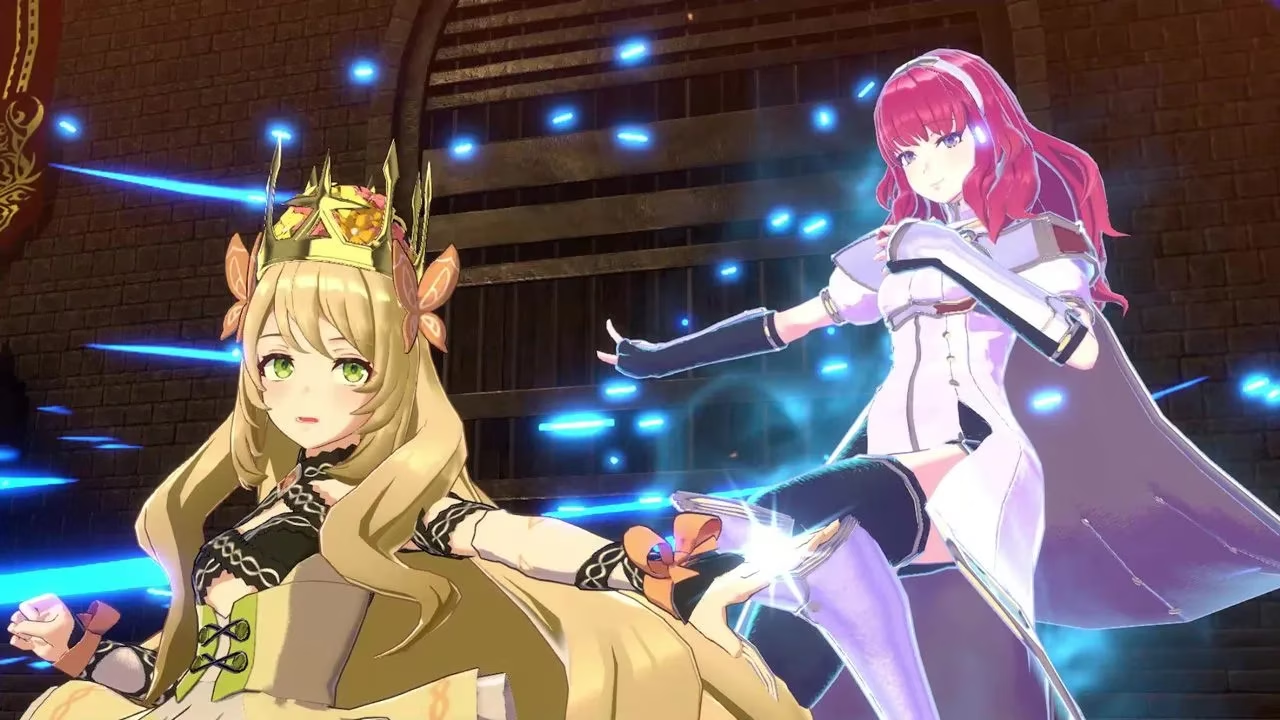
The combat engine in Engage feels fast, layered, and deeply replayable. Break mechanics, Emblem Rings, weapon triangle adjustments, and class flexibility give players more tools than ever. Builds can be shaped around inherited skills, refined weapons, and bond fragments. For tacticians who care about systems, Engage is a triumph. Some reviewers have argued that no earlier Fire Emblem game allows so much control over how a unit performs on the battlefield.
| Aspect | Fire Emblem Engage | Fire Emblem: Three Houses |
|---|---|---|
| Combat depth | Excellent, with flexible customisation | Strong, though less mechanically open |
| Character writing | Frequently trope-heavy and uneven | Mature, empathetic, and politically layered |
| Social mechanics | Underbaked and less rewarding | Monastery routines and deep supports |
| Visual style | Bright, flashy, and VTuber-inspired | Grounded fantasy with a serious tone |
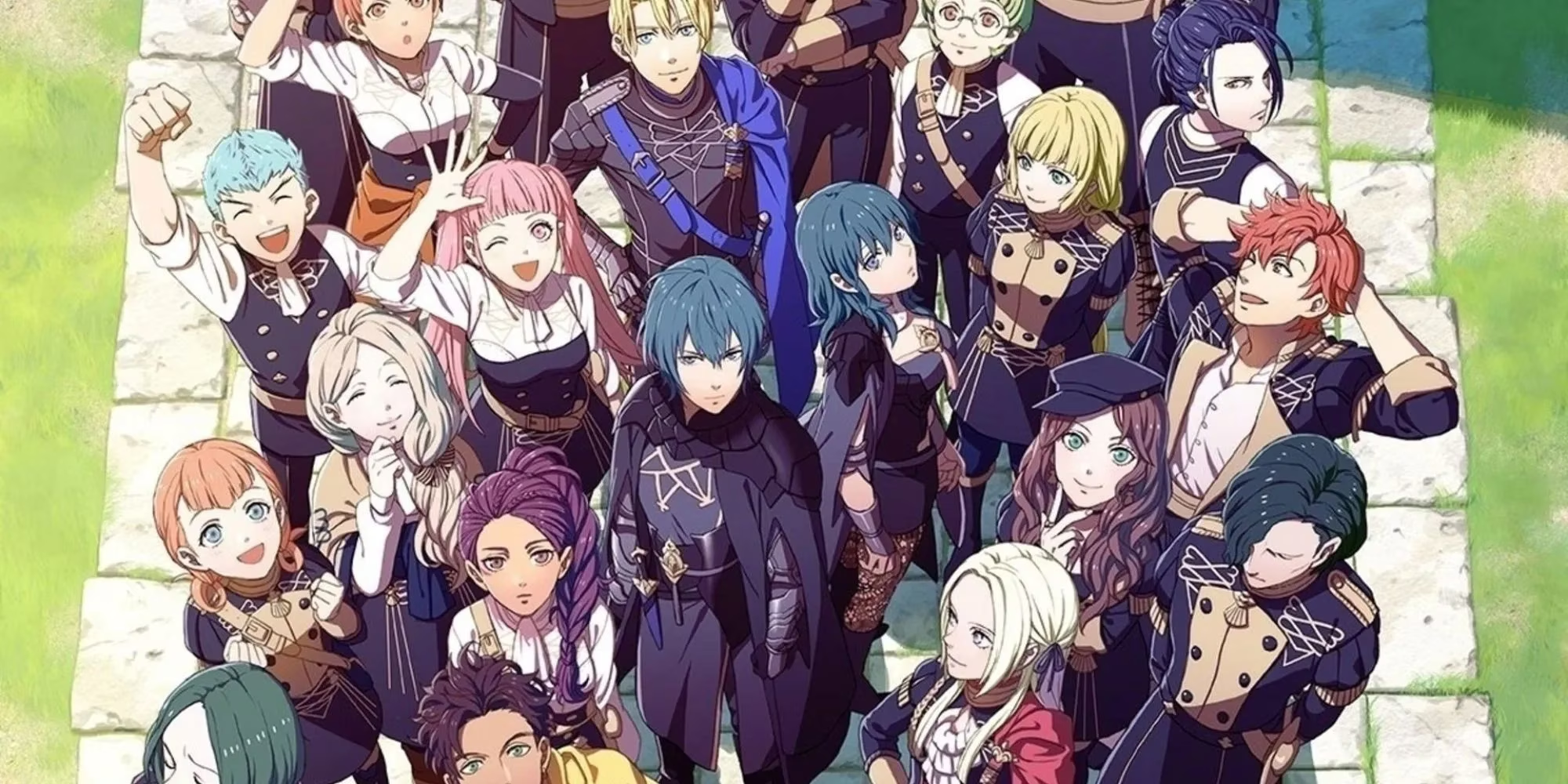
But once the battles end, Engage often stumbles. The early cast has been described as cliched or irritating, with supporting characters who orbit the protagonist rather than develop independent motivations. In Three Houses, Edelgard, Claude, and Dimitri carried distinct political visions and personal flaws. Choosing a house meant choosing a perspective, and the timeskip forced players to confront consequences. In Engage, by contrast, the opening hours lean into adorable anime hijinks and cutesy banter. Some reviewers noted awkward fan service moments that undercut dramatic stakes, such as allies fawning over the protagonist during training or optional bonding scenes that feel disconnected from the war narrative.
Part of this tonal shift may come from the character designer Mika Pikazo, known for designing popular VTubers such as Calliope Mori, Takanashi Kiara, and Gawr Gura. Nintendo's choice signals a desire to reach a contemporary audience through bright, recognizable anime aesthetics. Yet critics argued that the visual direction, while distinctive, sometimes feels detached from the serious kingdom-versus-kingdom drama that Fire Emblem fans had come to expect after Three Houses.
It would be unfair to say Engage is a bad game. For many players, the core loop is strong enough to carry dozens of hours. The Emblem Ring system encourages experimentation, and post-launch supports, paralogues, and difficulty options give completionists plenty to do. Still, the social systems are not as rewarding. Forming bonds with the world is often described as more difficult because characters lack the layered backstories and internal conflicts present in Three Houses.
What Engage does well:
-
⚔️ Best-in-class tactical combat
-
🎨 Deep unit customization and class flexibility
-
💍 Emblem Ring experimentation
-
🗺️ Replayable maps and higher difficulty settings
What it misses compared with Three Houses:
-
😬 Trope-heavy early cast
-
🏰 Less political and narrative intrigue
-
💬 Underbaked social bonding
-
🎭 Fan service that can undercut tone
As of 2026, Fire Emblem Engage has settled into a reputation as a mechanically superb strategy game that lacks the emotional resonance of Three Houses. It remains an easy recommendation for players who prioritize combat and customization, but those hoping for the same mature storytelling may find themselves longing for Fódlan. Whether the next Fire Emblem installment bridges these strengths will likely define the series' next chapter.