There is something about a necromancer that instantly commands a room—or a crypt, or a battlefield full of shambling corpses. It isn't just the ominous attire or the way they can make death itself seem like a disposable workforce. It's the sheer audacity. Raising the dead is, after all, a statement, and these characters deliver it in style. Moving through the shadows of forgotten tombs and gothic keeps, the necromancer is a figure who has fascinated gamers for decades. Yet behind the skeletal minions and eerie chants, a rich variety of personalities and motivations lie waiting to be unearthed.
Let's be honest: when most people picture a necromancer, they think of a cackling, robed figure who smells like a damp cellar and hasn't seen a vegetable in years. But the truth is far more nuanced. Some wield their power with surprising discipline, others stumble into undeath by accident, and a few even manage to be the good guys—well, mostly. Across the sprawling landscapes of RPGs and strategy games, a handful of these dark magic users have carved out unforgettable legacies. Here are the necromancers who prove that while their methods might be questionable, their impact is undeniable.
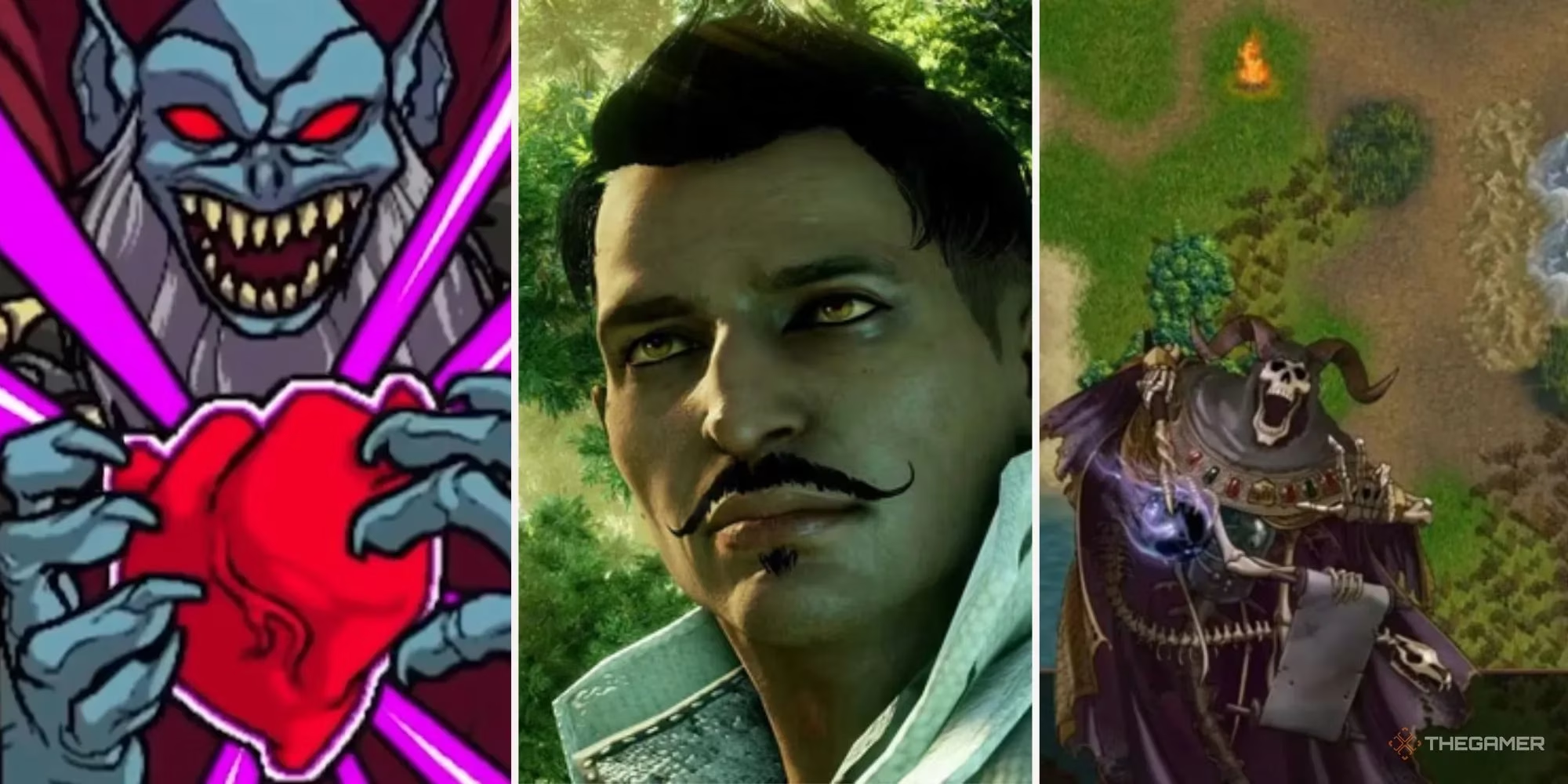
Dorian Pavus – The Charmer With a Cause
If there is one necromancer who could convince you to have a cup of tea in a haunted library, it is Dorian Pavus from Dragon Age: Inquisition. He arrives with a flourish, a moustache that deserves its own character sheet, and the kind of sarcasm that can cut through even the thickest fog of despair. Dorian hails from the Tevinter Imperium, a land where slavery is woven into the social fabric, and necromancy is seen less as a forbidden art and more as an academic discipline. He doesn't fit the standard portrait of a brooding death mage. Instead, he is surprisingly warm and genuinely committed to reforming his nation's blood-soaked reputation.
What sets Dorian apart is his refusal to abandon hope. Yes, he raises spirits from the Fade to do his bidding, but he does so with a wink and a pointed remark about the inadequacy of the living. He wants Tevinter to show its better nature to the world, and he leaves everything behind to join the Inquisition in pursuit of that ideal. The man is a rare breed: a necromancer with good intentions and good methods. As a friend, he grows, he questions, and he never stops being the most stylish corpse-wrangler in Thedas.
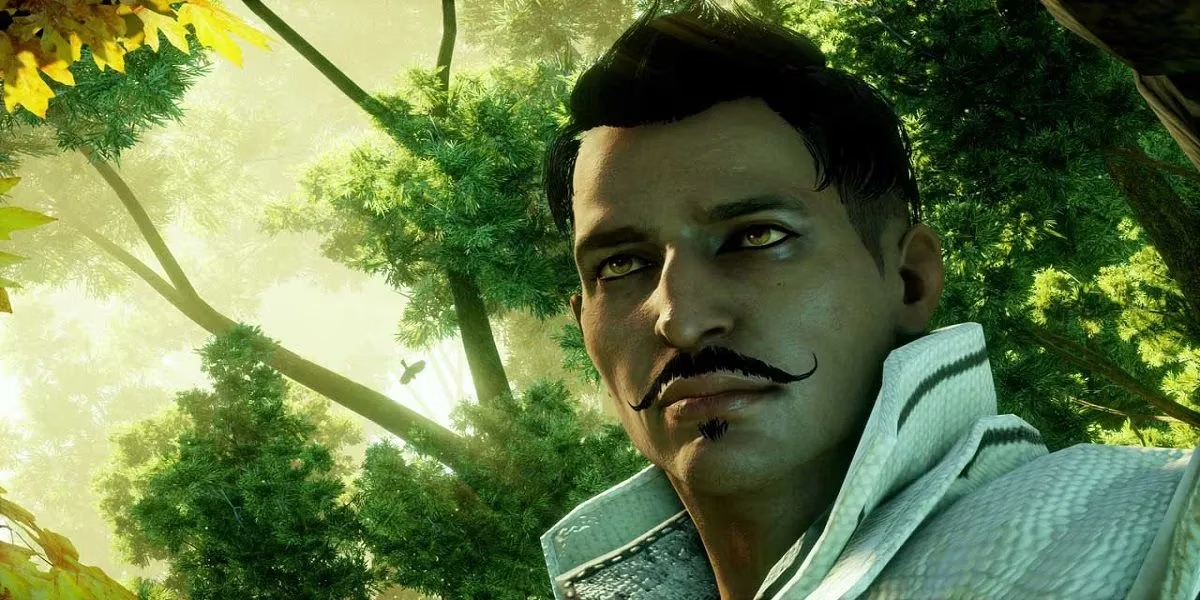
Xardas – The Moral Grey Zone
Few necromancers can claim to have mentored a hero without succumbing to the cliché of the final betrayal. Xardas, who has haunted every Gothic game since 2001, is the exception that makes you reconsider the alignment chart entirely. He looks the part: forbidding, cloaked in darkness, speaking in tones that suggest he knows exactly how the world will end. But unlike many of his peers, Xardas genuinely cares about your well-being—the player character, that is. His mentoring is laced with a chilling paternalism, as if he is preparing you for a truth you are not yet ready to accept.
Here's the rub: Xardas believes that a worthy cause justifies any atrocity. He will help you, guide you, and then casually mention that a few sacrifices—or an entire village—might be necessary to achieve something greater. Morality does not vanish with him; it simply gets rewritten. Walking the line between saviour and monster, Xardas remains one of gaming's most compellingly ambiguous figures, proving that a necromancer's heart doesn't have to be rotten, just exceptionally flexible.
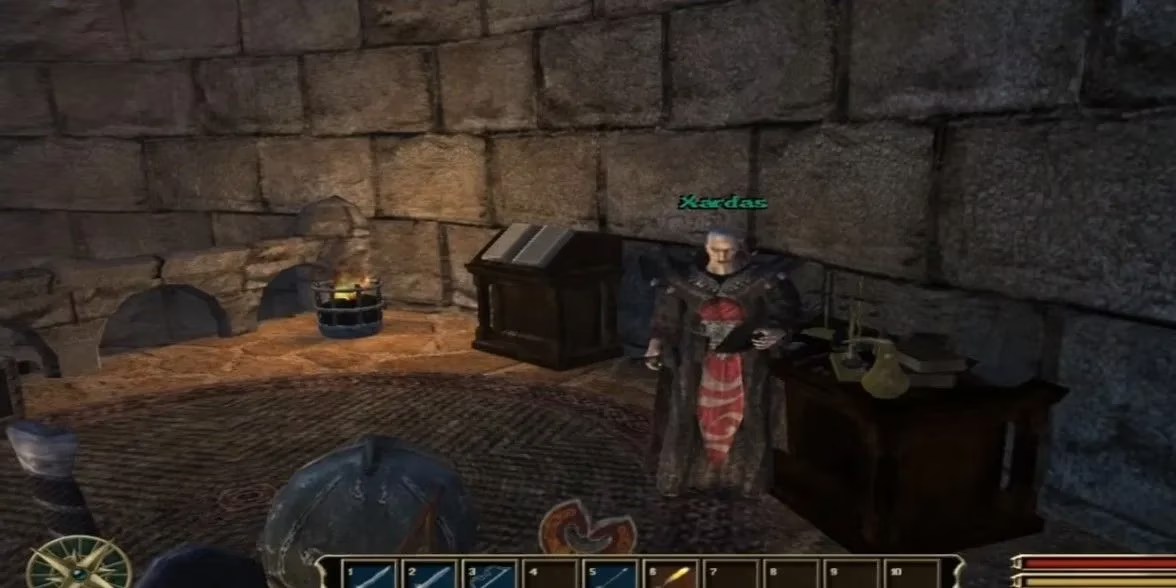
Jevyan – The Overlord Who Doesn't Wait for Permission
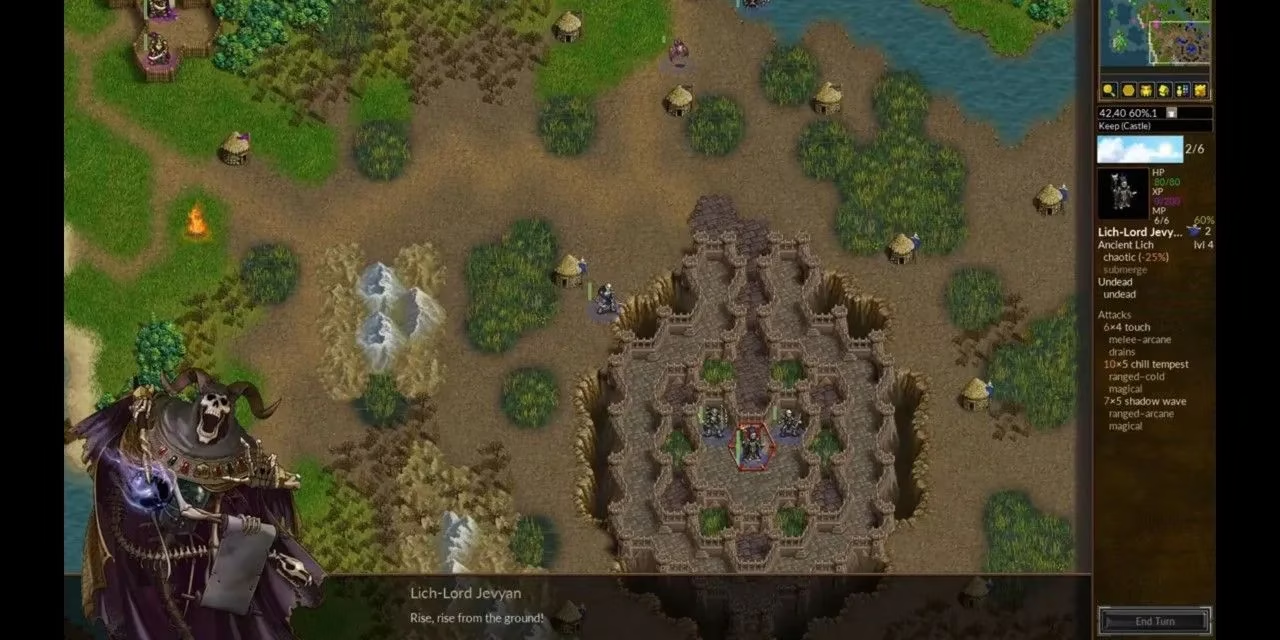
Some necromancers are patient schemers, slowly tightening their grip on the land. Lich-Lord Jevyan from The Battle for Wesnoth is not one of them. He isn't the main character, and he clearly doesn't need to be. From the moment he enters the story, Jevyan is already several steps ahead of everyone else, leading orcish hordes, slaughtering royalty, and resurrecting his fallen enemies as macabre trophies. His vengeance against the Wesfolk War was spectacularly brutal, and his conquest of the Green Isle kingdom by kingdom felt less like a campaign and more like an inevitability.
Honestly, the man doesn't ask for help. He simply takes. There is no pleading for allegiance, no grand speech to rally the undead—they follow because resistance is pointless. Jevyan embodies the raw, unapologetic ambition that makes necromancy so terrifying. He is the kind of villain who makes you grateful that you are only playing a game, because facing him in reality would require a change of trousers and a very long holiday far, far away.
Octavian – The Bard Who Beat His Own Heart
Say what you will about necromancy, but at least most practitioners have the decency to stick to spells. Octavian, better known as the eponymous NecroDancer, decided that music was a more fitting medium for commanding the dead. In Crypt of the NecroDancer, he stumbles upon a golden lute that grants immortality at a terrible cost: his humanity slowly drains away, replaced by a rhythm that can manipulate both the living and the deceased. He becomes a necromancer bard, which is as absurd and terrifying as it sounds. Even the shopkeeper isn't safe from his beat.
The real kicker? Your own heartbeat falls under his sway. While exploring the dungeon, every action—attacking, using items, even moving—must sync with the song's rhythm. It's an involuntary dance with death, and Octavian is the conductor. What makes him so memorable isn't just his villainy; it's the sheer, toe-tapping ridiculousness of it all. He's a little bit tragic, a little bit maniacal, and entirely unforgettable.
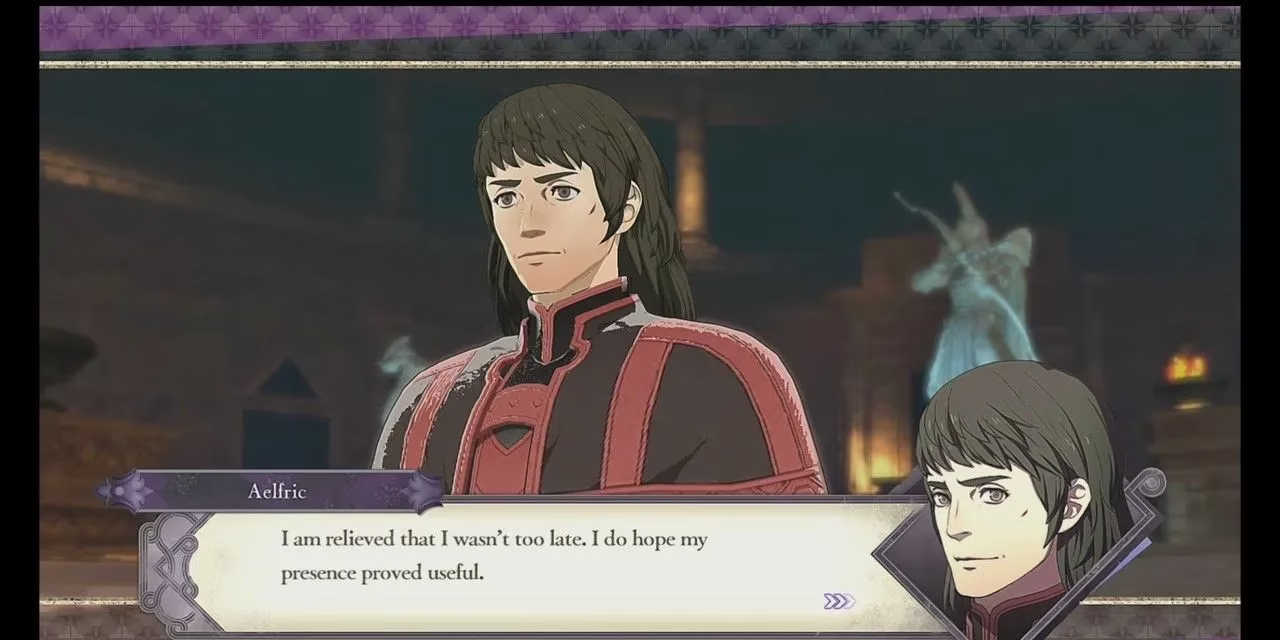
Aelfric – The Accidental Monstrosity
Sometimes, the worst necromancers are the ones who never meant to become one. Aelfric, the cardinal of the underground city of Abyss in Fire Emblem: Three Houses, is a cautionary tale wrapped in clerical robes. He loved a woman named Sitri, the protagonist's mother, but she never returned his affection. After her death, he coped by founding the Ashen Wolves house and burying his sorrow deep. Then he discovered that her body had been magically preserved, and grief turned into obsession.
Aelfric’s attempt to resurrect Sitri through the Rite of Rising goes catastrophically wrong. Instead of breathing life back into a lost love, he fuses with her remains and becomes the grotesque Umbral Beast. It is a pitiful, horrifying end—reanimation without revival. What makes his story so striking is its human core: a man undone by unrequited love, who stumbles into necromancy not out of malice but out of sheer, desperate longing. Accidental necromancy is somehow more heartbreaking than intentional villainy.
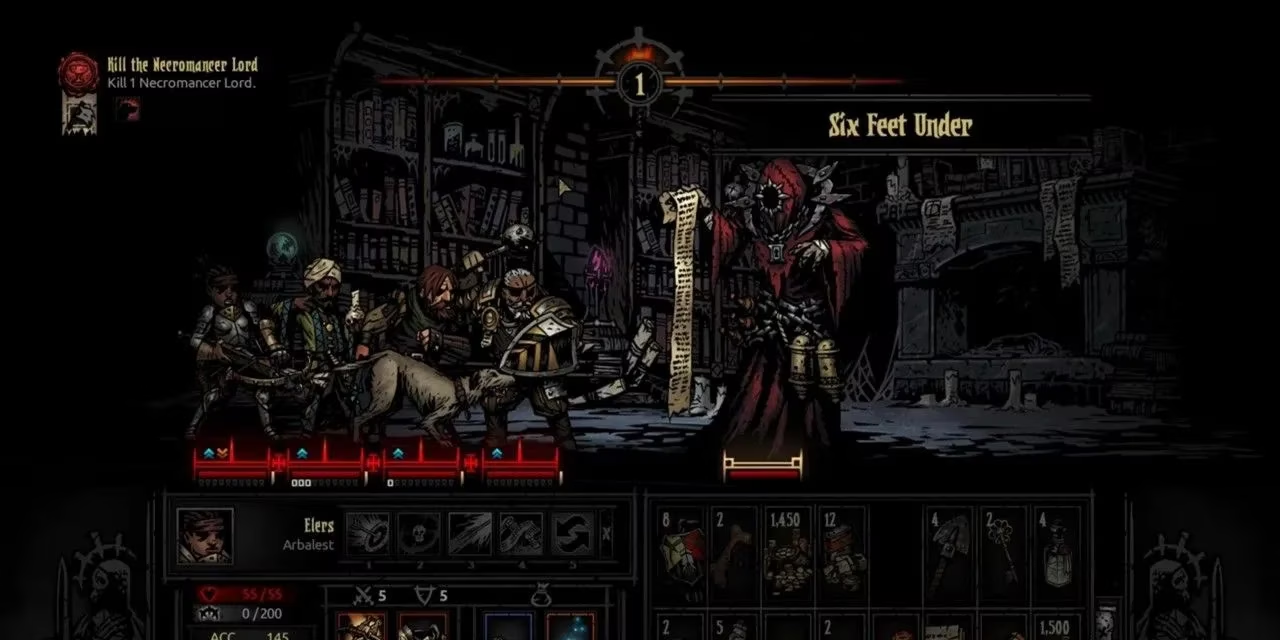
The Ancestor’s Necromancer Lord – A Terrifying Partnership
Darkest Dungeon is not a game that trades in comfort. Every character is flawed, and every victory comes with a psychological price. The Necromancer Lord, one of the game's most dreadful bosses, was once a learned practitioner from overseas, invited by the Ancestor to share arcane secrets. He came with colleagues, all masters of the dark craft, expecting scholarly discourse. Instead, the Ancestor murdered him in his sleep and then raised him again, leaving most of his intelligence intact but shackled to an undead will.
The result was a necromancer who could generate an infinite supply of shambling horrors, all while trapped in the agony of his own undeath. The Ancestor himself considered this one of his finest achievements—a testament to how even skilled mages could be reduced to tools. Facing the Necromancer Lord in the ruins is a chilling reminder that necromancy isn't always a chosen path. Sometimes it is a curse imposed by someone far more monstrous.
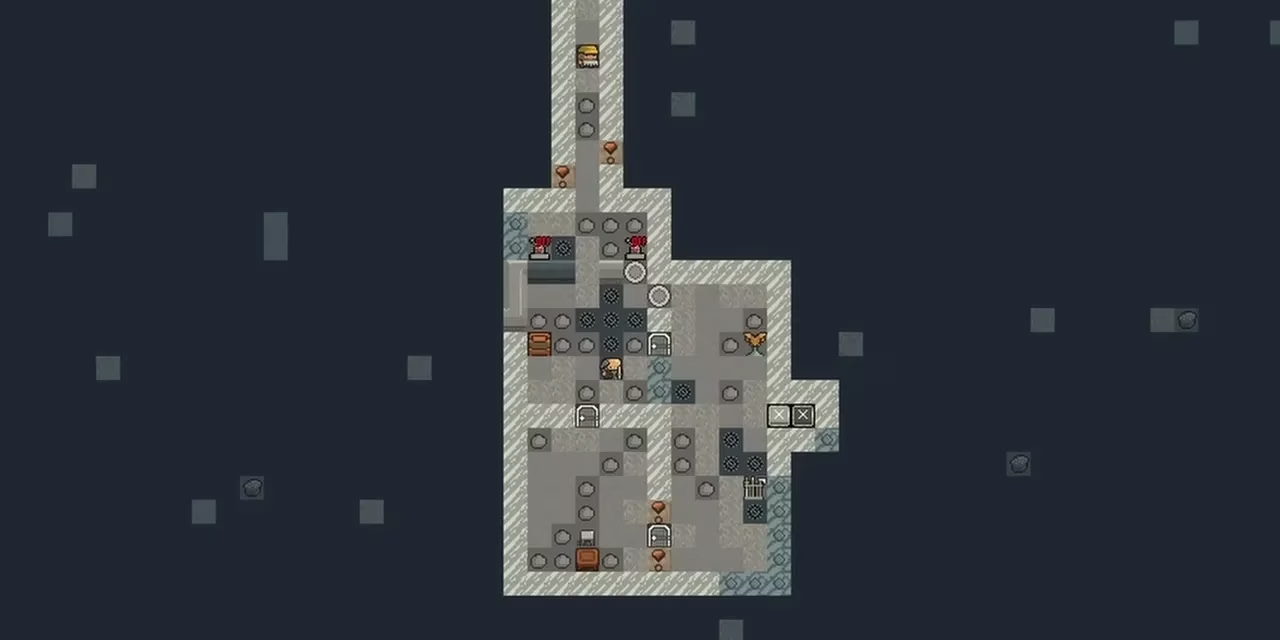
Dwarven Necromancers – Defying the Tall, Eerie Stereotype
Be honest: when was the last time you imagined a dwarf as a necromancer? The archetype is typically tall and willowy, draped in flowing black robes, designed for maximum eerie silhouette. Dwarf Fortress flips this expectation with delightful stubbornness. Its necromancer dwarves are stocky, pragmatic, and just as intent on conquering the world as any lich lord. They retain the usual hunger for power—ruling the mortal realm is always on the agenda—but they do so with an unexpected twist: limited physical needs.
Food and water are irrelevant to a Dwarf Fortress necromancer. The last thread connecting them to mortality is the need to breathe. This quirk opens up unusual strategic possibilities; their towers can be sealed off with flowing water to protect the rest of your fortress, a defence mechanism that feels almost like an engineering joke from the universe. Encountering a dwarven necromancer isn't just a fight; it's a rebellion against fantasy pigeonholing, and it works gloriously.
Kherriun – Lawful Evil Has Never Been This Determined
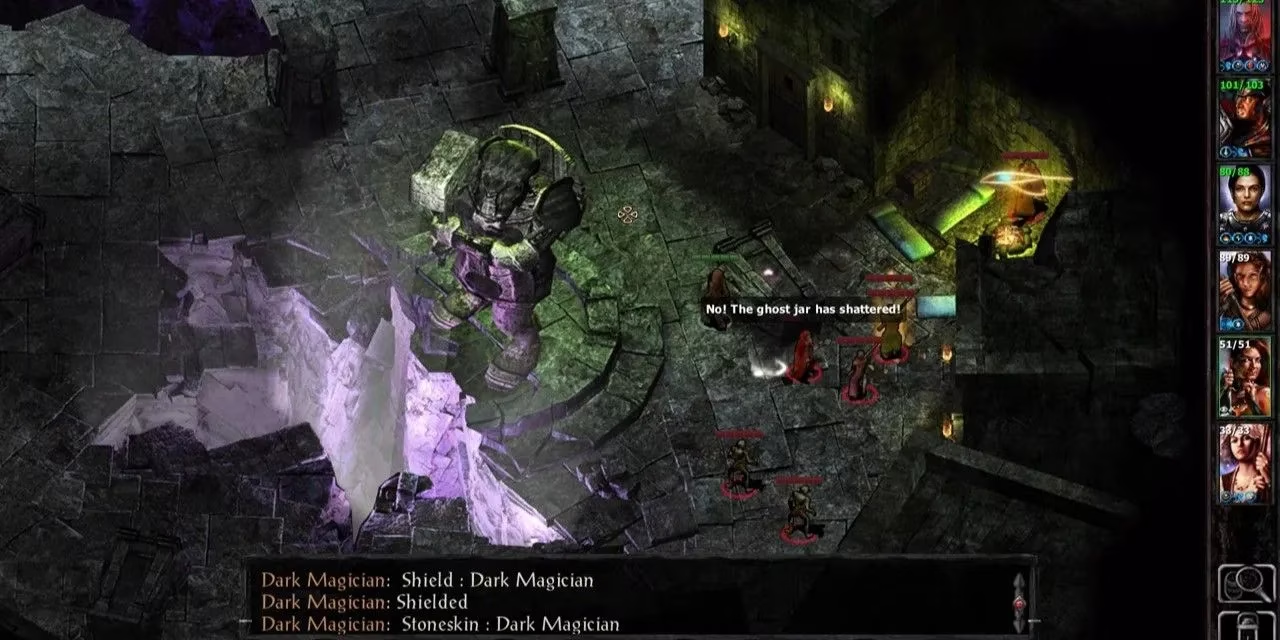
Here’s a fun twist on the typical death-worshipper: Kherriun, from Baldur's Gate: Siege of Dragonspear, is lawful evil. Yep, you read that right. While many necromancers in the series embrace chaotic glee, she operates with a code. There is structure to her wickedness, a sort of professional courtesy amid the rot. It is oddly refreshing to witness a necromancer who doesn't let ambition descend into utter anarchy. She plans, she executes, and she even files her mental tax returns on time—probably.
Her defining moment comes with the ghost dragon Halatathlaer. Kherriun sets out to subdue the spectral beast and bend it to her will. The plan fails, but the sheer, unhinged determination behind it is something to behold. She doesn't flinch. She doesn't beg. She simply commits with the ferocity of someone who believes that if you are going to meddle with the afterlife, you might as well aim for the biggest, most terrifying minion available. We don't approve, but we are undeniably impressed.
From the charm of Dorian Pavus to the desperate grief of Aelfric, these necromancers show that the dark arts are never one-note. They can be tools of reform, expressions of love, badges of bitter vengeance, or simply the rhythm that defines a dungeon crawl. Each one reminds us that death, in the hands of a skilled—or tragically flawed—practitioner, becomes a canvas for unforgettable storytelling. So the next time a skeleton army marches across your screen, take a moment to consider the hand that raised it. You might find a character far more alive than you expected.
This assessment draws from PEGI, highlighting how necromancer-heavy games often lean into mature themes—corpse manipulation, occult rituals, and psychological horror—that shape both tone and audience expectations. In the same way this blog contrasts charming reformers like Dorian with tragic figures like Aelfric and outright tyrants like Jevyan, the intensity and framing of death magic can meaningfully shift a title from pulpy fantasy to unsettling dread, influencing how developers present undead mechanics, story beats, and visual gore to fit an intended age rating.