I’ve always been drawn to strategy games that make me feel like a commander rather than a passenger. There is something deeply satisfying about studying a map, weighing scarce resources, and deciding whether diplomacy or aggression will serve my long-term goals. The hard part is finding games that stay interesting after the first victory. Too many tactical titles turn predictable once their systems become familiar. In 2026, I keep returning to a handful of strategy games precisely because they resist that predictability. Their difficulty curves, faction variety, narrative branches, and multiplayer chaos ensure that every new campaign feels like a fresh puzzle.

For me, replayability comes from more than extra content. I need systems that generate new problems, not just harder enemies. The games below deliver that through branching stories, shifting political landscapes, and opponents who refuse to behave the same way twice. Here is my personal ranking of the most replayable strategy games as of 2026.
| Replay Hook | Why It Matters |
|---|---|
| Branching narratives | Each campaign can end in a completely different way |
| Unpredictable AI | Forces me to adapt instead of memorizing patterns |
| Faction variety | Every new start feels like a fresh puzzle |
| Multiplayer modes | Human opponents create endless variation |
🏆 10. Age of Empires 4
I started with Age of Empires 4 because it is a comfortable entry point with enough depth to keep me exploring different civilizations. The Early Middle Ages setting gives the game a distinct identity, and the multiple civilizations are more than reskins; each one pushes me toward a different economic and military rhythm. I might spend one week refining my Holy Roman Empire infantry timing, then switch to a cavalry-focused faction and realize my old habits no longer work.
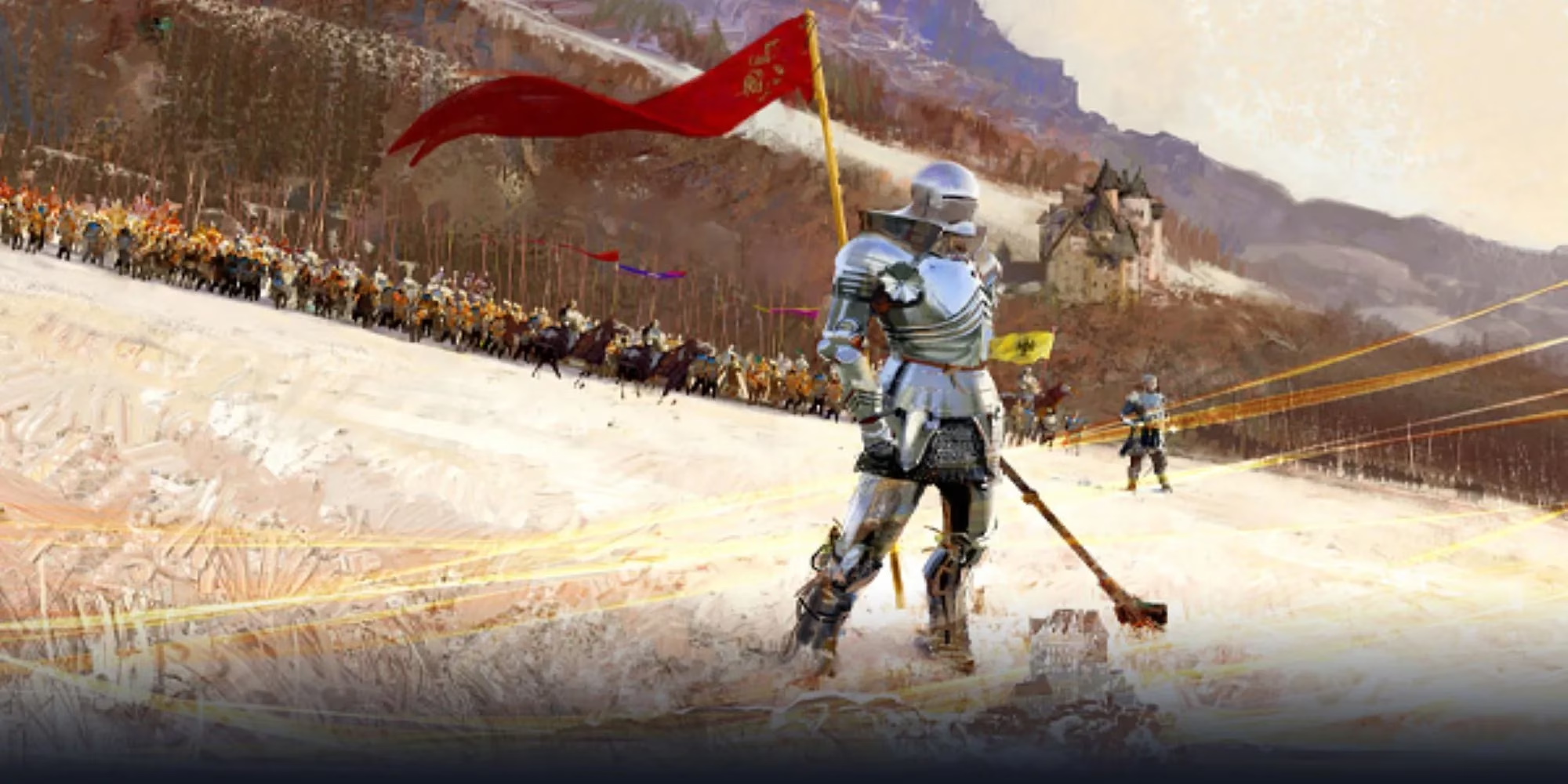
Even after clearing the campaigns, the multiplayer keeps me hooked. I can test my builds against up to seven other players, or keep things low-pressure by facing the AI. The expansions add new layers on top of the base experience, so by 2026 there is enough content to justify another run. Replayability here comes from matchup variety and how differently each civilization evolves during a match.
👽 9. XCOM 2
XCOM 2 is the game I launch when I want the game to fight back. I forget about medieval kingdoms and instead face extraterrestrial threats that seem designed to ruin my plans. The campaign's difficulty is a core part of its replay value: every missed shot, unlucky reveal, or failed evacuation can cascade into disaster. That tension makes victory feel hard-won, and defeat teaches me something for the next run.
I also love watching my soldiers progress from raw recruits into specialized operatives. Permadeath makes those journeys personal. With DLC expansions adding new classes, enemies, and mission types, it is difficult to run out of fresh combinations. The story may follow the same broad arc, but the tactical problems are never identical.
🐺 8. Northgard
Northgard scratches my Norse mythology itch while offering something different from the usual 4X or real-time strategy loop. As a Viking clan, I land on a mysterious island full of environmental hazards and undead threats. Winter can be brutal, and expanding too quickly often leaves my clan starving. Learning to survive is an iterative process, which is exactly why I return.
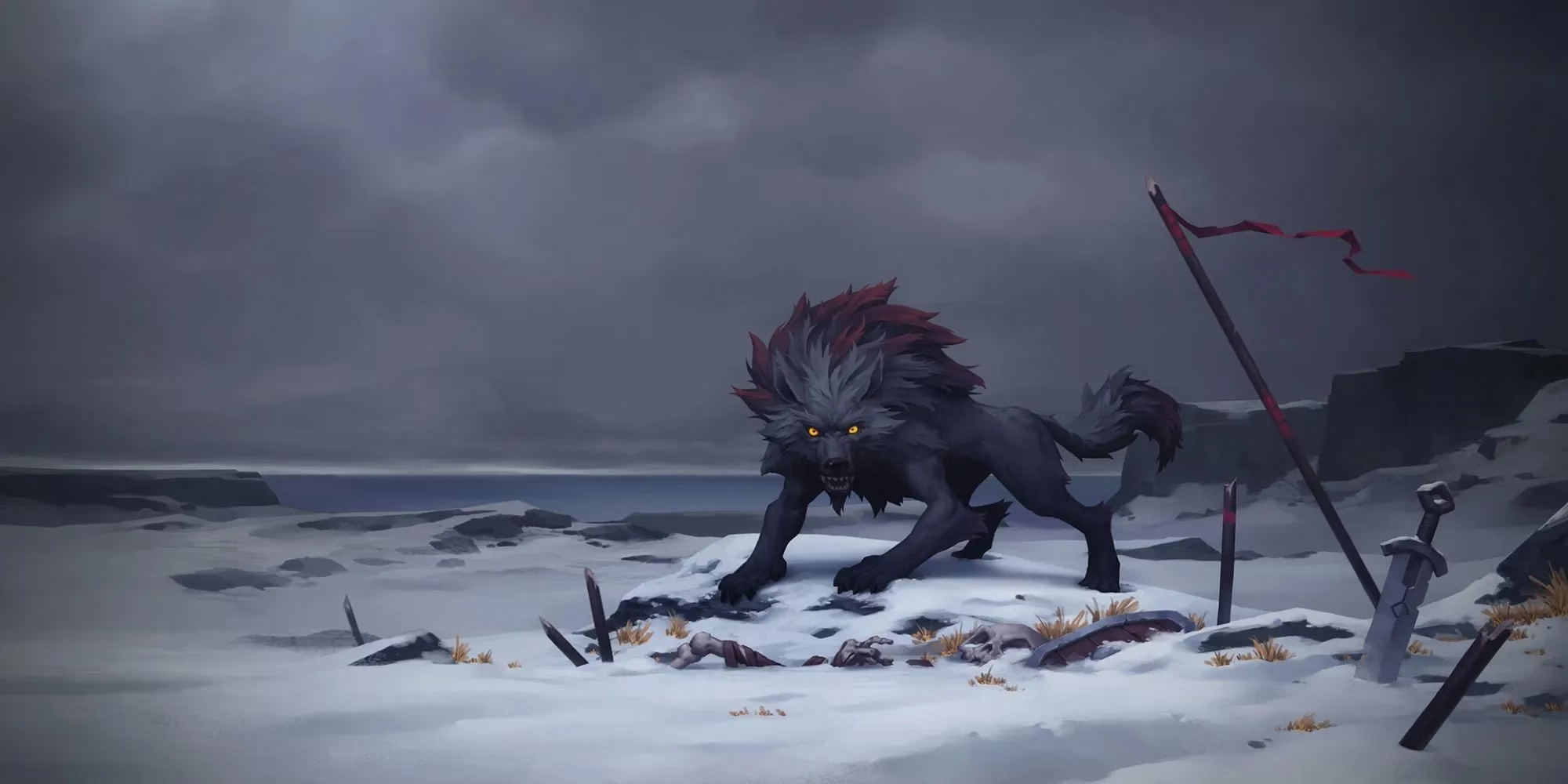
The main story takes a while to clear, but the real value is replaying with different clans. Each clan has its own strengths, units, and strategic identity, so starting over feels less like repetition and more like learning a new faction from scratch. Multiplayer offers three modes, including free-for-all, team play, and AI battles. I can cooperate one night, then betray my friends the next—strategy games are at their best when diplomacy is fragile.
🏛️ 7. Civilization 6
Civilization 6 is notorious for the 'one more turn' effect, and I have lost entire weekends to it. The number of nations and leaders available makes each campaign feel like a different historical experiment. I might pursue a science victory as Korea, then pivot to a religious or domination game as another leader. The early decisions ripple outward in interesting ways.

The skill ceiling also keeps me engaged. Some civilizations are straightforward, while others demand careful planning to overcome their weaknesses. I like that even after hundreds of hours, I can still be surprised by a map layout or an aggressive neighbor. The altering stories that emerge from each playthrough are more memorable than any scripted narrative.
⚔️ 6. Hearts of Iron 4
Hearts of Iron 4 is the game I play when I want complexity. World War 2 becomes a sandbox where I can call the shots as a national leader. The learning curve is steep, but every hour spent understanding supply lines, division templates, and production feels like an investment. I still make mistakes, but that is part of the appeal.
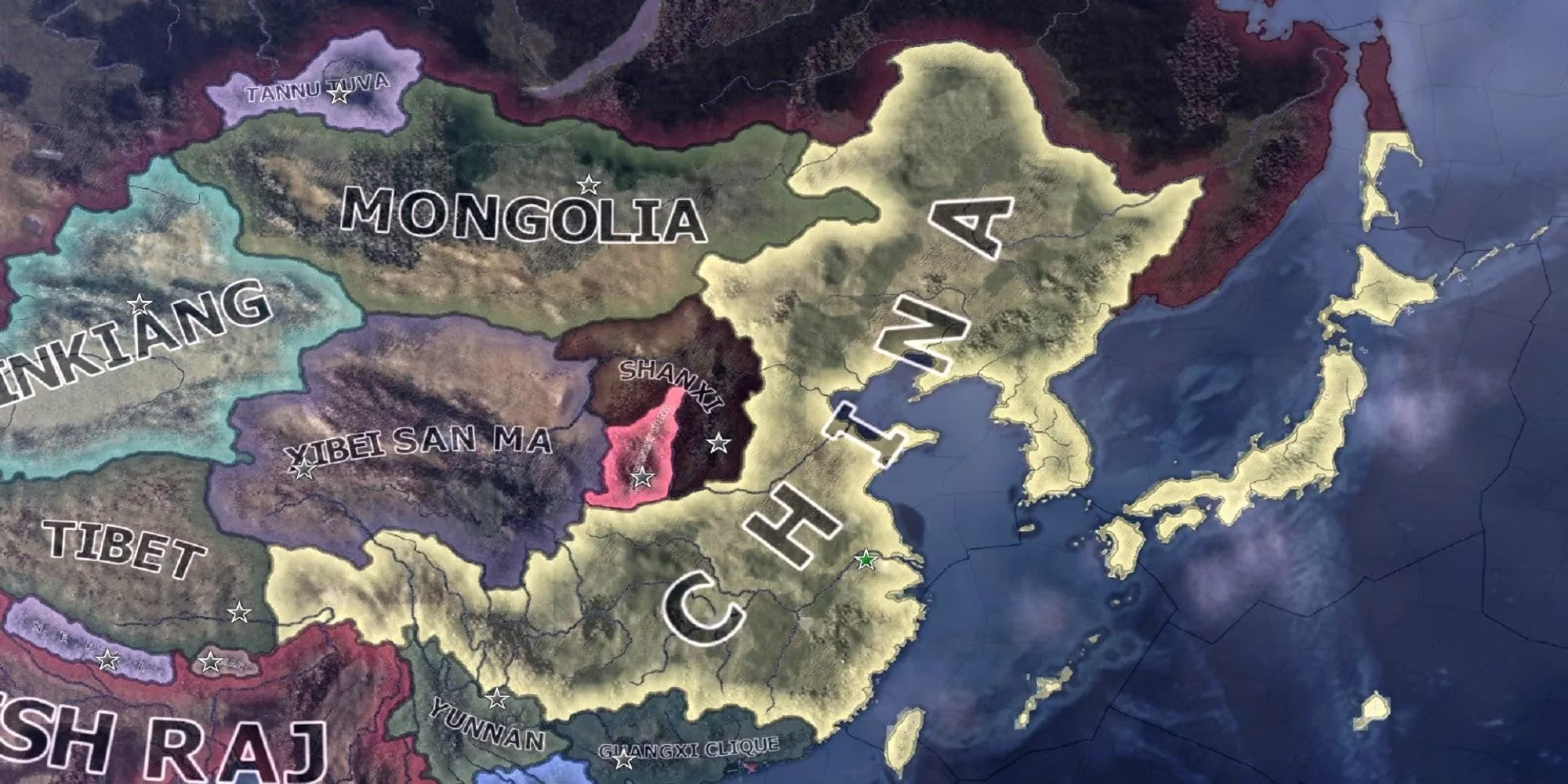
The eight DLC expansions add enormous amounts of content, but even the base game can occupy me for hundreds of hours. Completing everything on average takes around 520 hours, and veterans often spend thousands more. Replayability is not just the content; it is the way small political and military choices spiral into alternate histories.
🏹 5. Fire Emblem: Three Houses
Fire Emblem: Three Houses is a tactics game with deep character systems and narrative branching. I choose one of the houses at the start, and that choice changes my roster, combat style, and the story I experience. Seeing one ending is only a fraction of what the game has to offer.
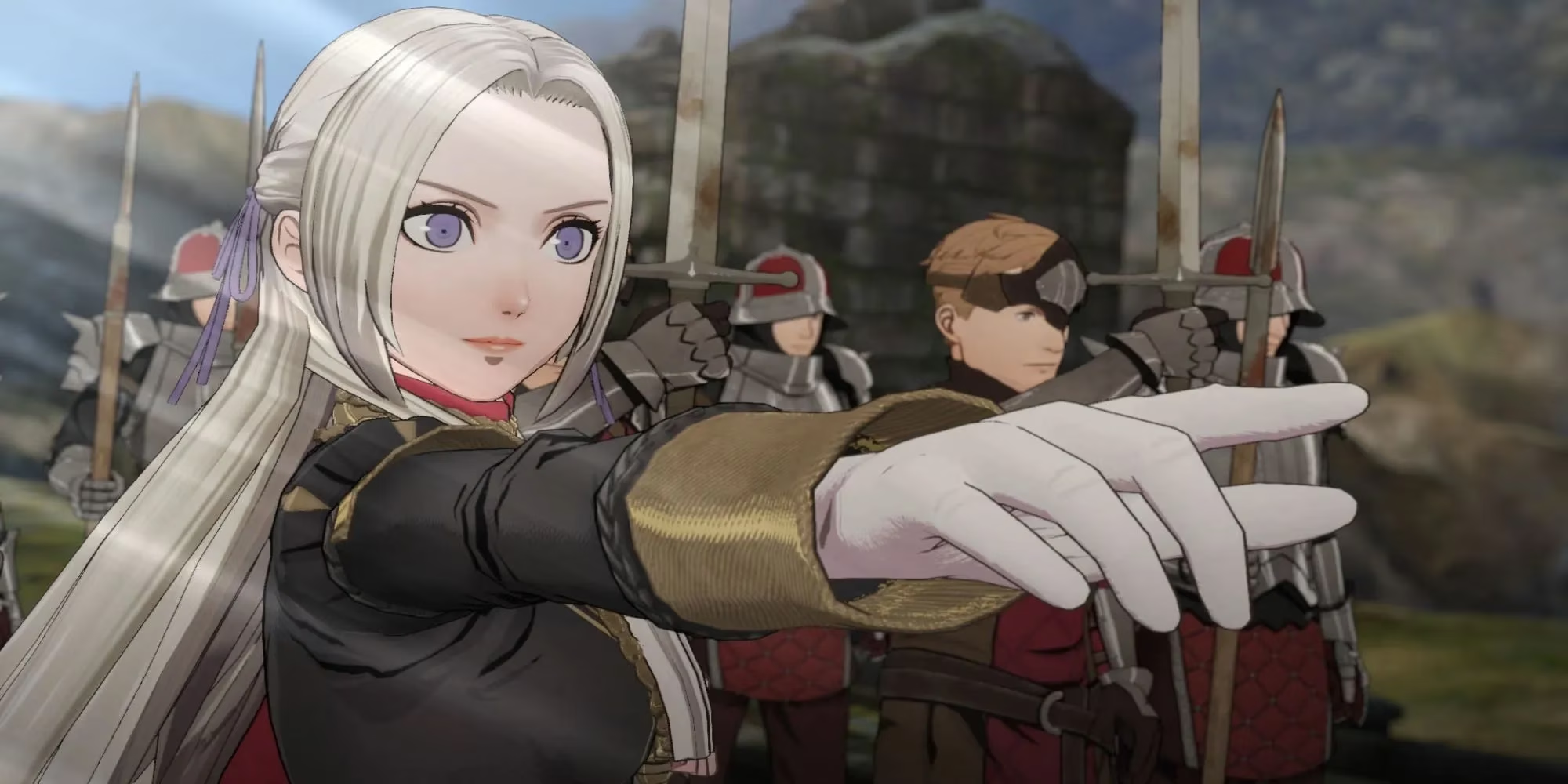
I appreciate that difficulty can be adjusted for a more casual pace when I want to focus on character relationships and worldbuilding. If I want a tactical challenge, I can replay a route on a harder mode. The combination of different houses and difficulty settings gives me excuses to start fresh without feeling burned out.
🛡️ 4. Tactics Ogre: Reborn
Tactics Ogre: Reborn revived a classic, and it remains one of my favorite games for branching decision-making. Every choice Denam makes alters the path of the story, so one clear is only one version of events. I finished the game and immediately wanted to see what might happen if I made different calls.
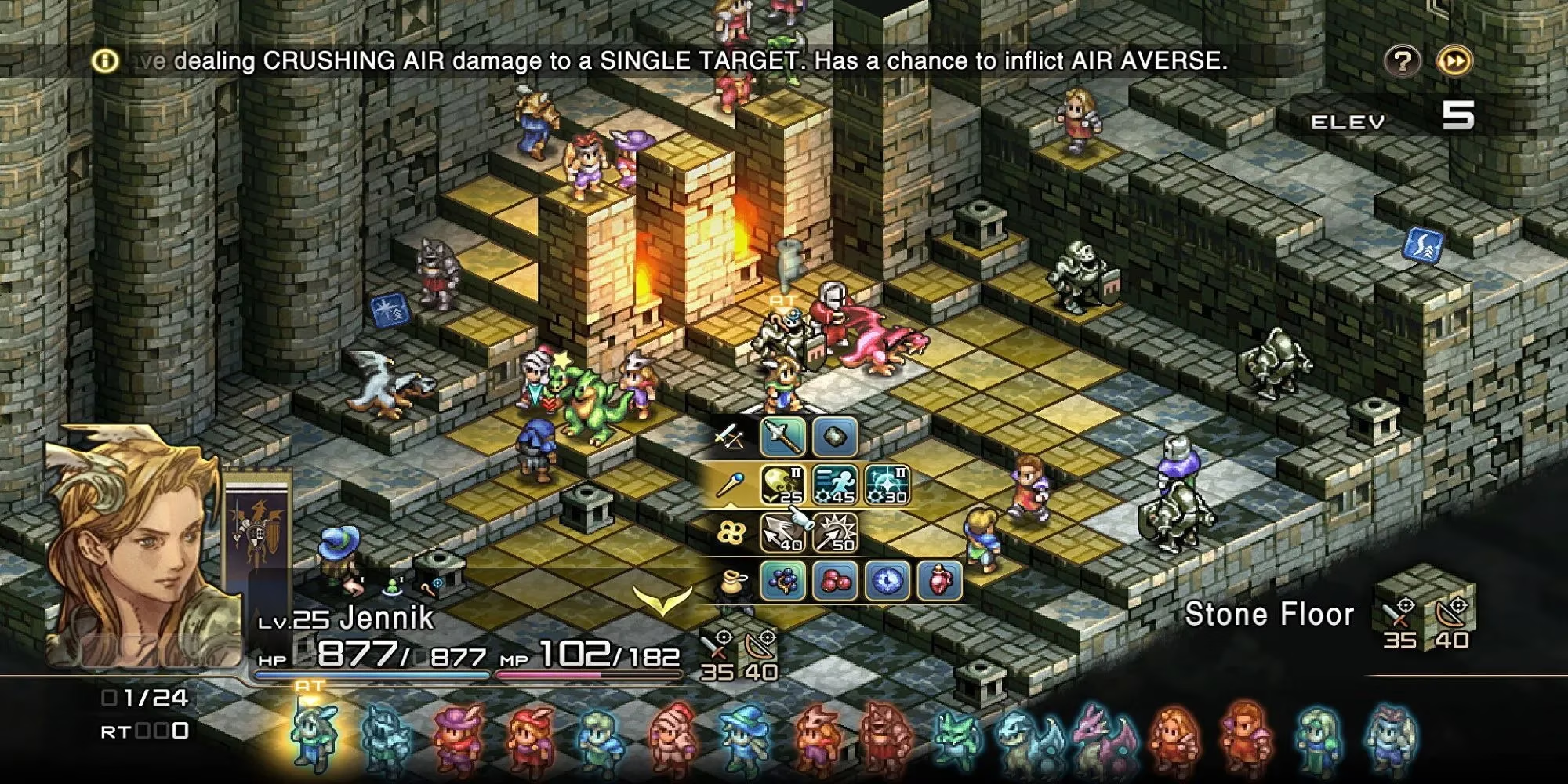
The post-game content is another reason I keep the game installed. Even without starting over, there is plenty to explore. But starting over is rewarding because I now understand how to build a stronger, more efficient party. The 'what ifs' in Denam's story keep pulling me back.
🏰 3. Total War: Medieval 2
Total War: Medieval 2 is a classic I return to for both nostalgia and its still-impressive campaign depth. The game places me in medieval Europe with the goal of conquest, but the political simulation ensures that things go wrong in unexpected ways. Prioritization becomes the real challenge: do I expand my economy, manage public order, or answer the Pope's call for a crusade?
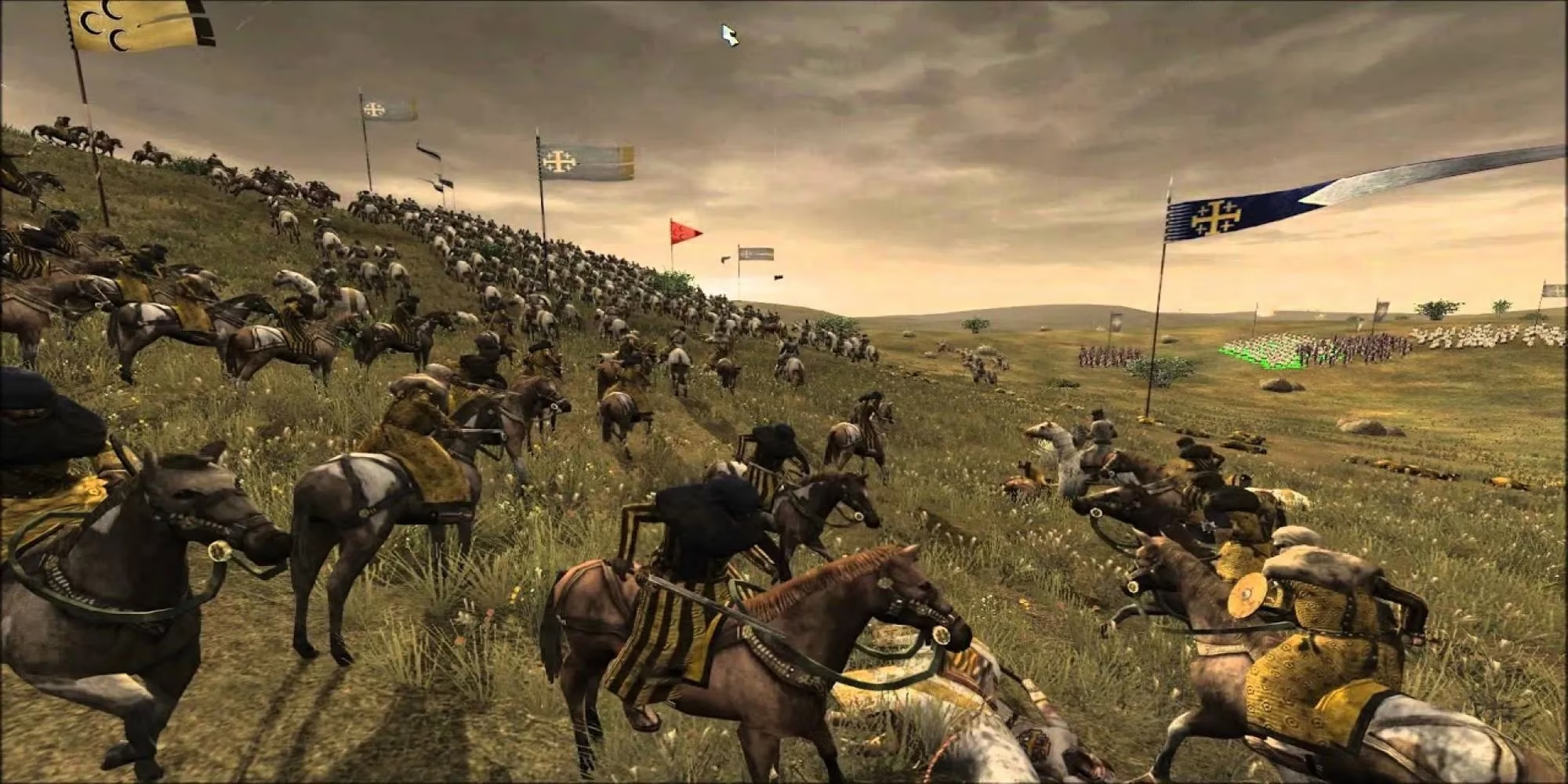
The Total War franchise is known for replay value, and Medieval 2 remains a community favorite. I can choose different factions, adopt different expansion priorities, and shape the medieval world differently each time. It is a game where new challenges emerge naturally from the simulation, not just from scripted events.
⛵ 2. Total War: Empire
Total War: Empire transports me to the 18th century and the height of the Enlightenment. The world is changing fast, and I have the power to steer it through political expertise, diplomatic maneuvering, and military strength. The scale of the map is a huge reason for replayability: 11 playable countries and 50 factions total offer enormous variety.
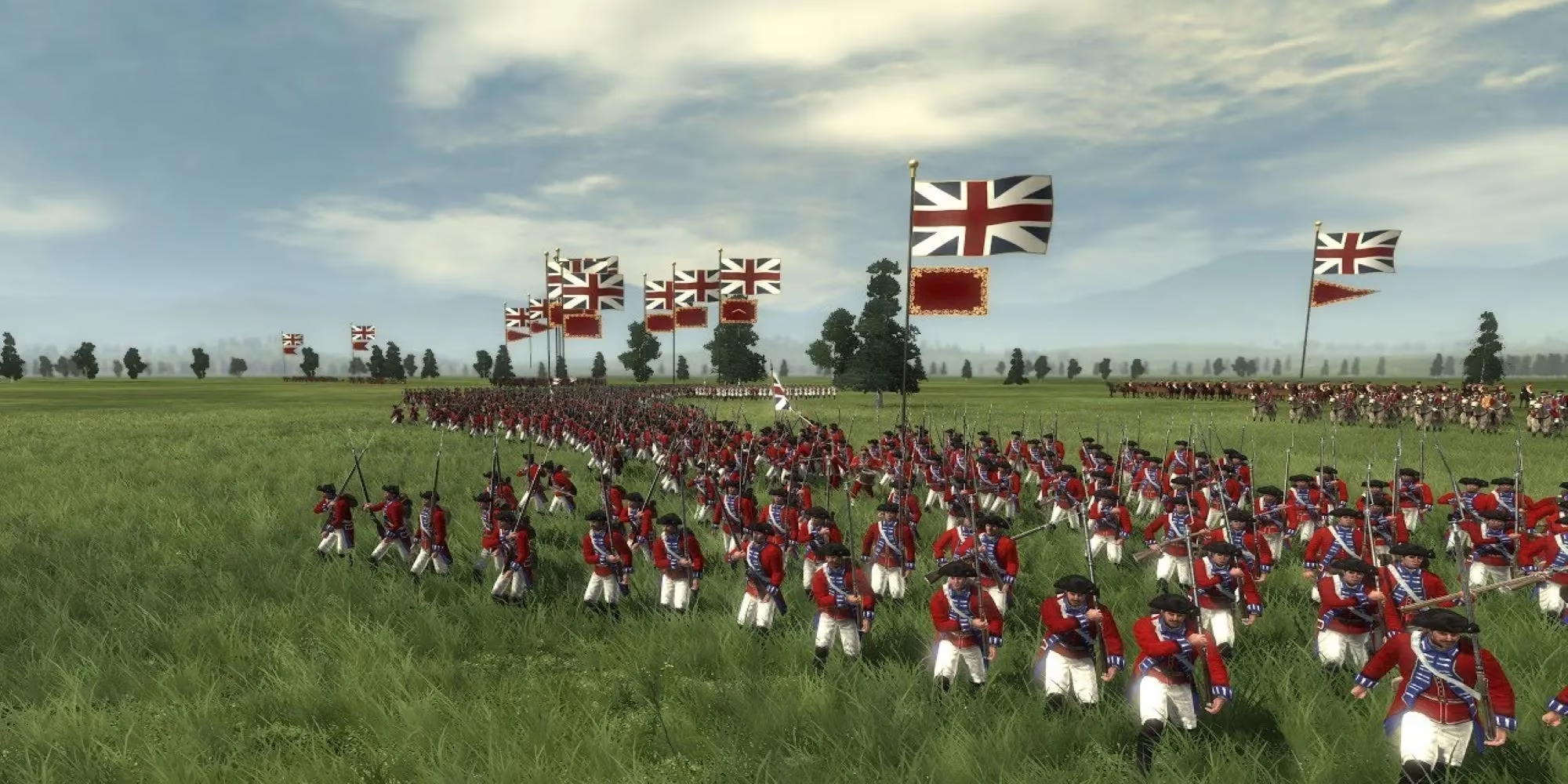
Each country has its own domestic stability, colonial interests, and trading relationships. I might focus on naval dominance as one nation, then switch to espionage and land conquest as another. The tools for gaining and retaining power feel varied enough that no two campaigns play out the same way.
🌍 1. Europa Universalis 4
Europa Universalis 4 sits at the top because it feels endless in the best way. With 345 achievements, 18 DLC expansions, and an average completion time of around 2,000 hours, there is always something to chase. I can pick one of hundreds of nations and attempt world domination, or I can set my own smaller goals and just enjoy the unfolding alternate history.
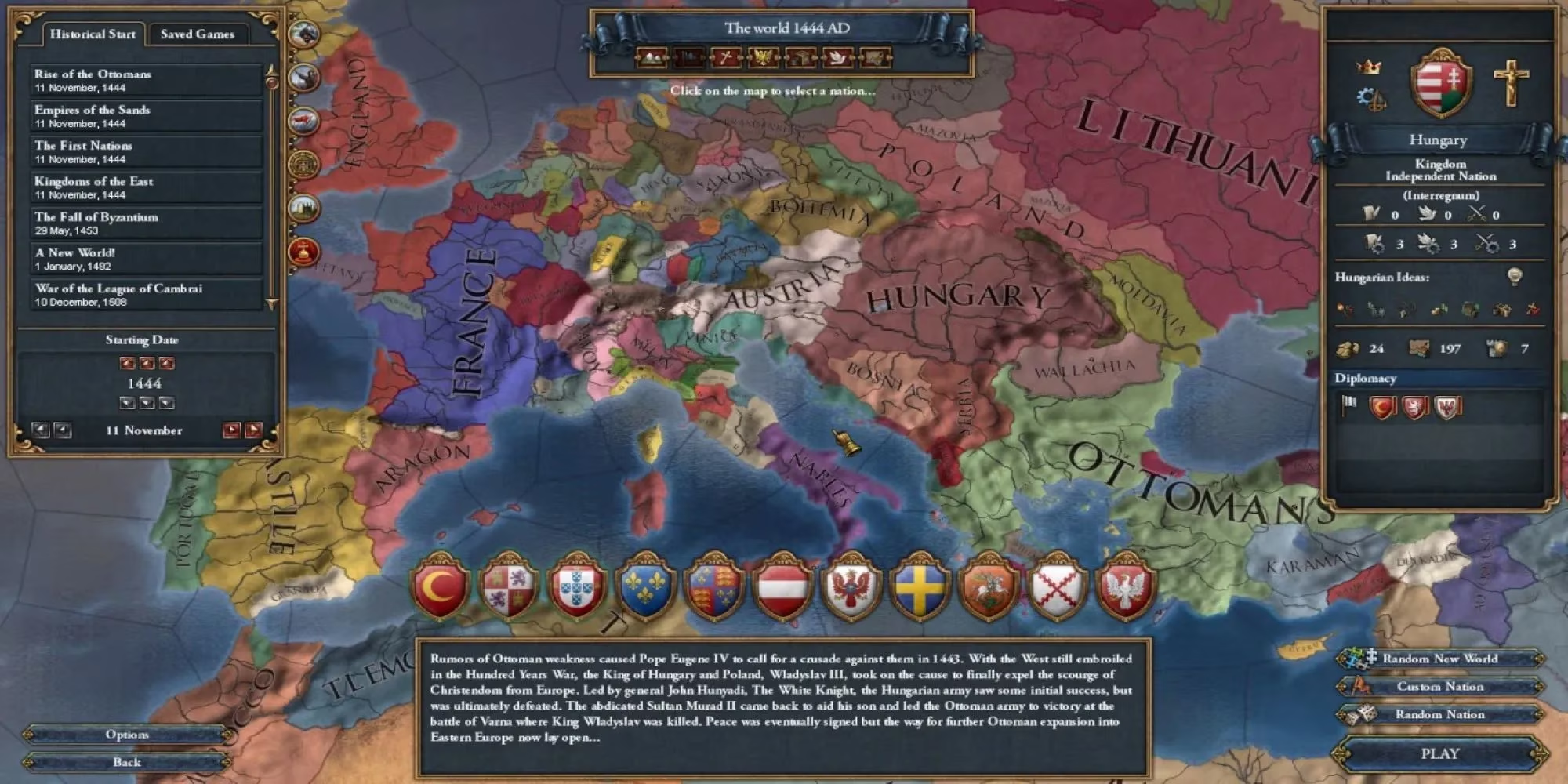
The reason I never get bored is that the game's systems keep generating new dilemmas. Trade, diplomacy, religion, colonization, and warfare overlap in complicated ways. Even with the same starting nation, different choices can lead to radically different outcomes. The possibilities are not just numerous; they feel genuinely open. That is why Europa Universalis 4 remains my most replayable strategy game in 2026.
At the end, replayability is not about a single feature. It is the combination of unpredictability, faction variety, difficulty scaling, and player-driven stories. These games keep me thinking, adjusting, and starting new campaigns long after the credits roll. If I had to choose one, I would still lose myself in Europa Universalis 4 for another thousand hours.