As the Nintendo Switch approaches its ninth year in the market in 2026, its legacy as a sanctuary for the turn-based strategy genre has only solidified further. In the early 2010s, enthusiasts of tactical, grid-based warfare faced a relative drought. The hybrid console's arrival, however, catalyzed a renaissance, with developers channeling their efforts into crafting high-caliber, deeply engaging experiences for the platform. This resurgence has transformed the Switch into a veritable treasure trove for strategy aficionados, a trend propelled by recent critical and commercial successes that have injected new life and mainstream appeal into the genre. From revitalized classics to bold new experiments, the Switch's library stands as a testament to the enduring power and evolving sophistication of turn-based tactics.
🔥 The Emblematic Evolution: Fire Emblem Engage and Three Houses
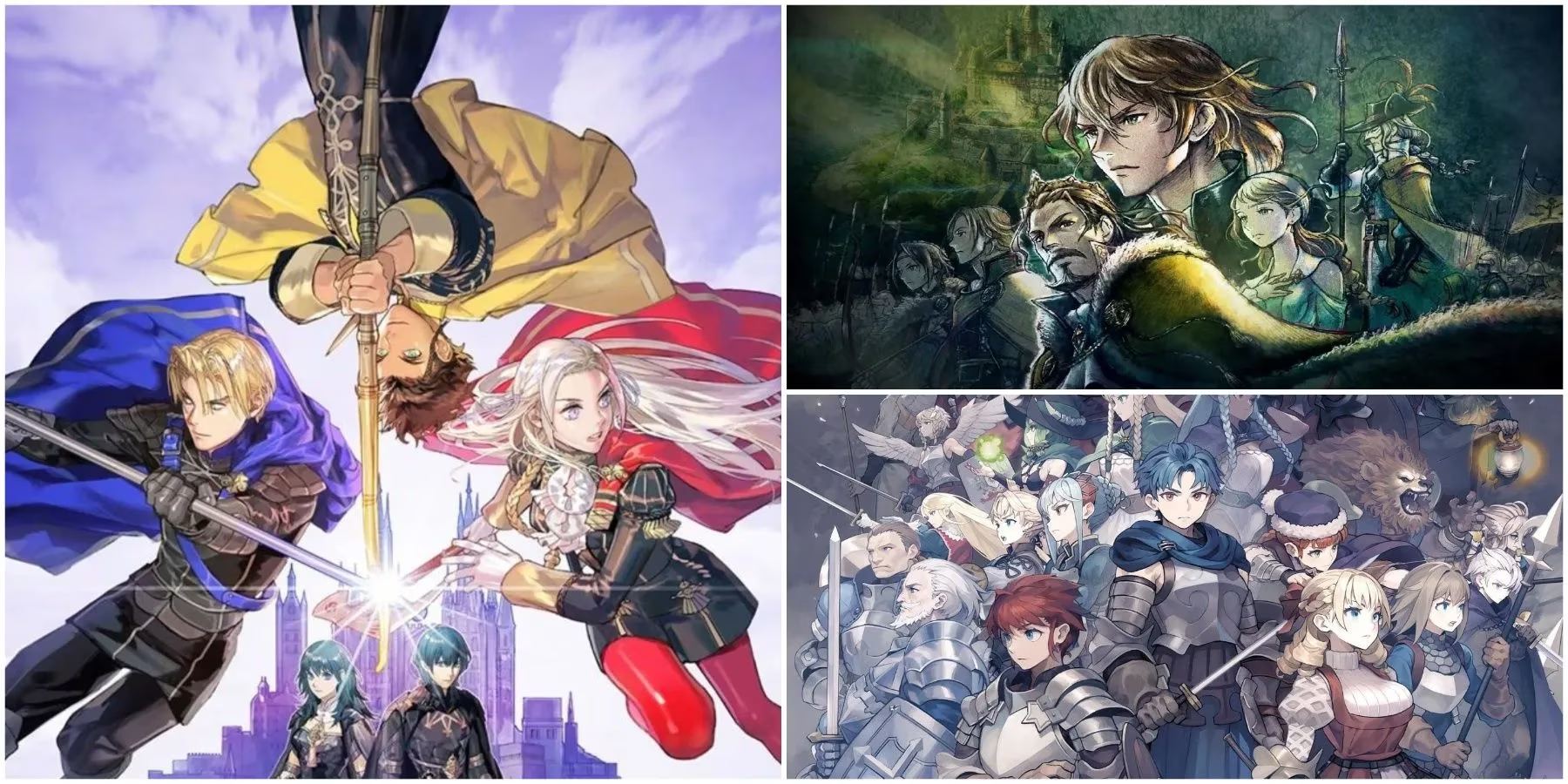
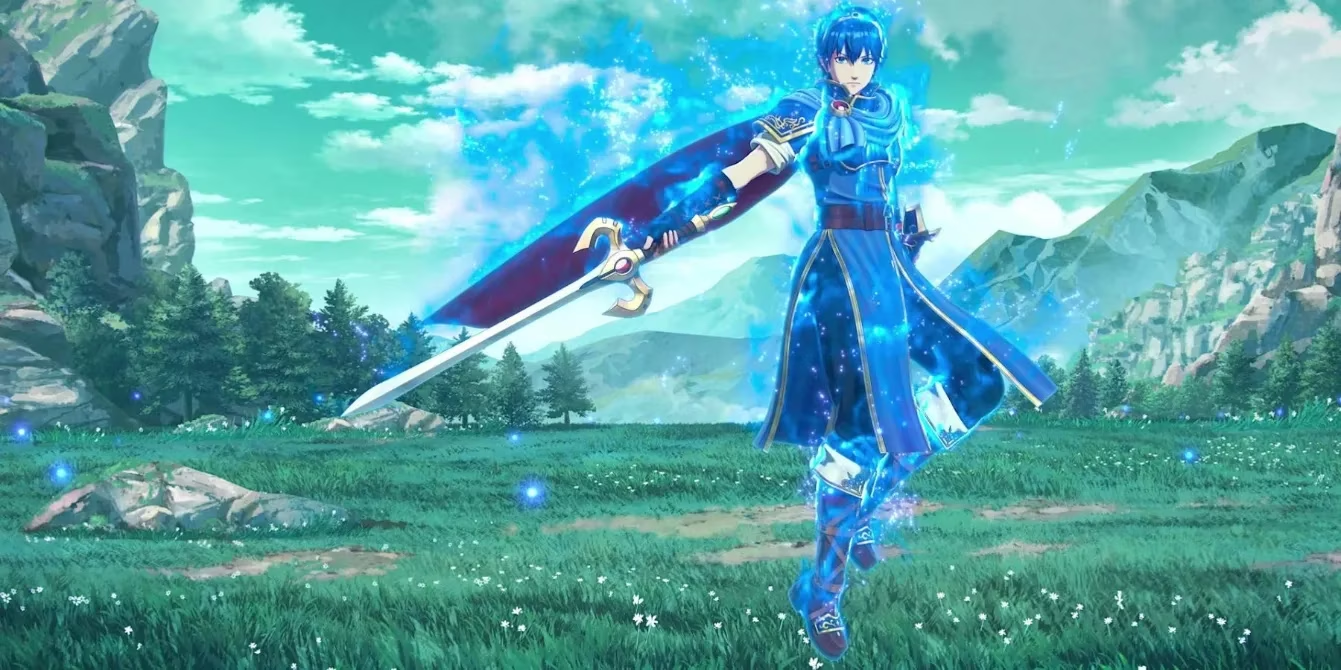
The Fire Emblem series has been a cornerstone of the Switch's strategy portfolio. Fire Emblem Engage presents a vibrant, celebratory chapter in the franchise's history. The narrative follows Alear, a divine dragon awakening from a millennium-long slumber to reclaim the powerful Emblem Rings, each containing the spirit of a legendary hero from Fire Emblem's past. This mechanic is not just a nostalgic callback; it functions like a tactical symphony conductor, allowing units to harmonize with these emblems to unlock stat boosts, new skills, and transformative combat states. The triumphant return of the Weapon Triangle—a rock-paper-scissors system for weapon types—alongside new features like Chain Attacks and Chain Guards, creates a gameplay loop that is both strategically rich and intensely satisfying. While it may not have reinvented the wheel like its predecessor, Engage carves its niche as a polished, challenging, and joyfully animated tactical experience.
Its predecessor, Fire Emblem: Three Houses, remains a titan of the genre. It masterfully blended tactical warfare with deep social simulation and role-playing elements set within the Officers Academy. Players choose one of three houses, each led by a compelling lord—Dimitri, Edelgard, or Claude—and guide their students through a story that evolves from academic rivalry into a continent-shattering war. The game's systems are a complex, interlocking clockwork of relationships, skills, and battalion management. Mechanics like the Divine Pulse (which allows for rewinding turns) and the deployment of large battalions made skirmishes feel epic in scale. With its mature narrative, immense replay value across three distinct routes, and a cast of unforgettable characters, Three Houses is often hailed as the pinnacle of turn-based strategy on the Switch.
🎮 Revivals and Refinements: Classic Formulas Reimagined
Several titles have successfully resurrected and refined beloved formulas. Advance Wars 1+2: Reboot Camp answered the prayers of long-dormant fans, delivering a gorgeous, modernized package of two timeless classics. It faithfully preserves the core appeal of building units, capturing cities, and outmaneuvering rival Commanding Officers on colorful, grid-based maps. The streamlined difficulty curve ensures newcomers can learn while veterans face formidable late-game challenges. Though its story is simple and some multiplayer aspects feel dated, Reboot Camp is a masterclass in pure, accessible strategy.
Following a similar spirit, Wargroove emerged as a brilliant homage to Advance Wars, wrapped in a charming medieval fantasy aesthetic. It took the foundational formula and added its own twists, including heroic commanders with unique "Groove" abilities and a robust map/campaign editor. The game's design philosophy ensures every unit, from humble soldiers to mighty dragons, has a crucial role to play. Its level design is a delicate puzzle box of elevation, chokepoints, and victory conditions, demanding thoughtful planning and adaptation. Wargroove proved the timelessness of the formula and built a passionate community around its creative tools.
🏰 Narrative Depth and Tactical Nuance
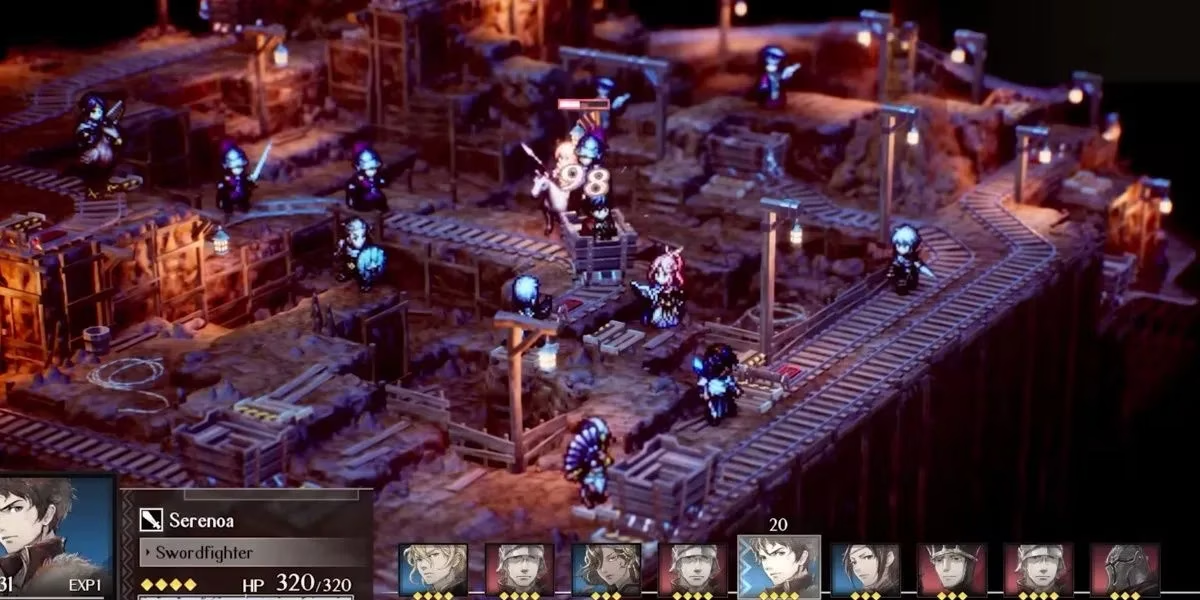
For players seeking strategy woven into epic, choice-driven narratives, two games stand out. Triangle Strategy (a spiritual successor to the Ogre Battle series) plunges players into a land torn by resource wars, political intrigue, and moral ambiguity. The story of Serenoa Wolffort is shaped by a unique Scales of Conviction system, where player choices at key junctures determine the narrative path and which allies join the cause. Its combat, while using a more straightforward class system, emphasizes environmental mastery, leveraging elevation, elemental synergies, and back attacks. The game's political drama and weighty decisions make each battle feel consequential.
Then there is Tactics Ogre: Reborn, a meticulous remake of a genre-defining classic. This game is a dense, historical tapestry of war, betrayal, and impossible choices. Its story, following Denam Pavel through a brutal civil war, is renowned for its maturity and narrative branching. The remake adds full voice acting, a rebalanced difficulty curve, and quality-of-life improvements while preserving the deep, tactical combat. With a vast array of classes, skills, and the fate-altering Wheel of Fortune (tarot) system, it offers near-endless strategic customization and remains a benchmark for story-driven tactical RPGs.
🦄 The New Vanguard: Unicorn Overlord
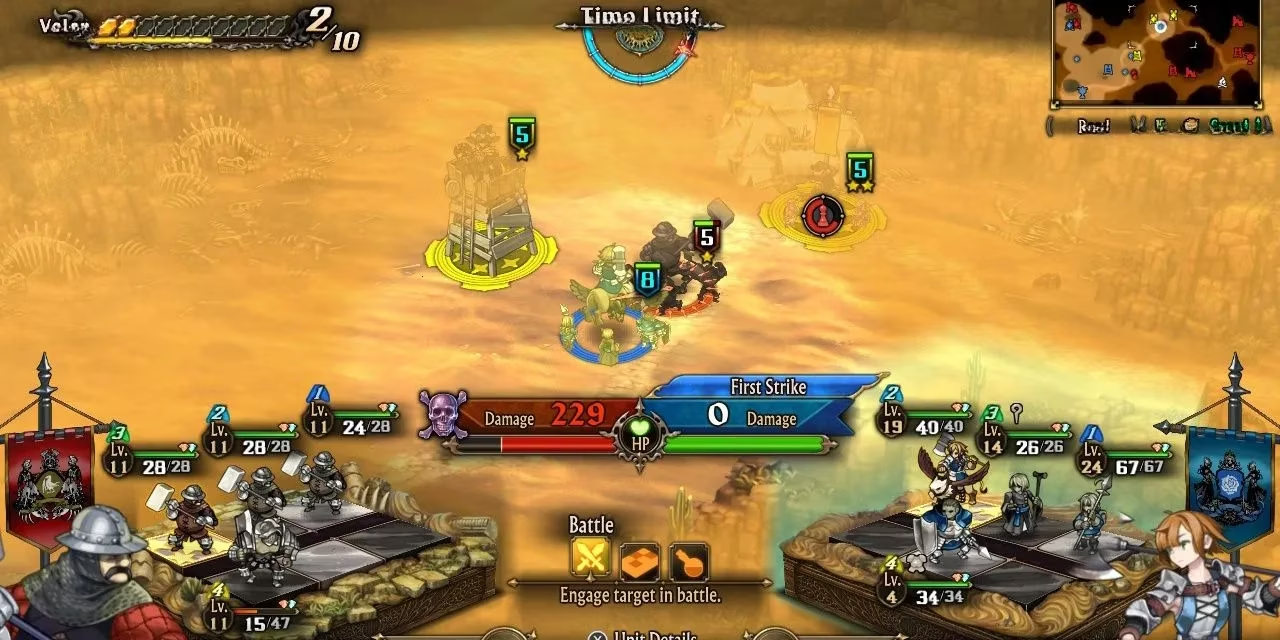
The genre's forward momentum is perhaps best exemplified by Unicorn Overlord, Vanillaware's 2024 masterpiece that has captivated strategy fans. It brilliantly innovates on the traditional formula by allowing players to create and deploy custom squads within a single unit slot on the battlefield. This "formation" system turns army composition into a deep, deck-building-like exercise in synergy, where balancing vanguards, rearguards, and their combined skills is paramount. Players must manage real-time exploration on the overworld, unit stamina, and dynamic battle conditions. Coupled with Vanillaware's signature breathtaking art style and a compelling tale of liberation, Unicorn Overlord has quickly cemented itself as a modern classic and a bold new direction for the genre.
📈 The State of the Genre in 2026
Looking at the current landscape, the Nintendo Switch's role in the turn-based strategy revival is undeniable. The success of titles like Unicorn Overlord has demonstrated a robust market appetite, paving the way for further innovation. The genre's health is evident in the diversity of experiences available:
| Game | Core Appeal | Notable Feature |
|---|---|---|
| Fire Emblem: Three Houses | Epic Narrative & Social Sim | Three divergent story routes, teaching mechanics |
| Unicorn Overlord | Innovative Squad-Based Tactics | Real-time exploration with formation-based combat |
| Tactics Ogre: Reborn | Mature Story & Deep Customization | Branching narrative paths (Chaos/Law/Neutral) |
| Advance Wars 1+2: Reboot Camp | Pure, Accessible Strategy | Classic unit production & territory control |
| Triangle Strategy | Moral Choice & Political Drama | Scales of Conviction voting system |
| Wargroove | Charming Homage & Creativity | Robust map/campaign editor & pixel-art charm |
| Fire Emblem Engage | Celebratory Fan Service & Polish | Emblem Ring fusion with legacy heroes |
The console has become a nurturing ground where classic series can find new audiences (Advance Wars, Fire Emblem), revered classics can be reborn (Tactics Ogre), and entirely new IPs can thrive (Unicorn Overlord, Triangle Strategy). As the industry looks ahead to anticipated titles and further experiments, the Nintendo Switch's catalog stands as a compelling argument that thoughtful, turn-based strategy is not just alive and well—it's thriving, evolving, and more engaging than ever. For any player with a tactical mind, the Switch remains an indispensable command console.