Let me tell you, fellow strategists, I feel ancient. Here we are in 2026, and the legendary Fire Emblem: Shadow Dragon and the Blade of Light has reached the grand old age of thirty-five. That's right, for three and a half decades, Nintendo's tactical titan has been expertly crafting worlds only to force us to watch our most cherished digital companions perish within them. Back when Marth and Roy were just cryptic cameos in Super Smash Bros. Melee, we had no idea the emotional gauntlet we were signing up for. But once you step onto that grid, you learn the series' fundamental, unforgiving truth: Permadeath is a brutal, beautiful, and utterly essential tyrant.
I cut my teeth on Advance Wars, where commanders were cold, calculating gods of war. You'd churn out battalions of nameless infantry and cutesy tanks, shrugging off losses as mere numbers on a spreadsheet. Victory through attrition was the name of the game, and sentimentality was a weakness. Then Fire Emblem crashed into my life and rewired my entire strategic brain. This wasn't about faceless armies; this was about people. Named, nuanced, narrative-driven people with hopes, fears, and fabulous hair. Losing a unit in Advance Wars was an inconvenience. Losing one in Fire Emblem? That was a personal tragedy, a gaping hole in your roster and your heart.
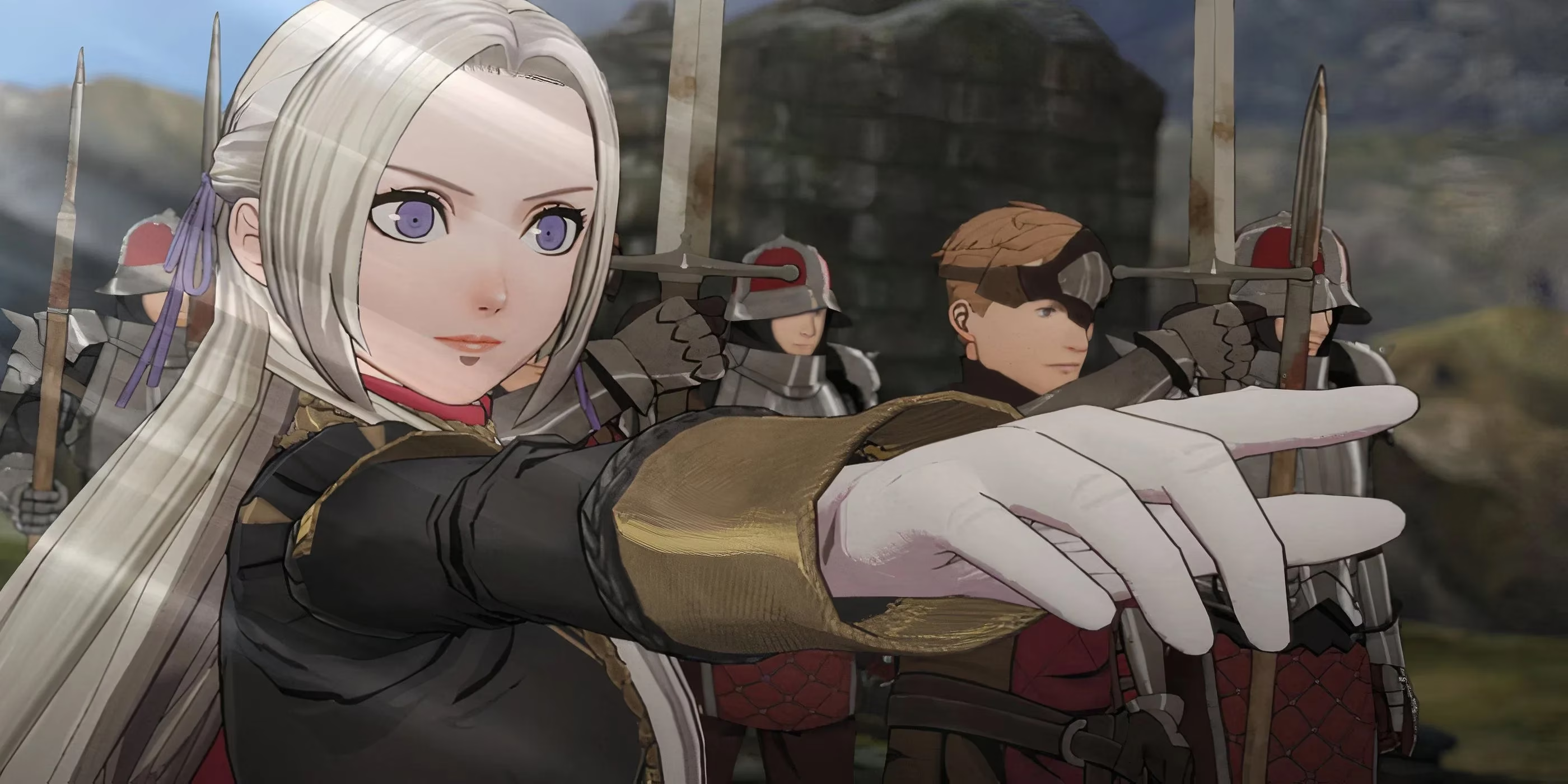
The series masterfully blends cold, hard tactics with scorching, raw emotion. Every decision carries weight far beyond the battlefield. You're not just managing weapon triangles and class promotions; you're nurturing bonds, mending broken spirits, and playing matchmaker. The modern pinnacle of this philosophy, 2019's Fire Emblem: Three Houses, didn't just raise the stakes—it launched them into the stratosphere. The game forces you to live with your students at the Garreg Mach Monastery. You share meals, handpick gifts, and listen to their deepest anxieties. You learn that the perpetually drowsy Linhardt restores HP by napping (Catnap skill, of course), and you gently coax the reclusive Bernadetta out of her room and, eventually, into accepting your proposal ring. These aren't just combat units; they're virtual confidantes.
And the game makes you pay for every ounce of that attachment. The Support system, which visually 'ranks up' friendships and romances, is a devilishly clever mechanic. Those heartwarming conversations don't just develop character; they grant tangible, game-changing combat bonuses when paired units fight together. The game whispers: Care for them, and they'll fight harder for you. It makes you complicit in your own eventual heartbreak.
Why 'Casual Mode' Feels Like Heresy
I know the newer games offer a 'Casual' mode, where fallen units merely retreat. To me, that's like ordering a five-alarm chili and asking them to hold the spice. You're removing the series' defining, devastating flavor. The constant, gnawing fear of loss is what transforms a simple tactical puzzle into a high-wire act of emotional management. On the harder difficulties, every enemy phase is a pulse-pounding exercise in risk assessment. Is pushing Petra forward to secure a kill worth exposing your precious healer, Mercedes? Can you afford to let Sylvain tank that hit, or will the RNG gods decide today is his day to meet the goddess?
The cruel genius of Three Houses is how it weaponizes your affection.
The time-skip is Nintendo's most devastating narrative maneuver yet. After years of nurturing these students, the war tears you apart. You return to find older, harder versions of your friends staring you down from across the battlefield. They voice their regret, their conflicted loyalty, their heartbreaking resolve. You are no longer fighting generic brigands; you are systematically eliminating the very souls you swore to protect. I will never forgive the game for making me cut down Ferdinand von Aegir in all his post-timeskip, fabulously maned glory. The dialogue, the music, the sheer narrative weight—it turns every skirmish into an emotional execution.
Fire Emblem doesn't just simulate war; it simulates its emotional toll. It forces you to confront the horrific reality that in conflict, you lose people—people who mattered. The permadeath mechanic is the engine of that experience. It's what separates this series from every other tactical RPG on the market. So, as we celebrate 35 years of this magnificent, masochistic franchise, I raise a vulnerary to the fallen. To Matthew, to Neimi, to every Jagen that sacrificed himself to save my Lord. Your pixelated deaths were not in vain. You taught me that in the world of Fire Emblem, true strategy is measured not just in victories, but in the hearts you manage to keep beating.