Let's talk about one of my favorite narrative tools in video games: the identity twist. You know the feeling – you've spent hours, maybe dozens of hours, getting to know a character, forming an opinion, building a rapport. Then, the game pulls the rug out from under you. That trusted ally? A traitor. That harmless student? An assassin in disguise. It’s a classic move, but when done right, it can completely redefine a story and leave you reeling. I've seen it used in so many ways over the years, and it never gets old. Sometimes it elevates a side character to legendary status; other times, it turns a hero into the ultimate villain. The motivation behind the mask is what truly fascinates me. Is it duty? Survival? Malice? Or something far more tragic? Today, I want to dive into some of the most memorable impostors and double agents I've encountered in my gaming journey, exploring not just who they pretended to be, but why they did it.
The Student Who Wasn't There: Monica von Ochs / Kronya
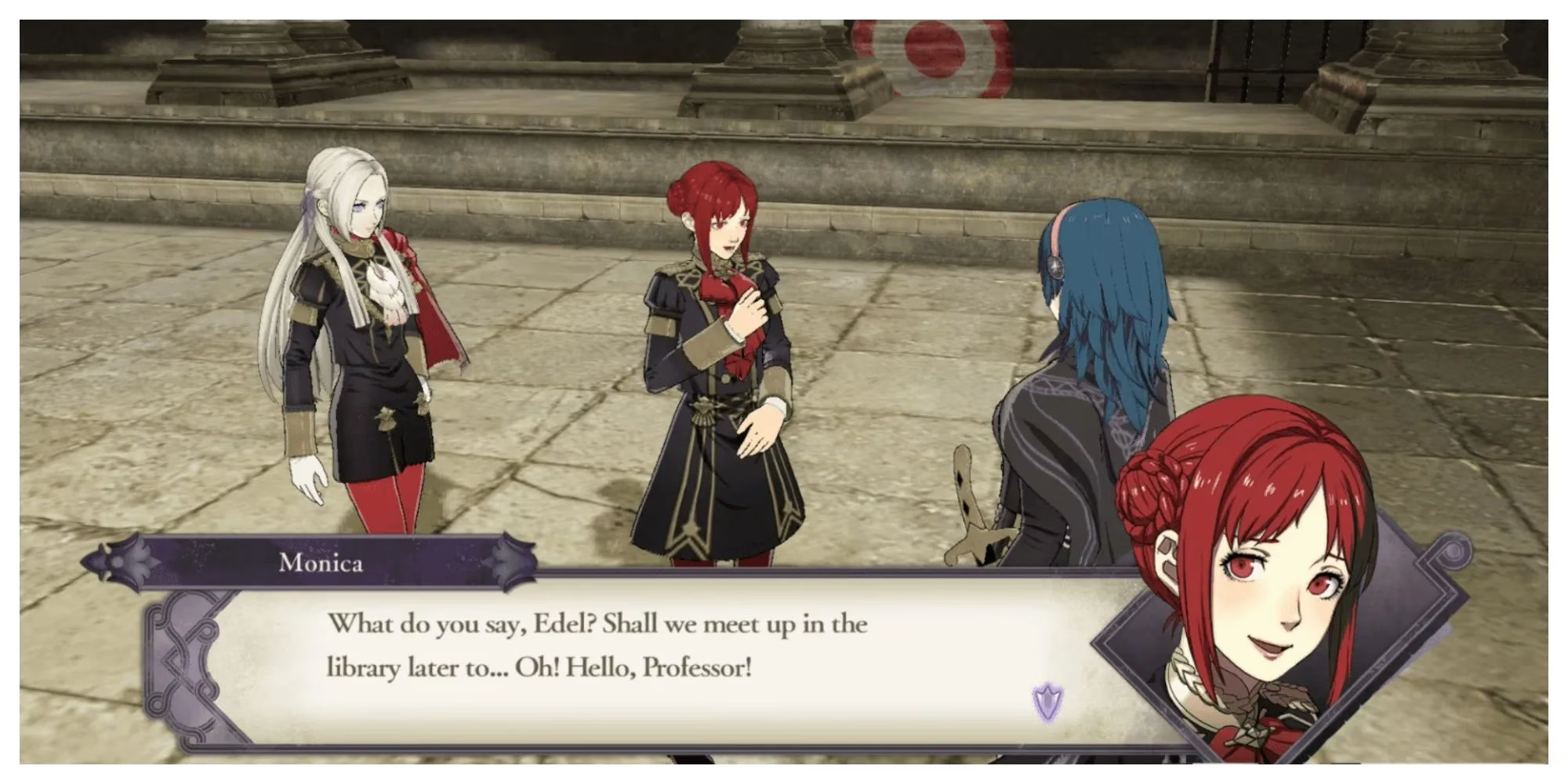
My first example takes us back to the halls of Garreg Mach Monastery in Fire Emblem: Three Houses. Remember Monica von Ochs? She was that Black Eagles student who vanished right before graduation, only to be 'rescued' from the Death Knight by Professor Byleth. When she returned, she seemed... different. More relaxed. Almost playful. Her old classmates noticed it too – this wasn't the Monica they remembered. She was particularly close with Edelgard, which, in hindsight, was our first big clue.
The gut punch came later. Sweet, recovered Monica was a lie. She was actually Kronya, a sadistic agent of Those Who Slither in the Dark. The real Monica had been killed, her identity stolen to give Kronya a perfect cover within the monastery. Seteth theorized it was a simple infiltration tactic, but her role was far more specific: she was the liaison to Edelgard, facilitating the princess's fateful alliance with the shadowy group to overthrow Archbishop Rhea. Kronya’s disguise wasn't just about hiding; it was about enabling a continent-wide war from the heart of the enemy's stronghold. Her end was fittingly brutal – sacrificed by her own ally, Solon, in a failed ritual. It’s a stark reminder that in Fódlan, trust is the most dangerous commodity.
What’s fascinating is the alternate timeline presented in Fire Emblem Warriors: Three Hopes. Here, the real Monica does survive, rescued by Shez. This version of Monica is a fiercely loyal, almost obsessively detail-oriented devotee of Edelgard. Playing both games gives you this eerie perspective: one timeline shows you the terrifying imposter, the other shows you the genuine article who was erased. It deepens the tragedy of the original twist immensely.
The Villain with a Secret Duty: Fassad / Locria
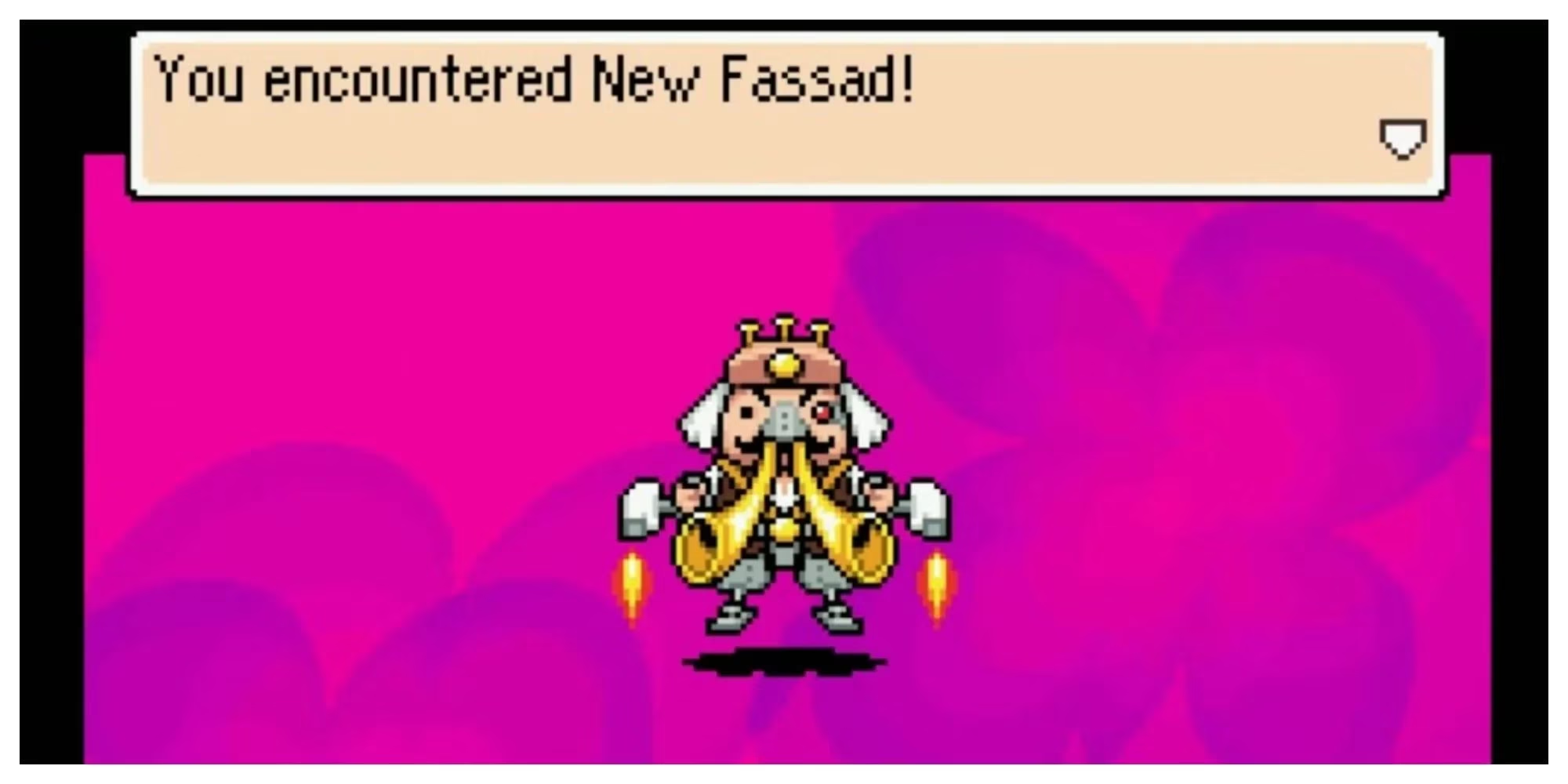
Now, let’s shift to something more poignantly mysterious: Fassad from Mother 3. Here was a character I loved to hate. A cruel, smarmy agent of the Pigmask Army, he forced commercialized 'happiness' onto the peaceful village of Tazmily with a sneer. He was a recurring thorn in Lucas's side, even coming back as a horn-mouthed cyborg who needed an interpreter! After we finally beat his final form, Miracle Fassad, he tumbled into the sewers, presumably dead. Good riddance, right?
Well, the game had one last, quiet revelation for us. Mother 3 features a magical tribe bound to protect the Seven Needles, which are tied to a prophecy about the Dark Dragon. We meet six of them: Aeolia, Doria, Lydia, Phrygia, Mixolydia, and Ionia. The seventh, Locria, is absent... until you find his empty house. And what's in the house? Horns. Bananas. Peels. The signature trappings of Fassad. The realization dawns slowly: the despicable Fassad was the missing Locria.
This twist is unique because it’s delivered posthumously and through environmental storytelling, not a dramatic cutscene. Fassad’s cruelty wasn't for personal gain; it was a twisted, corrupted performance of his sacred duty. As a member of the tribe, his life was linked to a Needle. His actions, as horrible as they were, were part of the world's mechanistic fate. It reframes every horrible thing he did, not as the acts of a simple villain, but as the tragic breakdown of a guardian. It doesn’t excuse him, but it adds a layer of profound sadness that’s pure Mother series brilliance.
The God in Hero's Clothing: Perseus / Loki
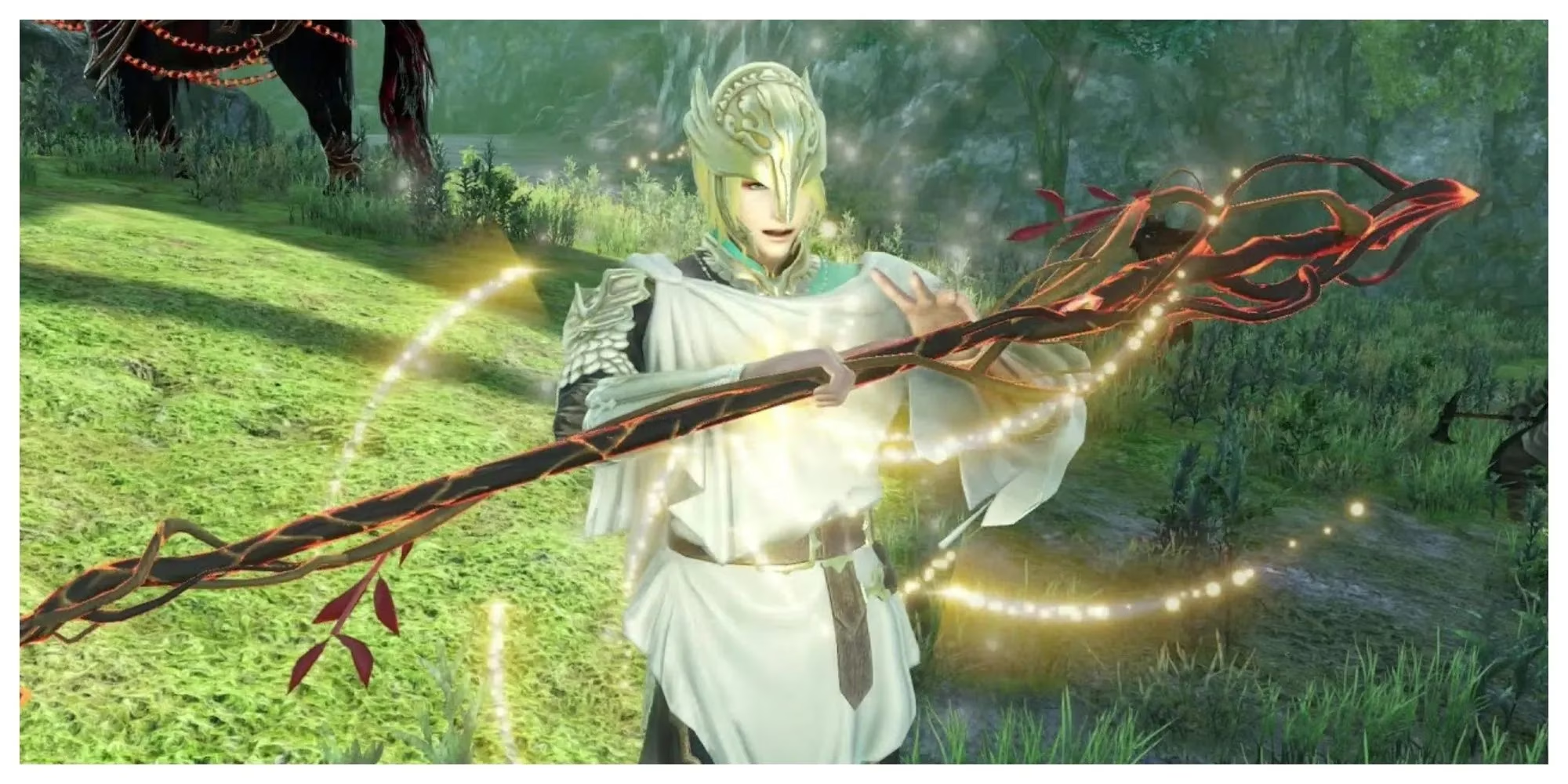
Mash-up games like Warriors Orochi are a playground for identity shenanigans, and Warriors Orochi 4 delivered a fantastic one with Perseus. Here was the legendary Greek hero, son of Zeus, fighting valiantly alongside the Coalition Army against his own father's forces. He formed a genuine bond with the samurai Yukimura Sanada. He felt like a noble ally, a demigod making the hard choice to fight for what's right.
Nope. It was all an act. 'Perseus' was actually Loki, the Norse trickster god, working for Odin. His entire presence was a plot to stir conflict between the Olympians and the Coalition, weakening both for Odin's eventual conquest. Now, this is where the story gets good, especially in the Ultimate version. It turns out Loki and the real Perseus were actually friends. They planned to spy on the gods for Gaia. Odin, suspicious, forced them to fight to the death to prove their loyalty. In an act of ultimate friendship, the real Perseus let Loki win, allowing the trickster to live on in his guise.
So, Loki’s deception started as a survival tactic, then became a weapon of war, but was rooted in a personal tragedy and a debt to a fallen friend. If you go the extra mile in Ultimate and collect Perseus's fragments to revive him, you get the true ending where the restored hero exposes Hades's own schemes. This twist isn't just 'the hero is the villain'; it's a layered story of friendship, sacrifice, and deception that spans multiple pantheons. Loki wasn't just hiding who he was; he was hiding why he was there, and the grief that came with it.
The King in Exile: DiZ / Ansem the Wise
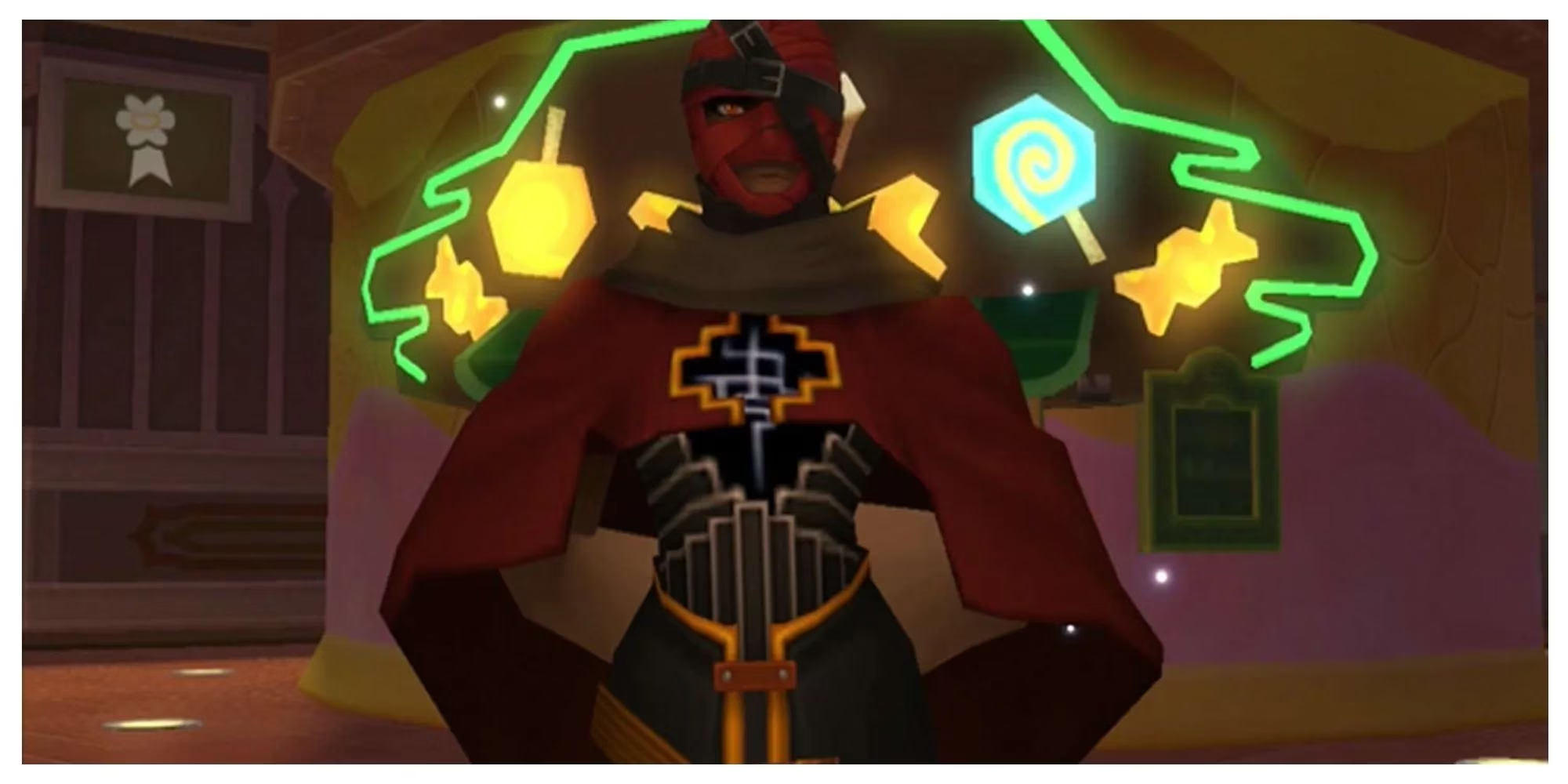
The Kingdom Hearts series is built on secrets and alter egos, but the reveal of DiZ stands out. When we first meet this mysterious, bandaged figure in Chain of Memories, he’s posing as Ansem, Seeker of Darkness, manipulating Sora and Naminé from the shadows. Throughout Kingdom Hearts II, he’s this enigmatic, almost antagonistic figure pulling strings, driven by a vendetta we don't fully understand. His plans keep failing because, as he admits, he can't comprehend the human heart.
His true identity, revealed after a Heartless attack, was a shocker: he was Ansem the Wise, the former ruler of Radiant Garden. His alias, DiZ (Darkness in Zero), was born from necessity after his own apprentices, led by Xehanort, betrayed him and banished him to the dark realm. He adopted the disguise after his escape, a broken king consumed by a need for atonement and revenge against Organization XIII—a group led by Xemnas, the Nobody of his fallen apprentice.
Ansem's deception was a shield of shame and purpose. He hid because his past actions—his fear-driven experiments into the heart's darkness—had directly led to the chaos consuming the worlds. He wasn't a villain pretending to be a guide; he was a tragically flawed creator trying to clean up his own catastrophic mess. His story arc from shadowy manipulator to a man seeking redemption is one of the most compelling in the series. He didn't just hide his name; he hid the weight of his own guilt.
The Phantom Detective: Bobby Fulbright / The Phantom
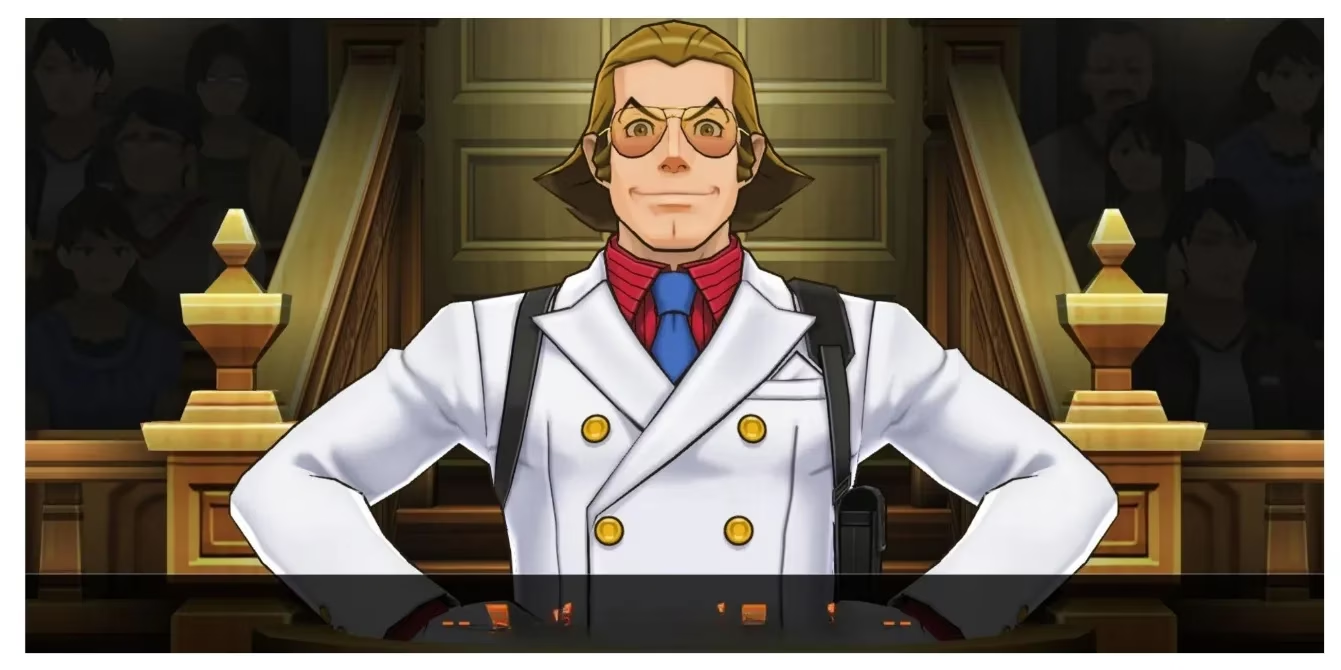
Finally, let's talk about a twist that genuinely fooled me in the moment: Bobby Fulbright from Ace Attorney: Dual Destinies. Fulbright was the new detective, a boisterous, loud, and endlessly cheerful foil to the brooding, imprisoned prosecutor Simon Blackquill. He was the series' new Gumshoe—a lovable, goofy, justice-obsessed cop who helped (and sometimes hilariously hindered) your investigations. He was in every case, a constant, trustworthy presence. The Ace Attorney formula had trained me to trust the detective.
That's what made the reveal so effective. Detective Bobby Fulbright had been dead for years. The man we'd been working with was the Phantom, an international spy and master of disguise who had murdered the real Fulbright and stolen his life. This wasn't a simple culprit; this was a remorseless agent responsible for terrorism, including a courtroom bombing, and the one who framed Simon Blackquill for murder. The goofy persona was a meticulously crafted mask.
The brilliance is in the subversion. Ace Attorney culprits are usually introduced and defeated within a single case. The Phantom was with us the entire game, exploiting our genre-conditioned trust. When the reveal happened—when his 'perfect' mask of fearlessness finally cracked because Athena Cykes sensed his true, hidden terror—it was a masterstroke. His disguise wasn't for a short con; it was a long-term, deep-cover operation to monitor Blackquill and serve his unknown masters. The cheerful cry of "Justice is served!" took on a horrifically ironic new meaning. It’s a twist that uses the series' own conventions against the player, and it’s utterly unforgettable.
Why These Twists Resonate in 2026
Looking back at these characters from my perspective now, in 2026, what strikes me is how these twists are about more than just shock value. They explore core themes:
-
The Burden of Legacy & Identity: Ansem and Fassad/Locria are both trapped by their pasts and titles, their disguises a form of escape or corrupted duty.
-
The Performance of Self: Kronya and the Phantom are pure actors, their entire presented selves a weaponized fiction.
-
Friendship and Sacrifice: Loki's deception is built on the corpse of a friend's sacrifice, adding profound tragedy to the trickery.
In an era of gaming where narratives are deeper and more complex than ever, these identity twists remain powerful because they target the fundamental relationship between player and character. They make us question our perceptions and invest emotionally in uncovering the truth. The best ones, like these, don't just change the story; they change how we remember every interaction we ever had. And honestly, as a gamer, I wouldn't have it any other way. The moment of revelation, that delicious, heart-dropping 'oh no' or 'oh WOW' – that's the magic we play for.