In the vast ocean of interactive storytelling, some experiences stand out like intricate tapestries woven with threads of divergent fates. As we navigate 2026, the legacy of games that dared to tell more than one story continues to inspire developers and captivate players seeking depth beyond linear narratives. These titles don't just offer branching paths—they construct entire parallel universes of consequence, where player agency becomes the loom upon which destinies are woven. The most memorable among them transform simple choice into architectural narrative, building cathedrals of story from the bricks of perspective.
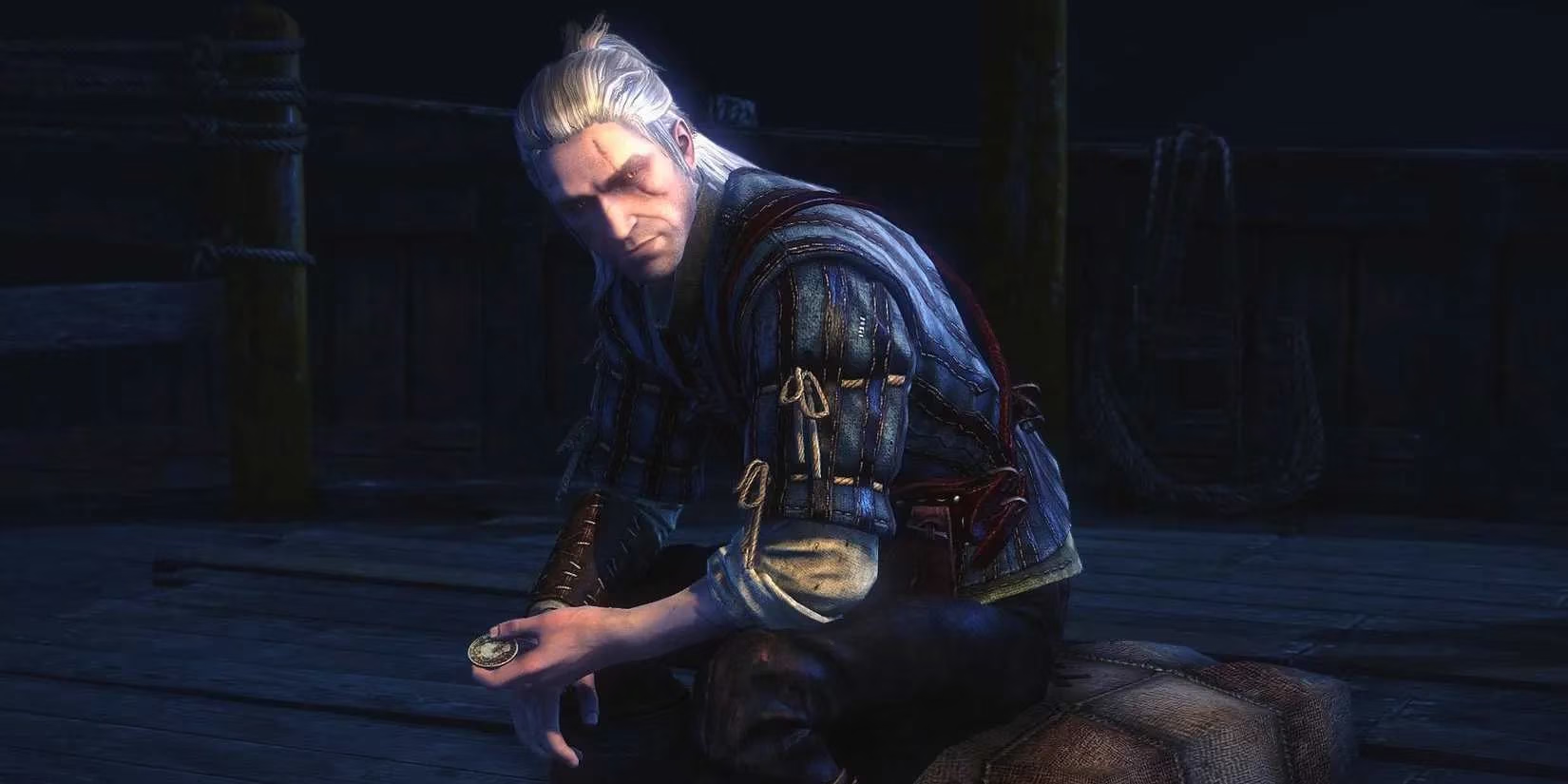
The Witcher 2: Assassins of Kings remains, even years later, a masterclass in narrative bifurcation. This dark fantasy RPG operates like a literary choose-your-own-adventure novel where a single decision—whether to return a sword during a crucial confrontation—splits the narrative into two entirely different continents of experience. Following Roche leads through political intrigue and military campaigns, while siding with Iorveth unveils a rebellion's struggle and magical conspiracies. The game's brilliance lies in how these paths feel equally substantial, each with unique characters, locations, and moral quandaries. CD Projekt Red crafted these parallel stories with such care that replaying feels less like repetition and more like discovering an alternate dimension where familiar faces wear different masks.
Octopath Traveler 2 carries the torch for JRPG innovation with its symphonic approach to storytelling. Imagine eight distinct melodies that gradually harmonize into a grand orchestral piece—that's the experience of guiding eight characters through their personal journeys. From Hikari's quest for redemption to Agnea's dream of stardom, each narrative thread possesses its own rhythm and emotional color palette. The game's "HD-2D" visual style serves as a perfect metaphor for its structure: pixel-art nostalgia layered with modern depth. What makes this approach revolutionary is how these stories intersect organically; characters don't merely meet for combat convenience but share meaningful moments that acknowledge their separate struggles while building toward a shared destiny.
| Game | Number of Storylines | Convergence Point |
|---|---|---|
| The Witcher 2 | 2 major paths | Never fully converge |
| Octopath Traveler 2 | 8 character arcs | Final chapters |
| Fire Emblem: Three Houses | 4 routes (including secret) | War's conclusion |
| Detroit: Become Human | 3 protagonist threads | Android revolution |
Fire Emblem: Three Houses presents its multiple narratives like a historical text written from competing nations' perspectives. Choosing between Edelgard's Black Eagles, Dimitri's Blue Lions, or Claude's Golden Deer isn't merely selecting a faction—it's adopting an ideology. The game's calendar system and school setting allow players to build relationships that will later be tested on battlefields where former students become enemies. This structure creates emotional complexity rarely seen in tactical RPGs; defeating a unit might mean killing a character you personally trained, whose tea preferences you memorized during peaceful academy days. The narrative operates like a prism refracting the same historical events through different colored lenses, revealing how perspective transforms truth.
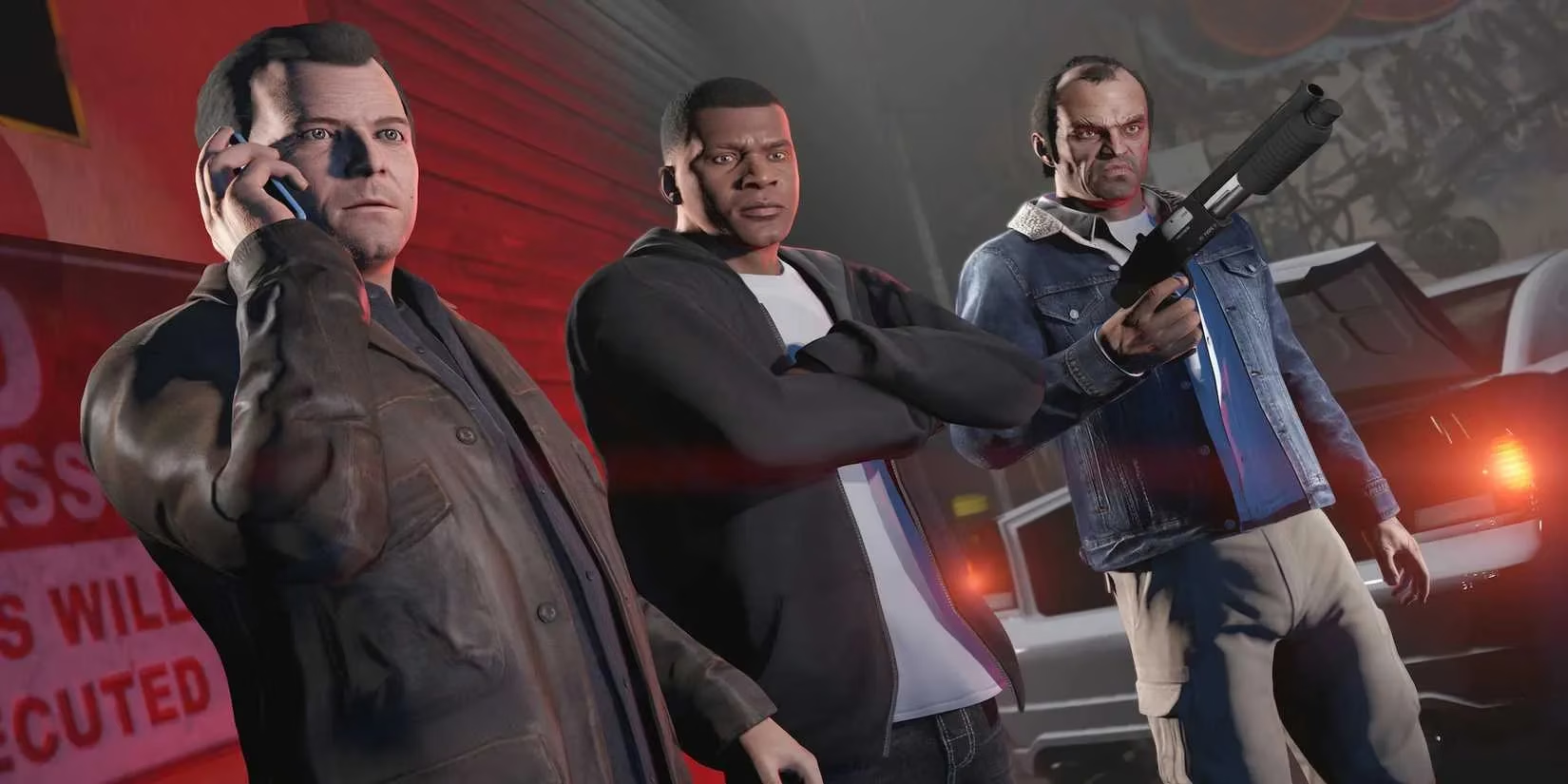
Grand Theft Auto V revolutionized open-world storytelling by treating its three protagonists as living components of a dysfunctional ecosystem. Switching between Michael, Franklin, and Trevor feels less like changing characters and more like channel-surfing through different cable networks—each with its own tone, conflicts, and dark humor. Rockstar's achievement was making these interwoven stories feel simultaneous rather than sequential; while you're helping Franklin with his real estate ventures, Michael's family drama continues evolving off-screen, and Trevor's meth empire expands in the desert. The heist missions where all three collaborate represent narrative convergence at its most thrilling, forcing players to consider how each character's specialized skills complement the others' weaknesses.
Detroit: Become Human approaches multiple storylines with the precision of a watchmaker assembling interconnected timepieces. Each android's journey—Connor's existential detective work, Markus's revolutionary awakening, Kara's maternal struggle—ticks forward with its own rhythm, yet all are synchronized by the same societal tension. Quantic Dream's branching narrative system creates what feels like a living flowchart where minor decisions ripple across all three stories. The narrative operates like a triple helix DNA strand: individually each thread follows its own logic, but together they encode the complete genetic blueprint of this android uprising. This structural brilliance ensures that even four years after its release, players continue discovering new narrative permutations, each revealing different facets of the game's central question about consciousness.
The Last of Us Part II employs dual narratives not as parallel lines but as mirrors facing each other, reflecting and distorting the viewer's perceptions. Naughty Dog's controversial masterpiece forces players to occupy opposing perspectives in a cycle of violence, creating what might be gaming's most uncomfortable form of empathy. The narrative structure functions like a psychological experiment: first we experience Ellie's quest for vengeance as righteous, then we're forced to retrace those events from Abby's perspective, discovering her own justifications and humanity. This isn't merely switching characters—it's undergoing narrative refraction, where the same events bend through different emotional prisms to reveal spectrums of moral ambiguity previously invisible.
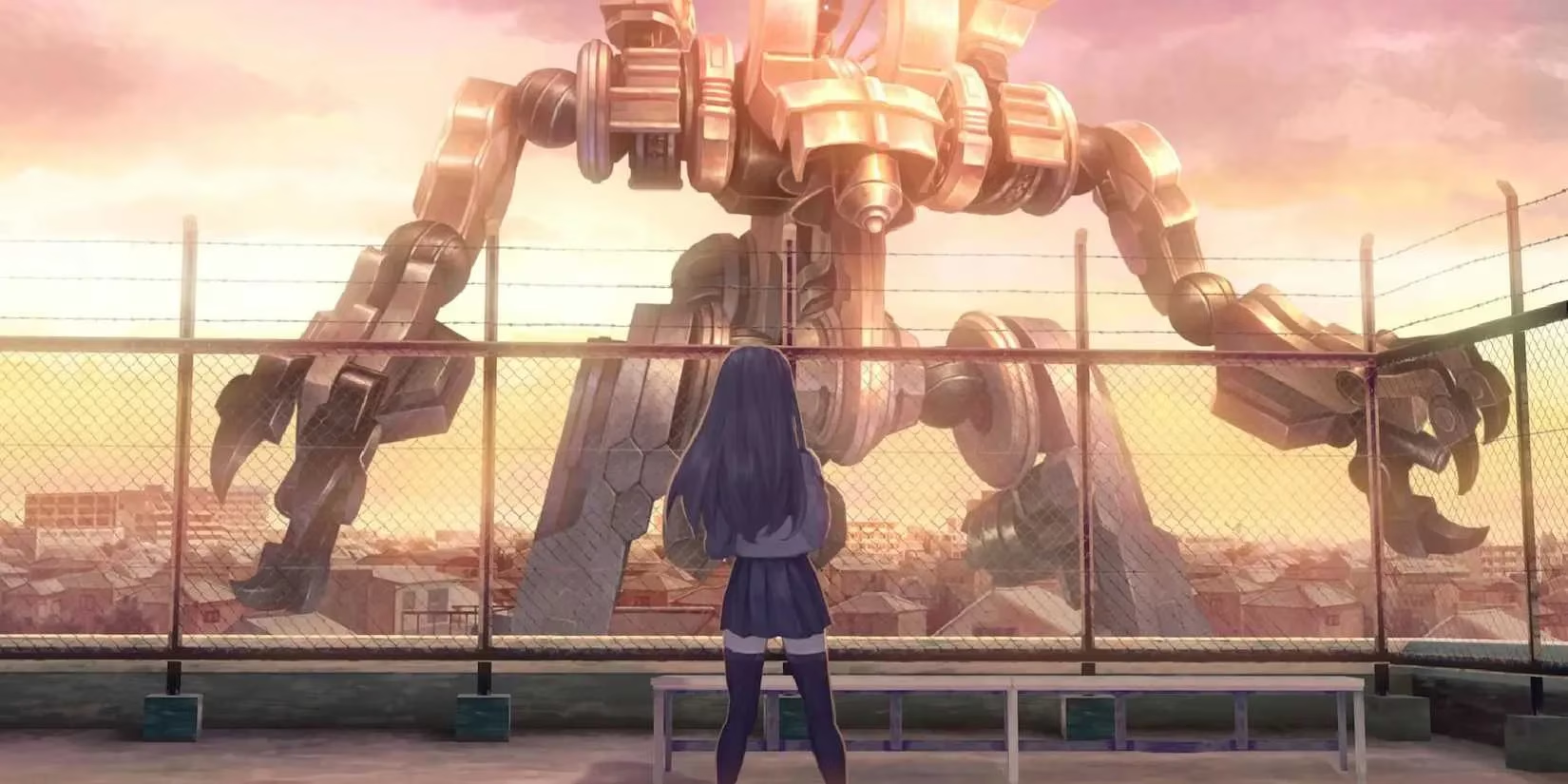
13 Sentinels: Aegis Rim constructs its narrative like a multidimensional puzzle box where each character's perspective represents a different tool for deciphering the truth. Vanillaware's sci-fi epic spans decades and dimensions through thirteen interconnected stories that initially appear disjointed but gradually reveal themselves as fragments of a single catastrophic event. The game's genius lies in how it withholds context: playing as one character might show a mysterious explosion, while another's perspective reveals it as a necessary sacrifice, and a third's exposes it as an accident. This creates what might be called "narrative triangulation"—only by experiencing all viewpoints can players deduce what actually occurred, making them active investigators rather than passive consumers.
Suikoden III remains a cult classic precisely because of its ambitious "Trinity Sight System." This PlayStation 2 gem presents its three main protagonists—Hugo, Chris, and Geddoe—as narrative vessels sailing the same turbulent political waters from different ports. Unlike games that force immediate character selection, Suikoden III allows substantial playtime with each before demanding commitment, creating informed emotional investment. The narrative operates like a medieval triptych: three panels that individually tell complete stories but together form a grander historical tableau. What makes this approach particularly effective is how character-exclusive scenes create narrative asymmetry—information one protagonist possesses remains hidden from others, mirroring how real conflicts develop from partial understandings.
Weird West transforms multiple storylines into what might be called a "narrative relay race," where completing one character's journey passes the baton to the next. This supernatural Western RPG features five distinct protagonists whose stories initially appear separate but gradually intertwine through shared locations, characters, and escalating cosmic threats. The retired bounty hunter, possessed native, werewolf, witch, and pig-bodied man each experience the same transforming frontier through different supernatural lenses. WolfEye Studios' innovative approach creates cumulative storytelling: decisions made as one character manifest as environmental changes or NPC attitudes for subsequent protagonists, making the world feel truly reactive rather than merely decorative.
Alan Wake 2 represents the current pinnacle of dual-narrative design, weaving its two protagonists' stories together like the double helix of a supernatural DNA strand. Remedy Entertainment's horror masterpiece alternates between Alan's surreal imprisonment in the Dark Place and Saga Anderson's investigation in the seemingly ordinary Bright Falls. These narratives don't merely run parallel—they infect each other: clues Saga discovers in reality manifest as manuscript pages in Alan's nightmare realm, while Alan's creative rewriting of reality alters Saga's crime scenes. The game's structure mirrors its central metaphor about storytelling's power: just as Alan writes to escape his prison, players must literally navigate between narratives to solve the mystery. This creates a uniquely participatory form of storytelling where switching characters feels less like a mechanical choice and more like cognitive cross-examination.
🎮 Why Multiple Storylines Resonate in 2026:
-
Reflects our interconnected digital age where multiple perspectives coexist
-
Maximizes replay value in an era of expansive game libraries
-
Creates communal discussion as players compare narrative paths
-
Allows for more nuanced exploration of moral complexity
-
Serves as technological showcase for modern gaming hardware
These games demonstrate that multiple storylines aren't merely a structural gimmick but a fundamental evolution of interactive storytelling. They acknowledge that truth is rarely singular, that heroes and villains depend on viewpoint, and that the most compelling narratives often emerge from the spaces between perspectives. As gaming continues to mature as an artistic medium, these multi-threaded experiences serve as beacons, illuminating how interactivity can transform narrative from something we consume into something we help weave—thread by thread, choice by choice, until the tapestry reveals patterns we couldn't perceive from a single vantage point. In an age of personalized algorithms and curated realities, these games remind us that understanding requires occupying more than one position, that empathy grows from seeing through others' eyes, and that the richest stories are those containing multitudes.