In the land of Elyos, where legends whispered of Divine and Fell Dragons locked in eternal war, one figure stood at the crossroads of both worlds—Alear. From the moment she opened her heterochromatic eyes, the world saw a clash of colors, but few understood the storm of identities raging beneath her skin. Her journey was not merely a quest to collect Emblem Rings; it was a slow, painful unraveling of a truth that would shatter every mirror she had ever looked into.
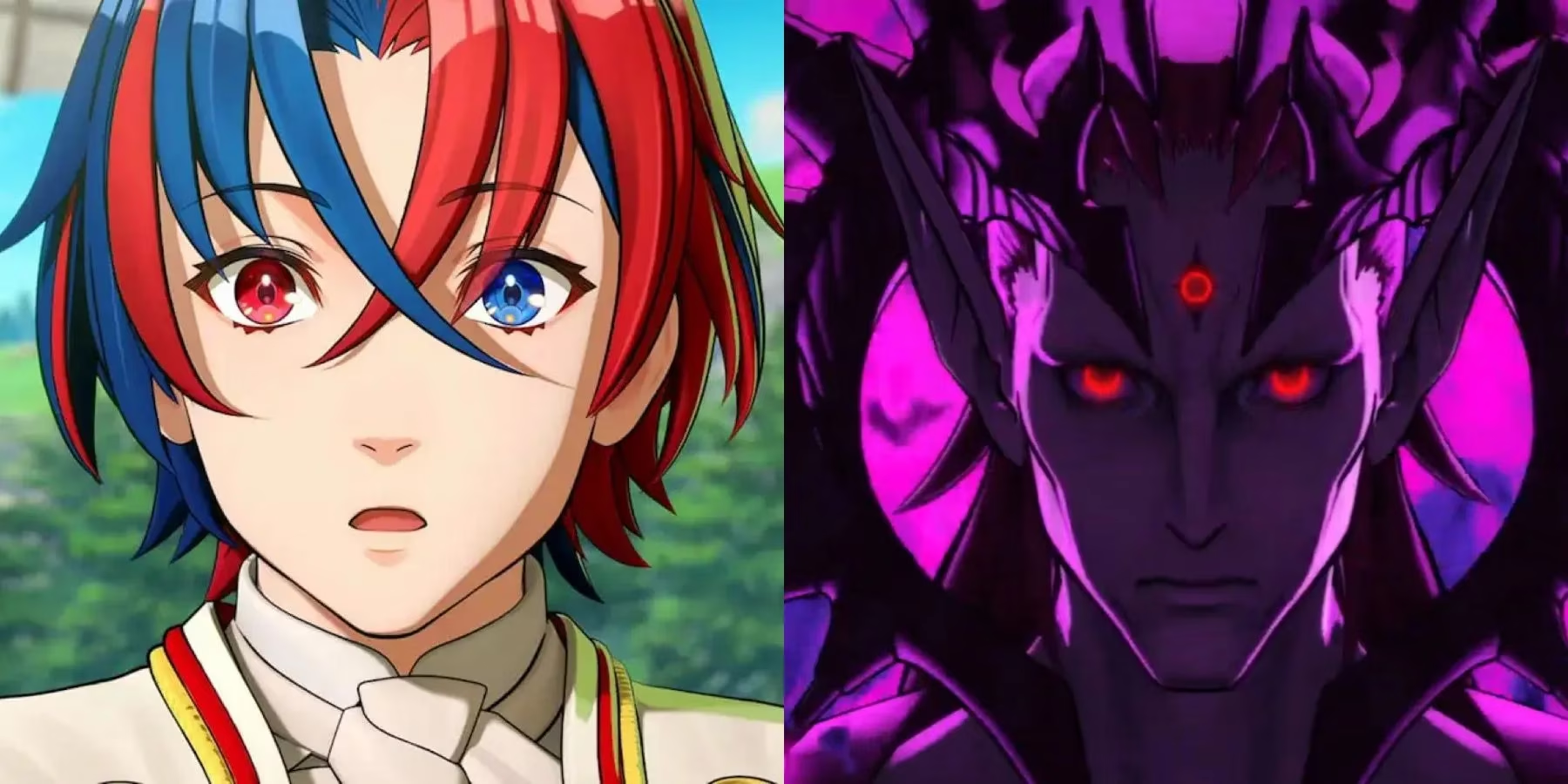
Alear’s hair was a cartographer’s nightmare—one half a serene azure, the other a bleeding crimson, as if two nations had waged war on her scalp and neither had won. It was not mere aesthetics; it was a living scar of her heritage. The blue whispered of the Divine Dragon Lumera, who had poured her own lifeforce into Alear so she might succeed the holy mantle. The red screamed of Sombron, the Fell Dragon who had fathered her in blood and darkness. This duality was a pendulum swinging between sacred and profane, and every beat of her heart was a negotiation that could tip the balance of the world. As a young girl training in the Somniel, Alear often caught her reflection in polished shields and wondered if she was a hero or a harbinger. The two colors never blended, a permanent fissure like a cracked locket holding two portraits that would never face each other.
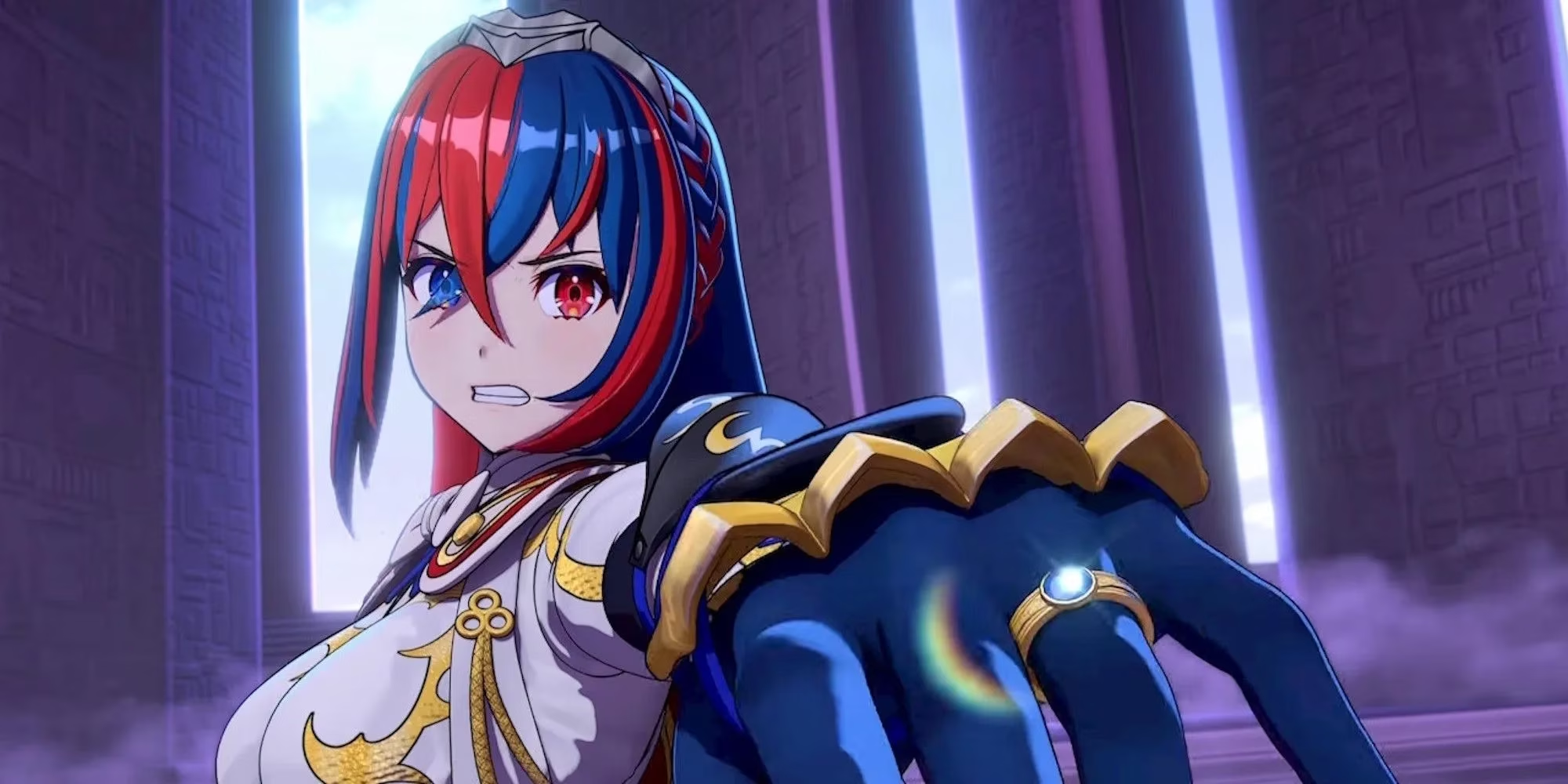
Her true nature erupted into the light when Griss, that sadistic servant of the Fell Dragon, sneered a revelation that turned her stomach to ice. "Fell Dragons summon Emblems by Invocations," he had said, and Alear realized with a choke that she had always done the same. The Emblems didn't answer her because she was a Divine Dragon—they answered because her blood was Sombron's. Yet unlike the hollow puppets her father commanded, Alear's summoned heroes laughed, wept, and offered counsel. Lumera's sacrifice had woven a second thread into the tapestry: free will. Alear was a chimera, a fusion of Fell authority and Divine empathy, making her the only being in Elyos who could call upon the Hero-King Marth and have him fight not as a slave, but as a friend. This contradiction was her greatest weapon, a double-edged blade that cut both her enemies and her own sense of self.
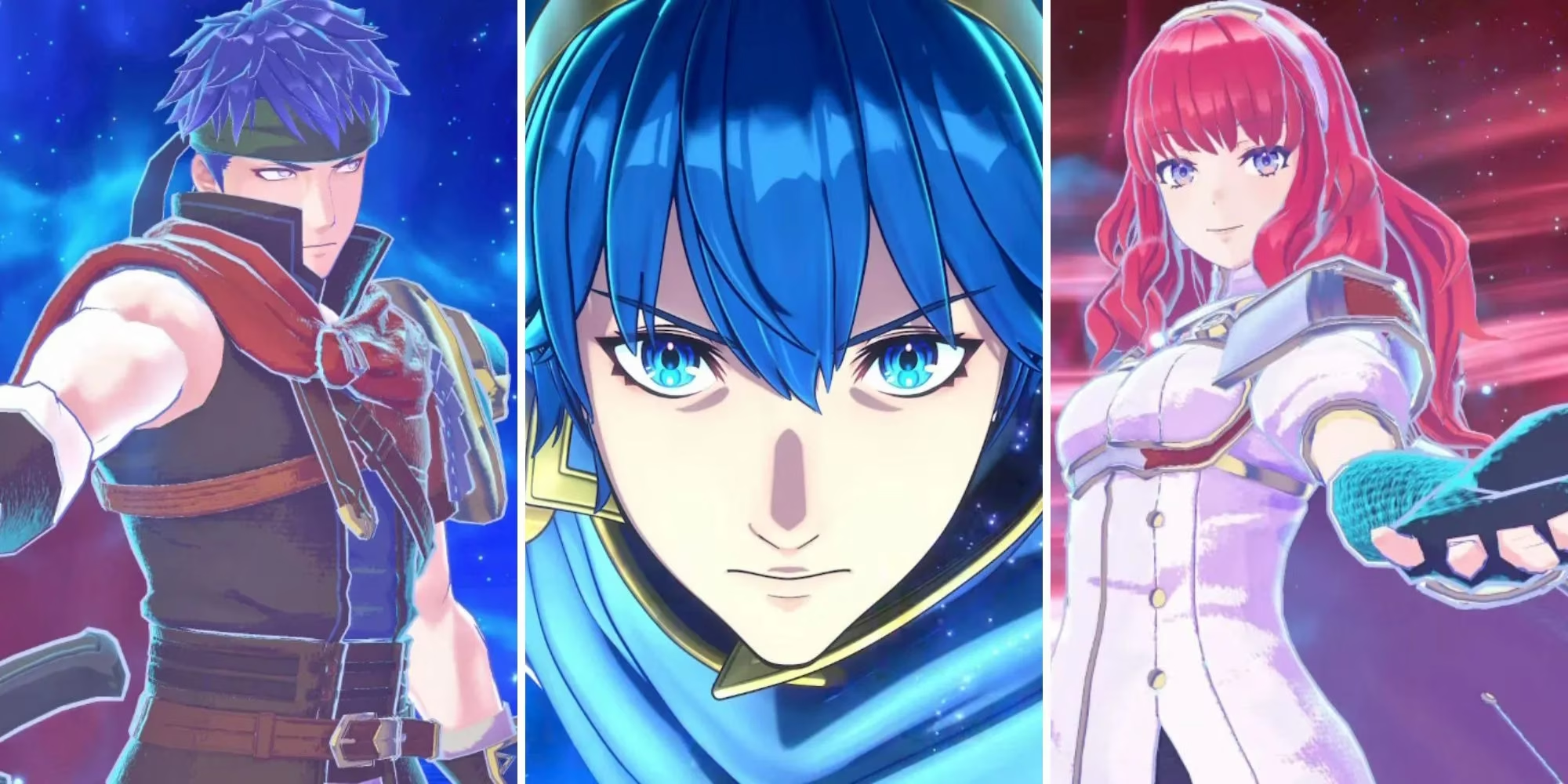
On the battlefield, Alear’s dual ancestry translated into a fluidity that left tacticians in awe. Her Dragon battle style turned Emblem Rings into instruments of breathtaking versatility. When Engaged with Corrin or Camilla, Alear could unlock every Dragon Vein—a feat impossible for pure-blooded knights who could only manipulate a single terrain. She could call forth healing mist, jagged stone spires, or suffocating miasma with the same ease as breathing. It was as if her body itself was a conductor's baton, and the land responded to her mixed blood by offering up all its secrets, not just the ones sanctioned by one tribe. Statistically, she was a jack-of-all-trades with no glaring flaw except a vulnerability to magic—a final irony for someone born of a supernatural lineage. Her growth rates were a mosaic: 35% strength, 20% magic, 50% speed, 40% defense, 25% resistance—a balanced palette that let a player sculpt her into a swordmaster, a wyvern lord, or anything in between. This adaptability was like clay in the hands of fate, never hardening into a single shape because her ancestry itself refused to be boxed in.
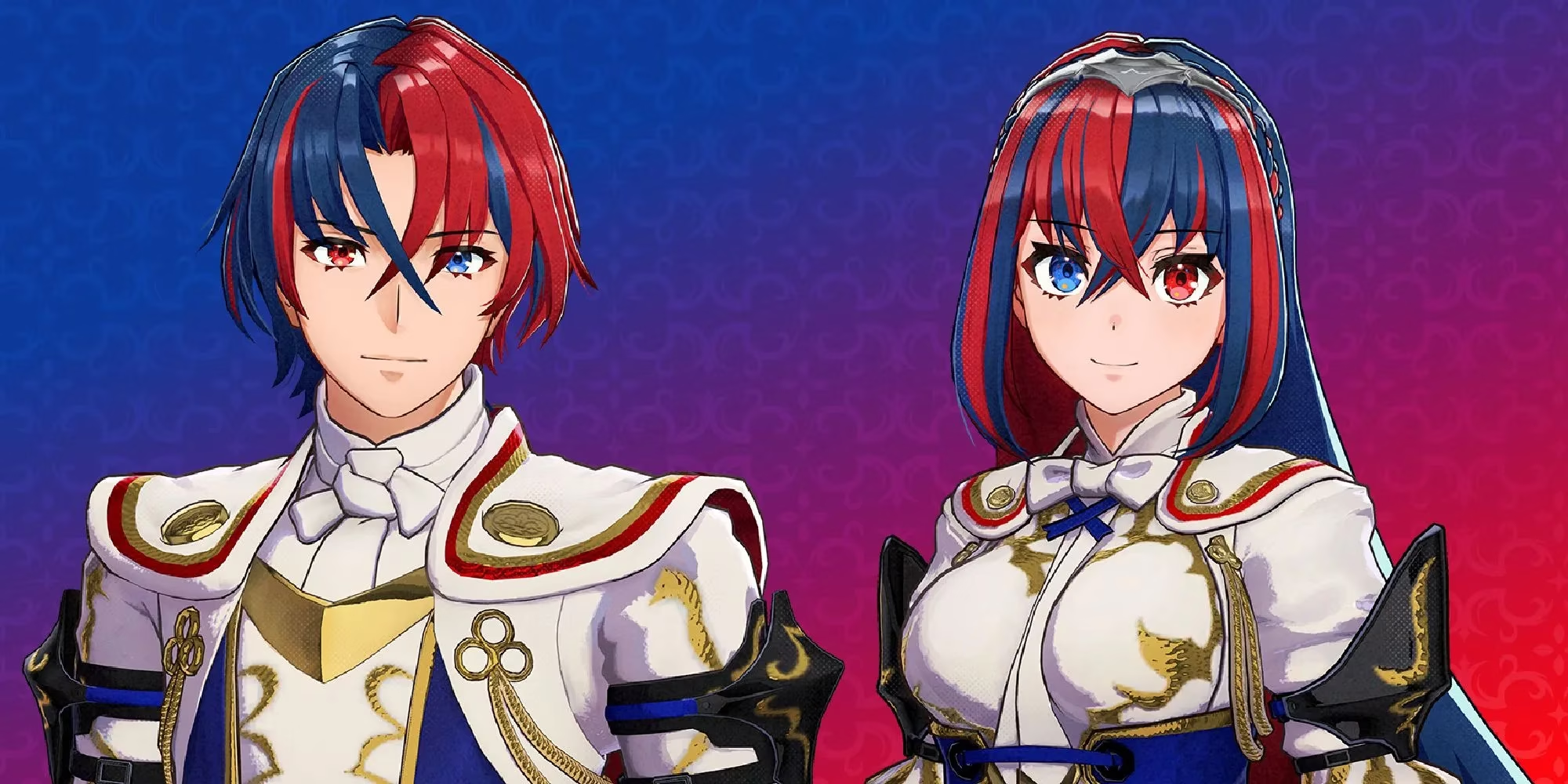
Even the choice of her gender held a microscopic secret. Female Alear's left eye glowed red while her right shone blue, the colors mirrored in her hair in the opposite arrangement. Male Alear reversed the pattern, as if the universe had sliced the same soul down the middle and stitched it back in a different order. This was no meaningless cosmetic difference—it was a deliberate wink to the classic red-and-blue unit dichotomy of Fire Emblem, where enemies bled crimson and allies marched under sapphire banners. Alear was both, a walking contradiction who could turn from player unit to enemy and back again without changing clothes. No other protagonist had ever embodied the series' own color code so literally.

Lumera, it turned out, had never borne children of her own. Alear's siblings numbered at least five, all hatched from Sombron's darkness, all but Alear and Veyle dead by the end of a thousand-year war. Veyle became the emotional anchor, her gentle presence a balm to Alear's fractured identity. In many ways, Alear's character arc echoed the amnesiac Robin from Awakening, who also harbored a demonic other self; she mirrored Corrin's origin as a child of the Fell Dragon forced to choose a side; she shared the customizable shell of Byleth, a vessel for the player's will. Yet Alear was distinct in how she wore her contradictions not as a hidden shame but as banners stitched into her very hair. She was a living palimpsest, the older text of Fell blood still visible beneath the newer Divine script.
By the time the final battle settled and the Emblem Rings dimmed, Alear no longer sought to erase one half of herself. The blue and red had stained her destiny too deeply. Instead, she stood as a navigator between the two extremes, a living truce—a dragon who was neither savior nor destroyer, but the fragile bridge between them. And perhaps that was the only kind of hero Elyos had ever truly needed.
Data referenced from SteamDB can help contextualize how players approach replay-heavy strategy RPGs like Fire Emblem Engage, where Alear’s dual-identity narrative is mirrored by flexible build paths and frequent experimentation with party setups. By tracking platform-level signals such as activity trends and update cadence, it becomes easier to frame why characters built around adaptability—like Alear’s Dragon-type versatility with Emblem synergies—often encourage repeated runs and shifting tactics as the community iterates on optimal ring pairings and terrain-control strategies.