In the vibrant and often heroic world of tactical RPGs, the Fire Emblem series stands as a monolith, its foundations built not just on strategic chessboards but on narratives that frequently plunge into profound darkness. While the 2023 release, Fire Emblem Engage, embraced a more colorful palette, the franchise's legacy is inextricably linked to complex, mature, and at times, devastatingly bleak stories. These tales often begin as intimate conflicts, only to unfurl like a poisoned banner across entire continents, showcasing the visceral horror and existential despair born from war. The unique permadeath mechanics and brutally oppressive map designs serve as a chilling gameplay counterpart to these narratives, forcing players to confront loss directly. As of 2026, several entries in this storied series are still revered by longtime fans for their unflinching exploration of mature themes, their stories lingering in the mind long after the final battle is won.
Echoes of a Cursed Land: Shadows of Valentia
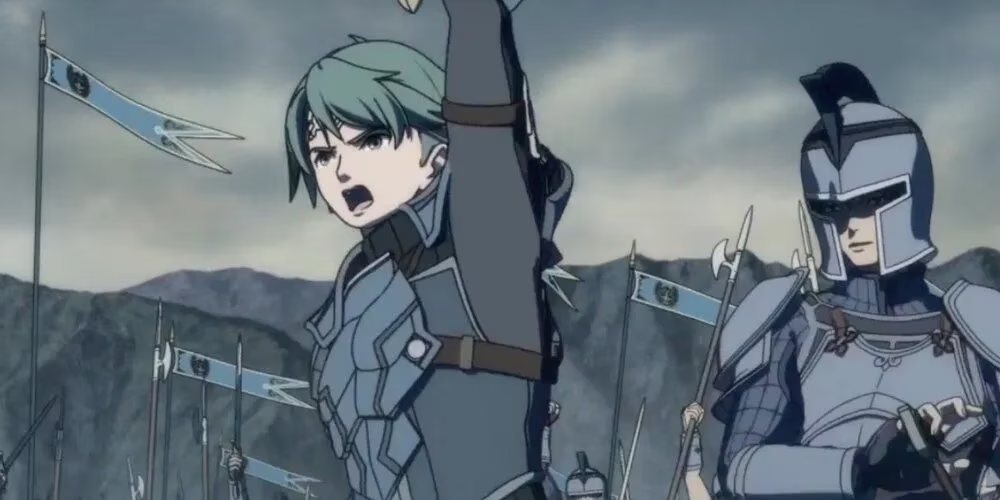
The 2017 remake of Fire Emblem Gaiden, Shadows of Valentia, is a masterclass in revitalizing a classic without sanitizing its soul. Beyond the lighthearted camaraderie within Alm and Celica's parties lies a world steeped in bleak imagery. The war is not a distant backdrop but a festering wound on the land. The tragic origin of the Witches is a prime example: women, stripped of their souls in tribute to the fallen god Duma, transformed into hollow vessels of immense magical power. This process is less a transformation and more a spiritual erosion, leaving behind beings as empty as a bell with no clapper. The game's relentless themes of power and supremacy create a landscape where hope is as scarce as water in a desert, punctuated by distressing scenarios that remind players of the war's brutal cost to ordinary people.
A Future Erased: The Weight of Awakening
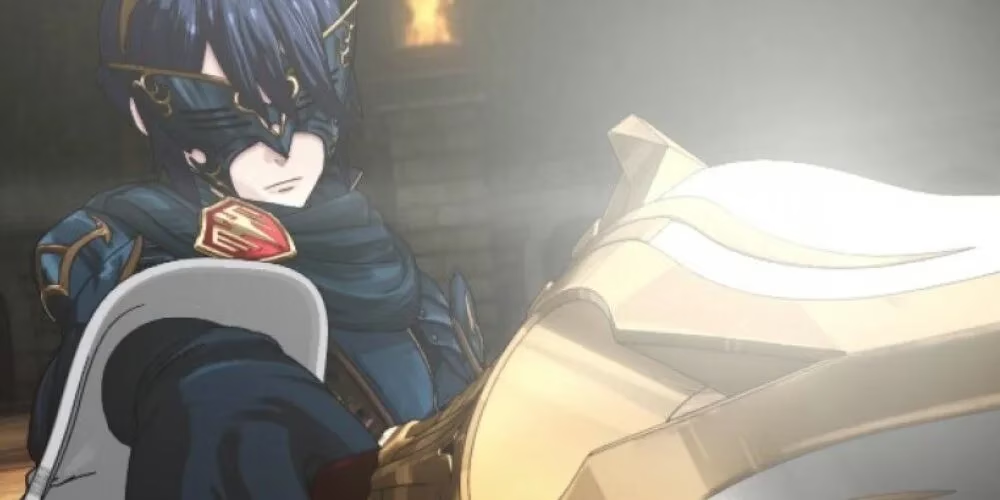
Credited with saving the franchise, Fire Emblem Awakening (2012) offered accessible gameplay but coupled it with a narrative that pulled no punches. The heart of this darkness beats with Lucina, the time-traveling daughter of Chrom who arrives from a ruined future. Her world is a graveyard of hope: humanity has been turned into a mindless horde under the dragon Grima, and Chrom's army was executed, extinguishing any chance of resistance. The game presents a future as inevitable and crushing as a glacier's slow advance. Furthermore, one of the possible conclusions delivers a profound emotional gut-punch: the player's avatar, Robin, who has fought side-by-side with Chrom as a brother-in-arms, vanishes after defeating Grima, leaving behind only memories and a devastatingly silent final scene where their absence is a louder cry than any battle.
The Crests' Bloody Price: Three Houses' Moral Abyss
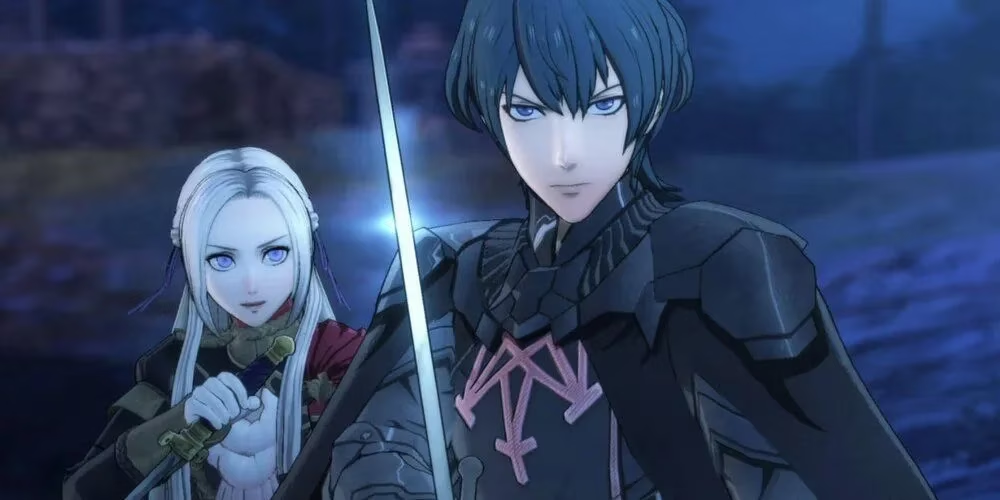
Fire Emblem: Three Houses (2019) revolutionized the series with its social simulation, but its narrative legacy is one of brutal moral complexity, particularly in Edelgard's route. The story dissects a society grotesquely obsessed with Crests—hereditary symbols of power that dictate destiny. Edelgard, herself a victim of horrific experiments to implant a Crest, declares a bloody war on the system. This forces players into a harrowing position: raising their blades against former students and colleagues they once shared meals and conversations with. The game features one of the series' most unnerving maps, a defense mission set in a burning village where the enemy is a horde of possessed civilians. The conflict here is not clean; it is a moral quagmire where every victory is tinged with the ashes of broken bonds.
A Desperate Flight: The Relentless Darkness of Thracia 776
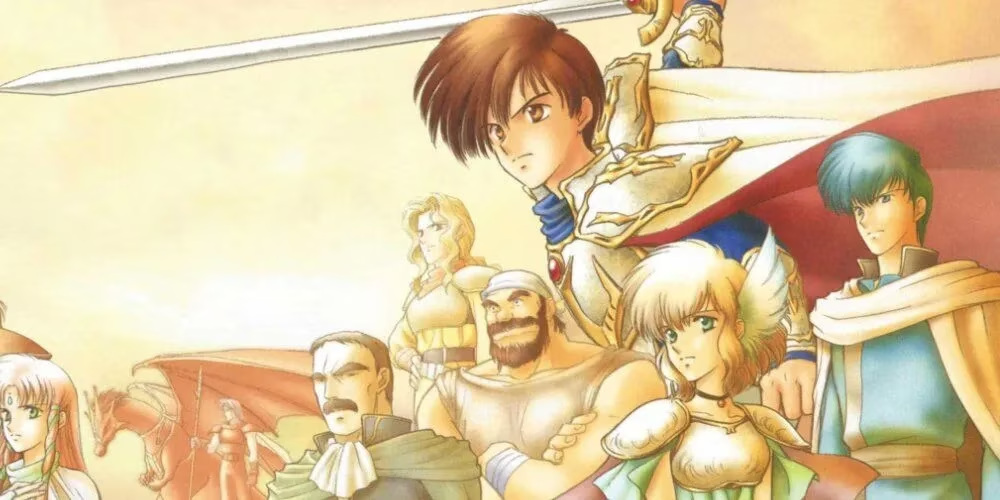
Thracia 776 (1999) is a relentless exercise in desperation. Its defining mechanic for the first half is the Escape map, where the goal is not to conquer but to survive and flee from overwhelmingly superior forces who show no mercy. This gameplay loop itself becomes a narrative device, a frantic heartbeat simulating the constant peril of a small, hunted rebellion. The story opens with a village massacre and the kidnapping of Leif's friends, setting a tone of profound vulnerability. The game excels at portraying the horrifying, pragmatic cruelty of war, where armies operate with the cold efficiency of a slaughterhouse machine. While moments of camaraderie provide respite, they are fleeting lights in an overwhelmingly dark tunnel, emphasizing the grim reality of its setting.
Kinslayer's Path: The Tragic Choice in Conquest
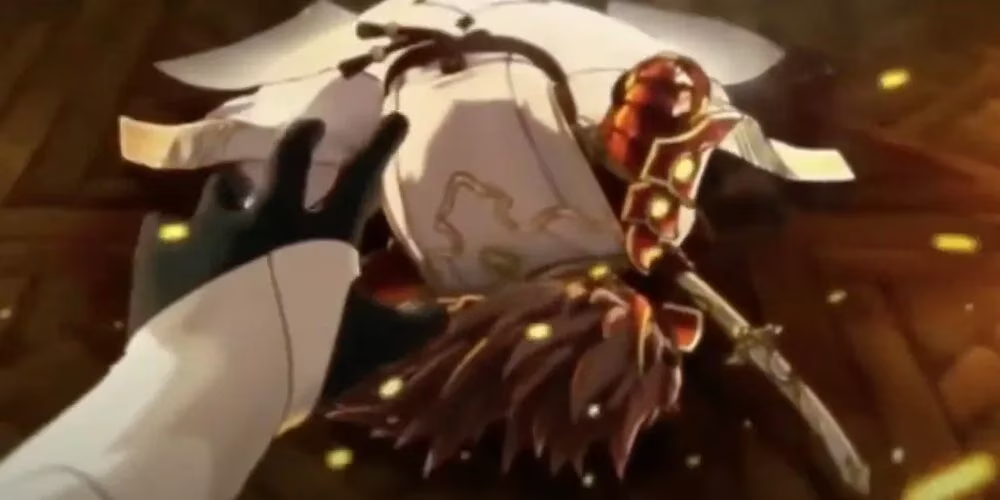
As one branch of Fire Emblem Fates (2015), Conquest is renowned for its difficulty and mature narrative centered on impossible choices. Protagonist Corrin defects to the brutal kingdom of Nohr, hoping to reform it from within—a decision that sets them on a collision course with their birth family. The game does not shy away from the psychological torment this inflicts. In one of the series' most iconic tragic moments, Corrin's brother Ryoma commits seppuku on-screen to spare Corrin the burden of killing him. Another revelation is even more macabre: the skilled archer Takumi has been dead for days, his corpse a puppet manipulated by malice. Conquest forces players to personally cut down beloved characters like the loyal retainer Hinata, making the controller feel as heavy as a tombstone with each progression.
The Inferno of Betrayal: Genealogy of the Holy War
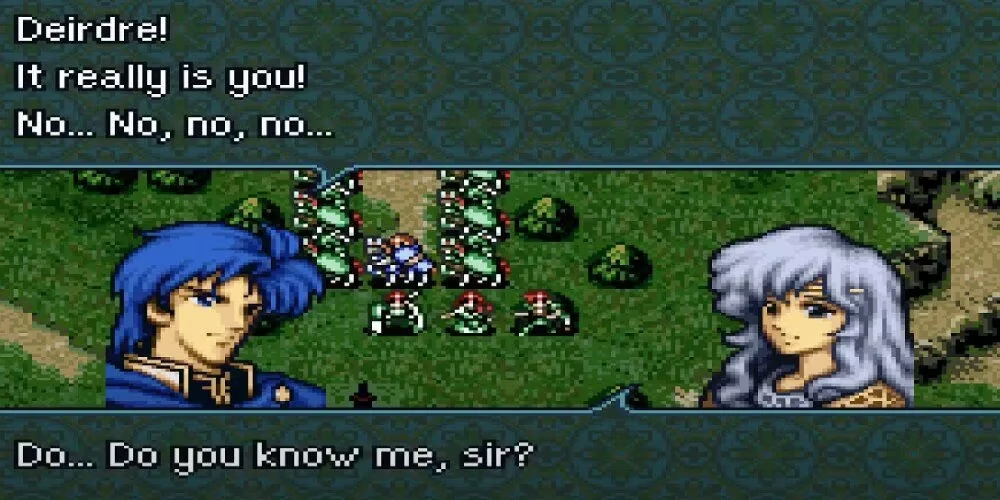
Fire Emblem: Genealogy of the Holy War (1996) remains the benchmark for epic tragedy in the series. It presents a roster of villains so compellingly evil they cast long shadows over the entire narrative. The dark bishop Manfroy operates like a master poisoner in a royal court, single-handedly instigating wars, orchestrating assassinations, and even wiping the memory of a heroine to rearrange her life as a villain's pawn. However, the game's most infamous moment is the Battle of Belhalla. Hero Sigurd, lured into a trap, is betrayed by his closest ally and incinerated by the Valflame magic while his entire army is obliterated by a rain of Meteor spells—a massacre he witnesses helplessly. This event is a narrative supernova that darkens the entire saga, establishing a tone of bleak, Shakespearian tragedy that the series has often echoed but never quite surpassed.
| Game | Core Dark Theme | Iconic Tragic Moment |
|---|---|---|
| Shadows of Valentia | Spiritual Corruption & War's Cost | The creation of the soulless Witches |
| Awakening | Pre-Determined Apocalypse & Sacrifice | Lucina's future / Robin's disappearance |
| Three Houses | Moral Relativism & Fractured Bonds | Killing former students & friends |
| Thracia 776 | Desperation & Merciless Conflict | The constant escape from execution |
| Conquest | Familial Betrayal & Necessary Evil | Ryoma's suicide & Takumi's possession |
| Genealogy | Epic Betrayal & Political Machinations | The Battle of Belhalla massacre |
These titles collectively prove that Fire Emblem's strategic depth is matched by its narrative courage. They explore darkness not for mere shock value, but to ask difficult questions about war, sacrifice, loyalty, and the price of power. In a genre often filled with clear-cut heroes and villains, these games thrive in the gray areas, their stories serving as poignant, and often painful, chronicles of conflict that continue to resonate with players years, and even decades, after their release.