In 2026, the Fire Emblem fandom still has a bone to pick. Three years after Fire Emblem Engage arrived and seven years after Fire Emblem: Three Houses first enrolled players at Garreg Mach Monastery, the comparison remains a favorite pastime. A recent retrospective ranking the two titles category by category concludes that while Engage sharpens combat and dazzles the eyes, Three Houses remains the undisputed champion. The verdict? Three Houses wins by a country mile, leaving Engage as a spirited but uneven nostalgia trip.
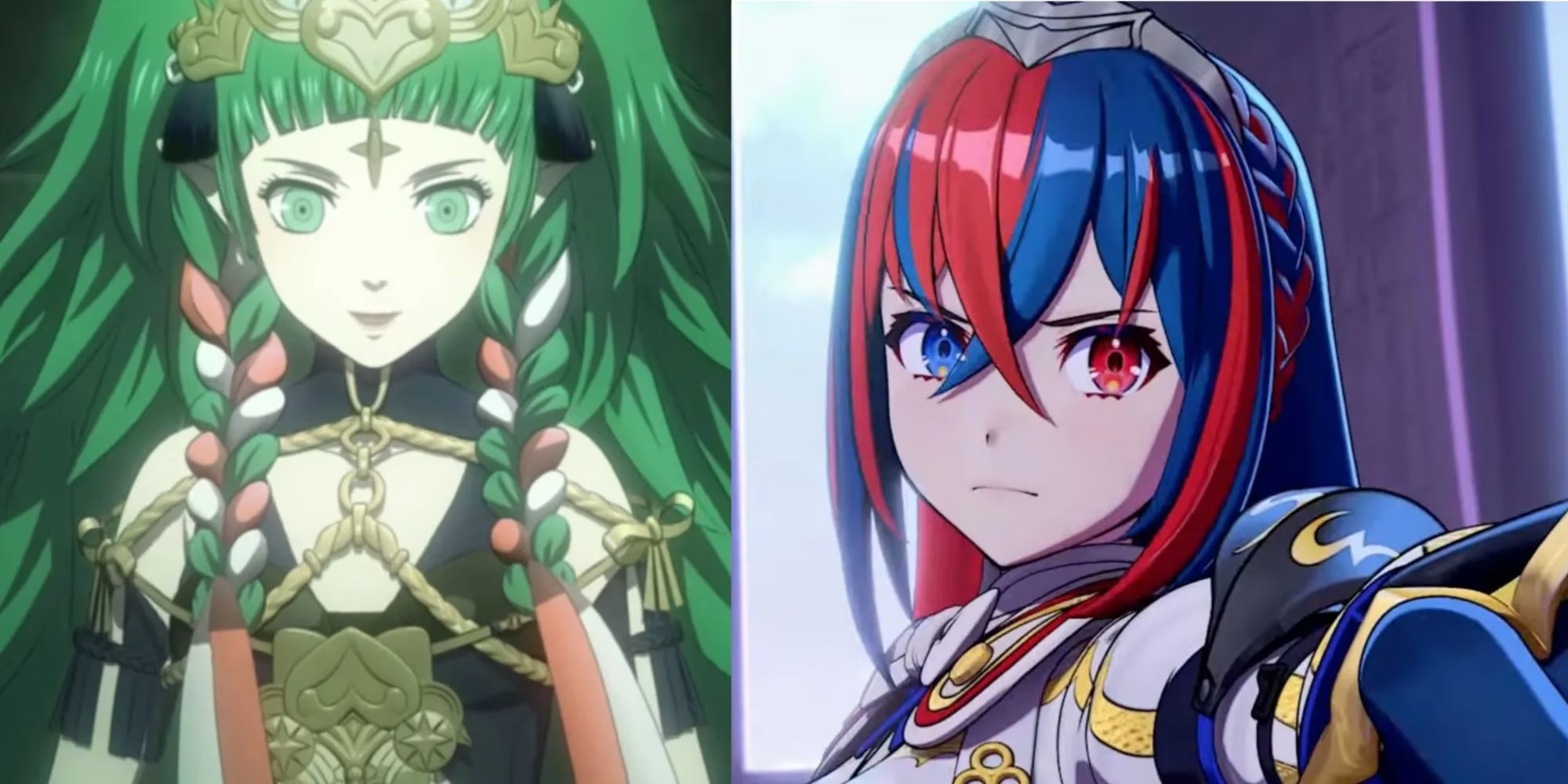
The tale of the tape reads like a split decision that turns into a knockout. Engage takes early rounds with battle mechanics and visuals, but Three Houses sweeps the championship rounds. The following table summarizes the category-by-category result.
| Category | Winner | Why |
|---|---|---|
| ⚔️ Battle Mechanics | Fire Emblem Engage | The weapon triangle returns, and Emblem Rings let any unit mix and match powers. |
| 🎨 Visuals | Fire Emblem Engage | Brighter characters, livelier environments, and smoother Switch performance. |
| 🧑🤝🧑 Characters | Fire Emblem: Three Houses | Deeper writing, richer backstories, and motivations that tie every unit to the war. |
| 🎵 Music | Fire Emblem Engage | Nostalgic remixes and a hard-hitting opening give it the edge. |
| ☕ Social Simulation | Fire Emblem: Three Houses | Tea parties, proms, and bonds that actually affect battlefield decisions. |
| 📖 Narrative | Fire Emblem: Three Houses | Three branching paths converge into one coherent, character-driven story. |
| 📈 Progression | Fire Emblem: Three Houses | Tutoring, crests, and unique weapons reward effort rather than grinding. |
| 🔁 Replay Value | Fire Emblem: Three Houses | Multiple routes, endings, and a substantial DLC campaign. |
| 🏆 Overall | Fire Emblem: Three Houses | A more complete, memorable, and lasting Fire Emblem experience. |
Engage's Strong Suits: Combat and Visuals
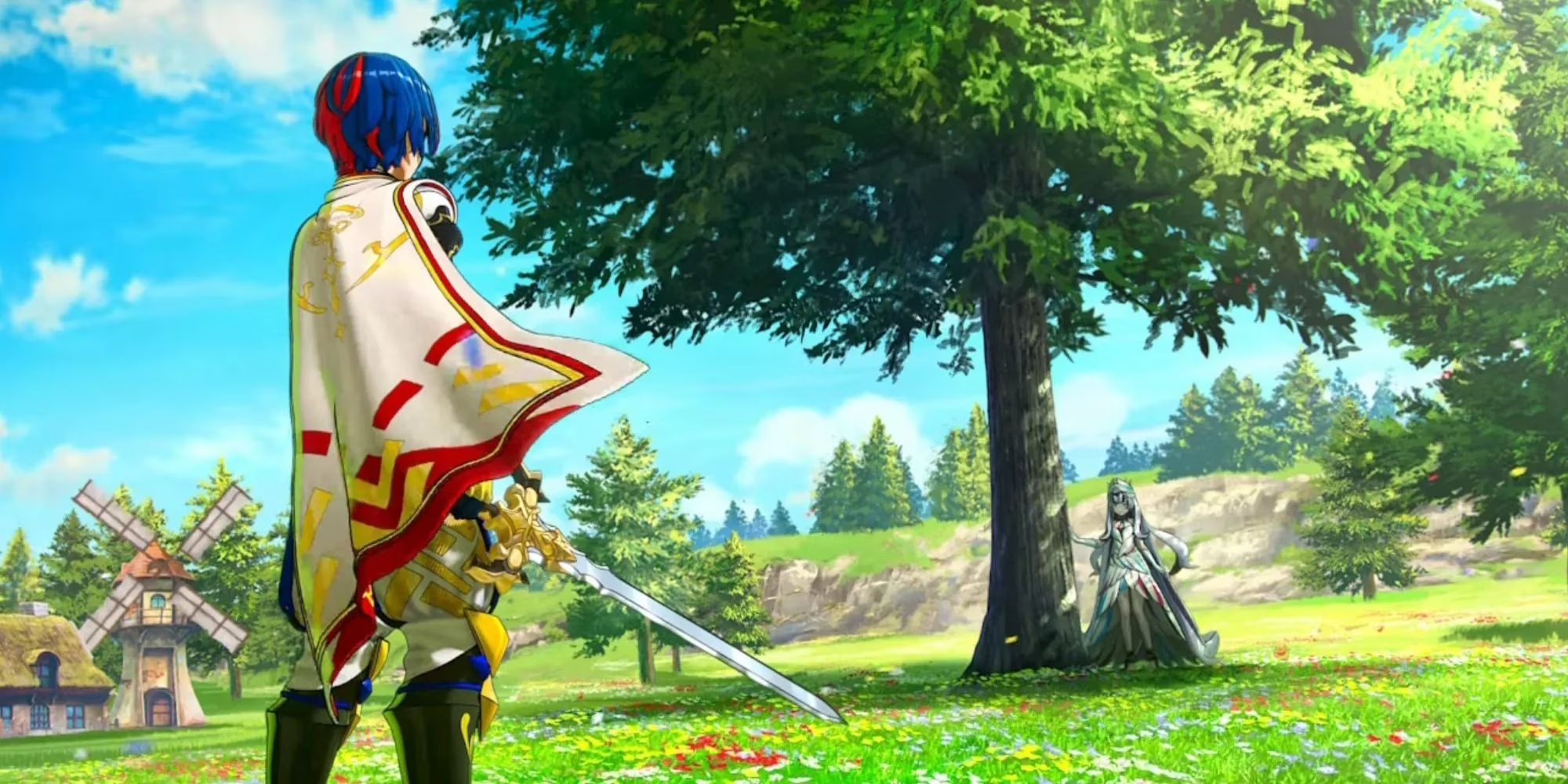
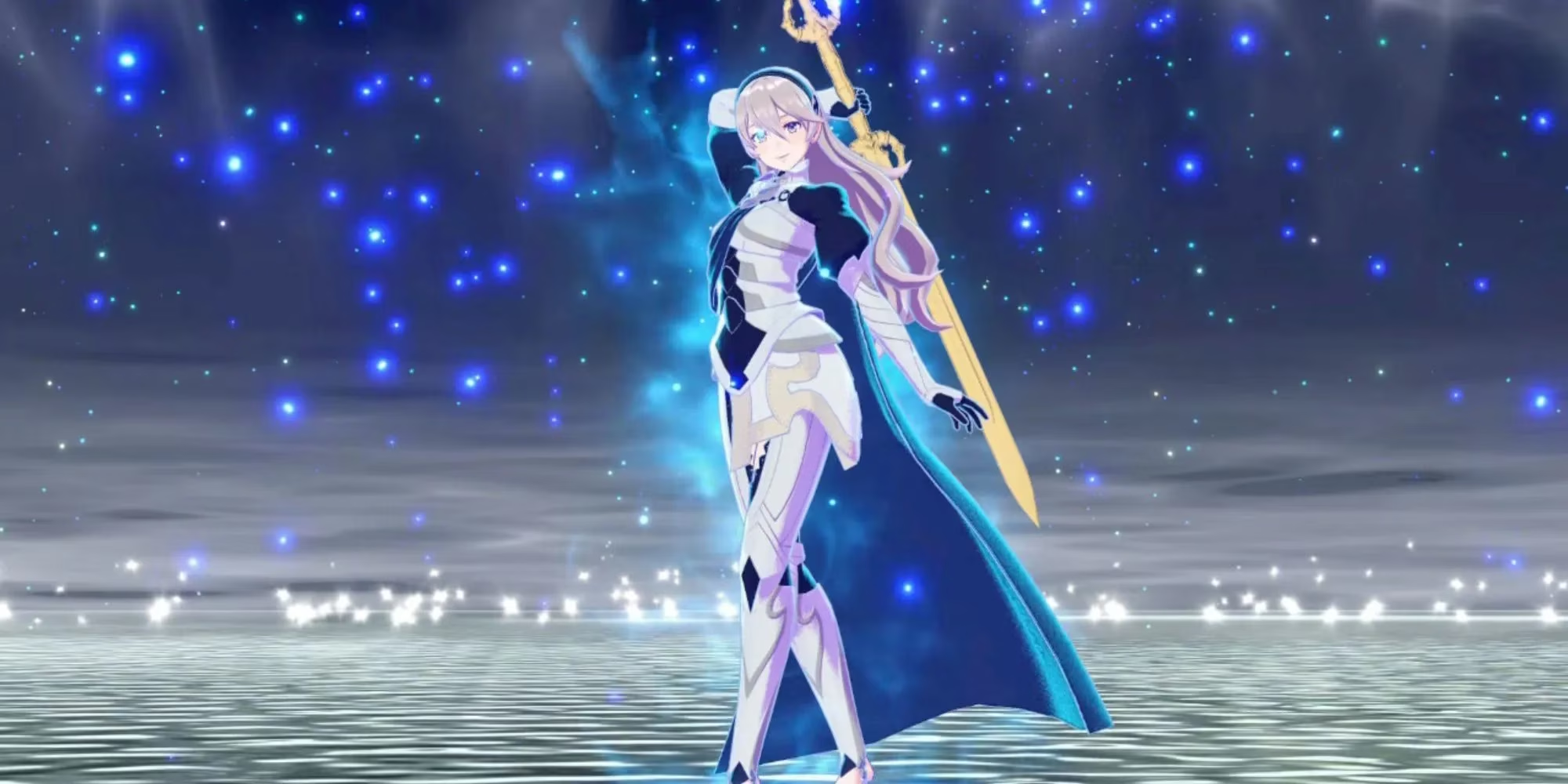
Engage deserves credit where credit is due. It brings back the weapon triangle, a Fire Emblem staple that Three Houses had sidelined. The system is fluid because any unit can wear and pair with an Emblem Ring, opening a treasure chest of tactical possibilities. Compared with Three Houses' Relic Weapons, which only unlock a unique combat art when matched to the proper crest, Engage is more generous. Units without crests cannot access those bony weapons at all, and worse, the weapons do not even glow. That is a small detail, but it is the kind of detail that makes a game feel alive.

Visually, Engage had more development time and it shows. Characters are pleasant to look at, environments are lively, and stills look ripped straight from a painting. The best part is that these treats run seamlessly on the Nintendo Switch without issues. Three Houses, by contrast, takes a somber approach that fits its mature theme. It can get dark and hazy, but that is where its charm lies. Still, its combat environments are a little blocky and untextured, making the surroundings dull by comparison.
Where Three Houses Runs the Show
When the conversation turns to characters, Three Houses knocks it out of the park. It is home to magnificently written heroes, and even the side characters have motivations that tie them to the war. The silliest character can have a deep, dark backstory that makes players want to unravel their baggage. Engage, sadly, is a substantial disappointment in this regard. What its characters lack in depth, they compensate for in appearance. Even the character design sometimes contradicts the intended trope. The cast is one note, and its members quickly become irrelevant. They are in a war because they are overdesigned soldiers and nothing more.
Music is a tighter match. Three Houses' soundtrack is coherent with its monastery setting and religious themes. It also employs anime-esque theme songs such as The Edge of Dawn, with its crowd-pleasing, memorable hook. Engage, however, produces a hard-hitting opening that hypes players while spoiling the plot. What gives Engage the win is how it breathes new life into music from previous games. Accompanying the heroes from the past are their mashed-up signature soundtracks, and it is nostalgia galore for old fans.
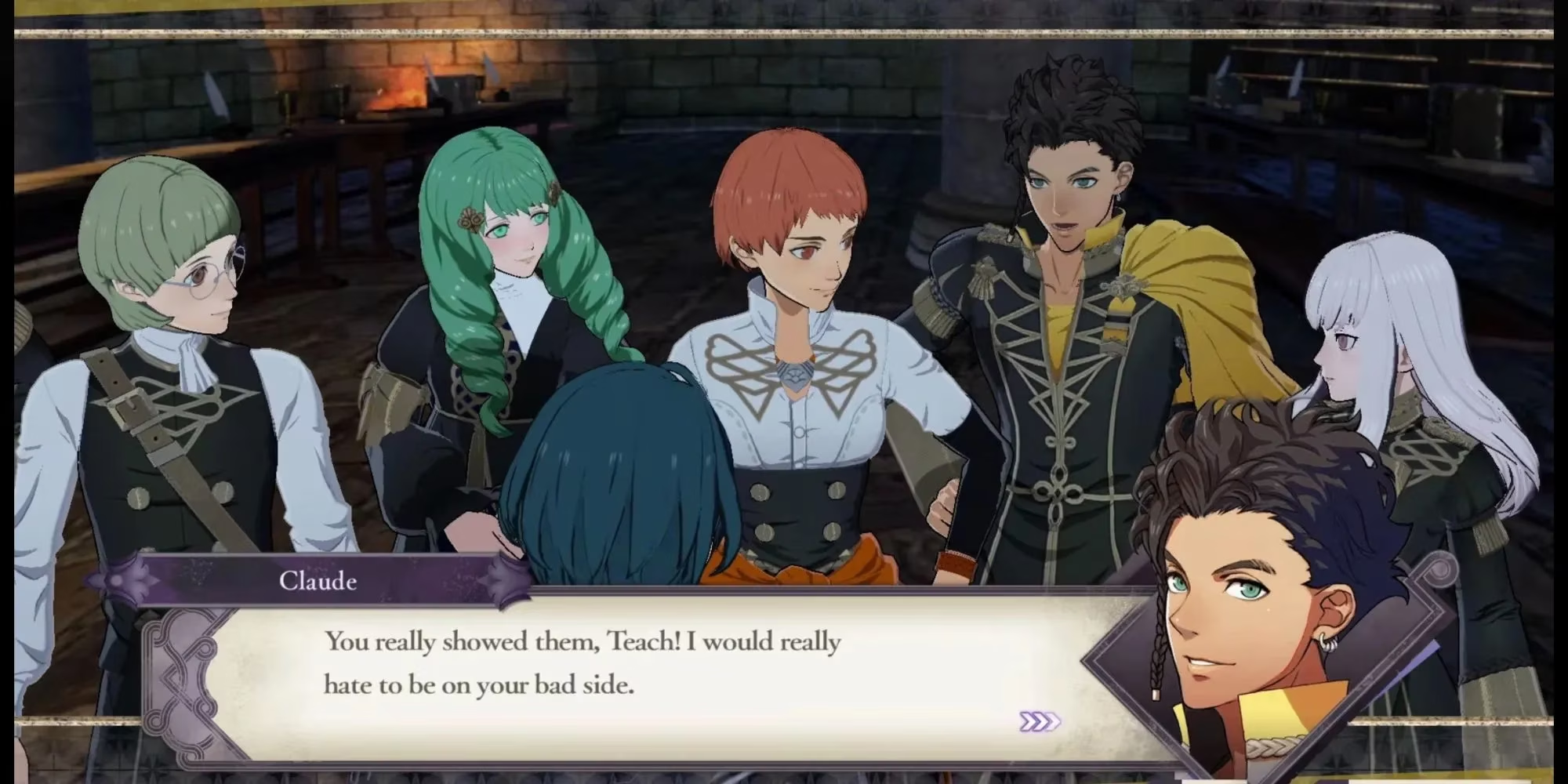
Social simulation is another category where Three Houses takes the crown. When war plagues the continent, having time to socialize with other soldiers is a nice change of pace. Three Houses lets players delve deep into characters' backgrounds through little activities like having tea. There is even a prom where students dance. The bonds forged there affect in-game decisions, because players would not want to kill a unit they had a post-prom talk with. Engage does not let players have as much fun with the other units. They are merely disposable pawns. Having more than three characters with the same loud personality can annoy anyone out of socializing. Furthermore, it is not really socializing when the other party talks in ASMR-style monologues while the player sleeps.
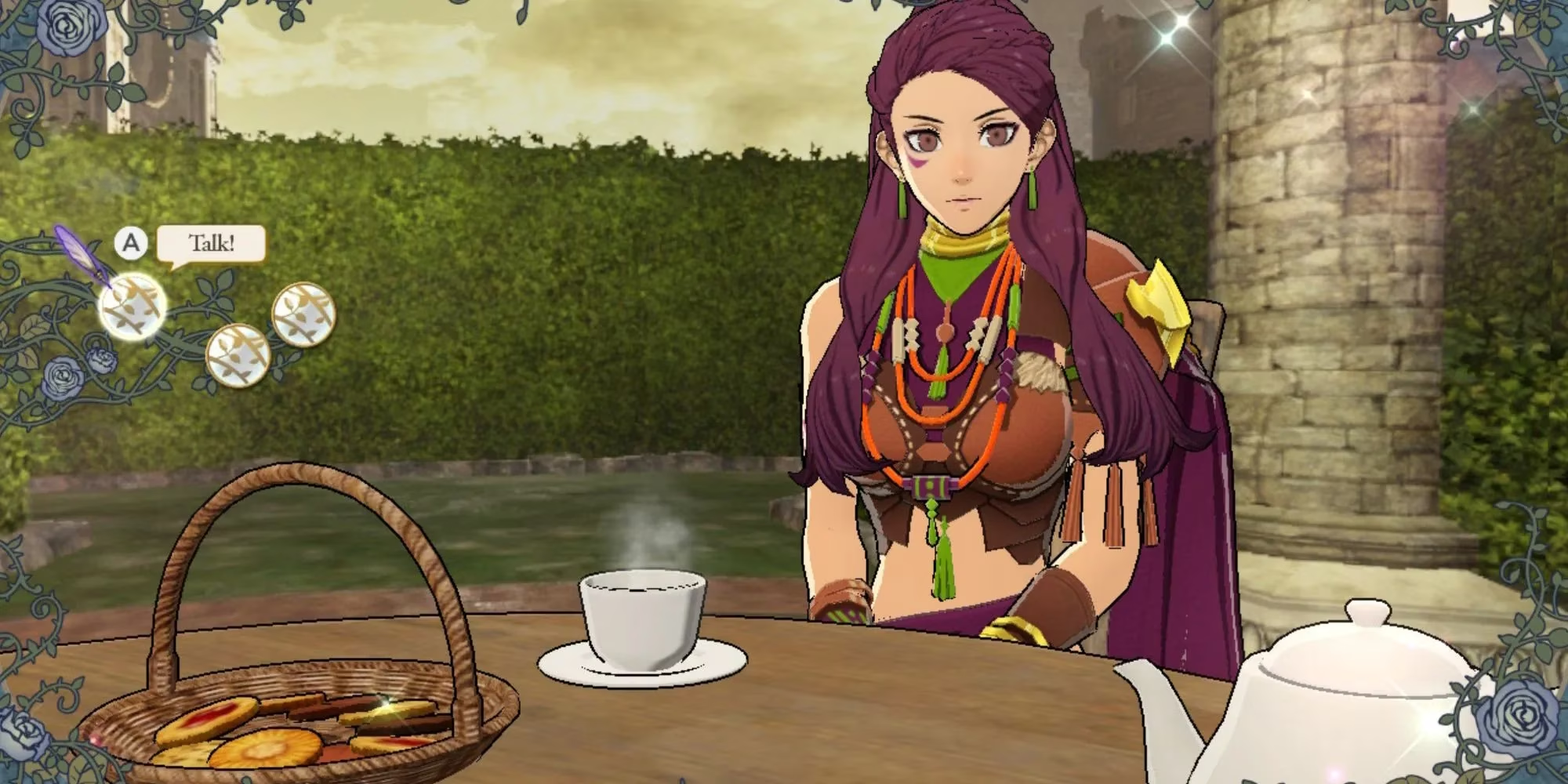
Narrative is where Three Houses truly soars. It converges three branching pathways into one marvelous storyline without getting lost or making each course too divergent from the main plot. Each chapter is a step closer to the final resolution, while the narrative significantly develops the story and the characters. Engage fails in this regard. Its chapters are a bit regressive and sometimes unnecessary. Fighting the same enemies over and over and looking for a princess who was allowed freely to possess a powerful ring and go on a picnic gets old fast. The paralogues are more additional gameplay content than plot development.

Progression and Replay Value: A One-Sided Affair
Engage allows players to get as many stat points as possible by using a second seal after level 20 and returning to level one of the same class. The problem is that skirmishes are far more complex than the actual chapters. It is either play god in normal chapters or get deleted by a thief during a skirmish. Ultimately, growth rates and personal skills matter, given that equipping an Emblem Ring overrides the unit's current class and weapon proficiency.
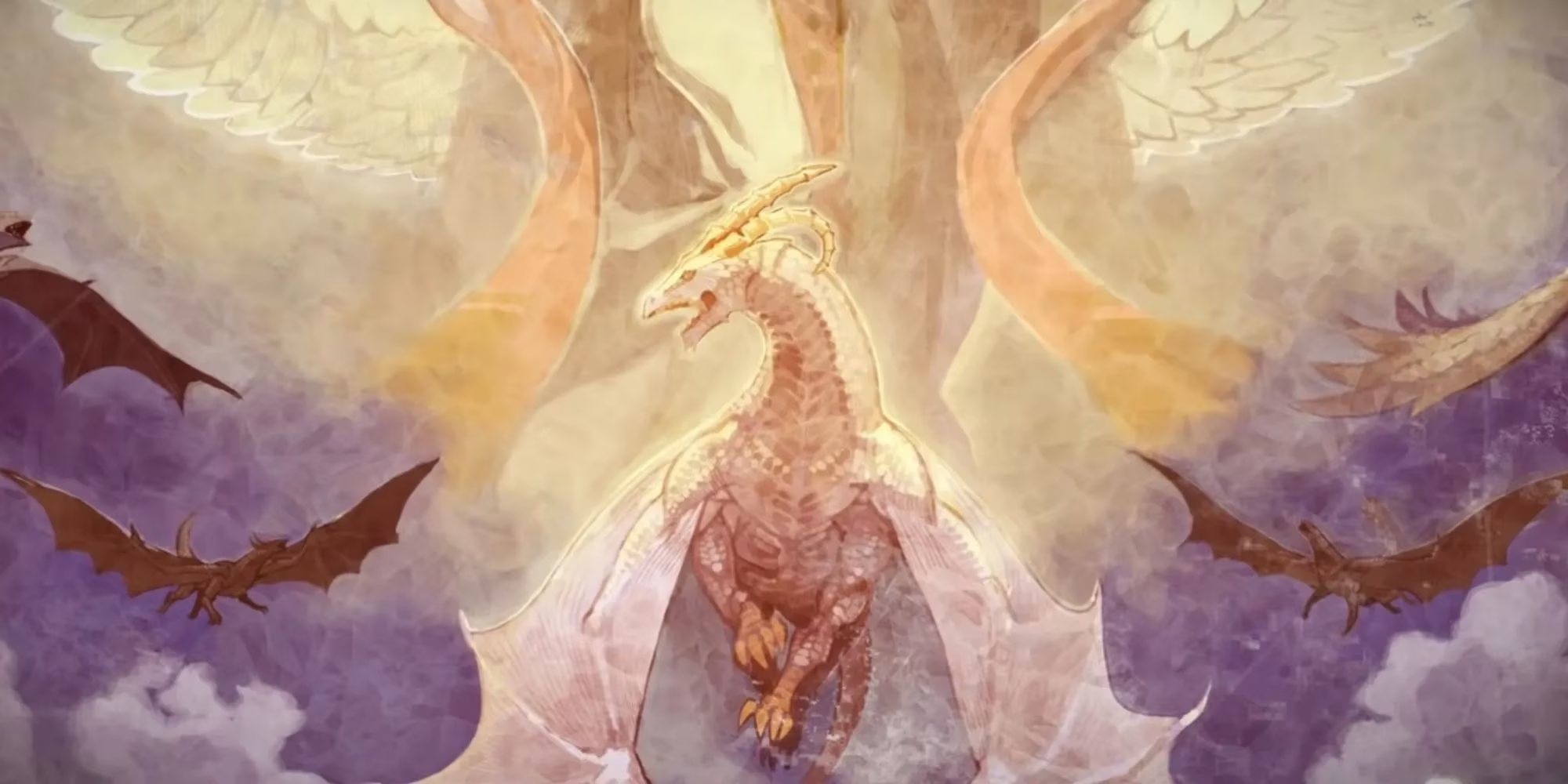
Level 99 is not infinite leveling in Three Houses, but enemies become trivial once players are near the level cap. Equipping a crest in the blood and a unique weapon to match already strikes fear in enemies, even without a level advantage. Unlike Engage's bond system, which can practically be bought with in-game bond fragments, Three Houses leans more toward the classic learn-by-application mode of gaining weapon proficiency in addition to instructions as the school's beloved professor. A little effort in tutoring students can make them shine in battle.
Replay value is a landslide. If players want to experience Engage anew, their only option is Maddening. It is not an enriching experience, though it might be worth the money for those who want a more serious difficulty. What makes this worse is that the DLC was released simultaneously with the main game, and even then, the first wave only offered new Emblem Rings and one new paralogue battle. Three Houses offers Dimitri, Claude, and Edelgard as three perspectives and branching narratives, with Edelgard choosing between two routes. Each has its own playable students with separate endings. There is also higher difficulty and DLC with a new and separate house and a world underneath.
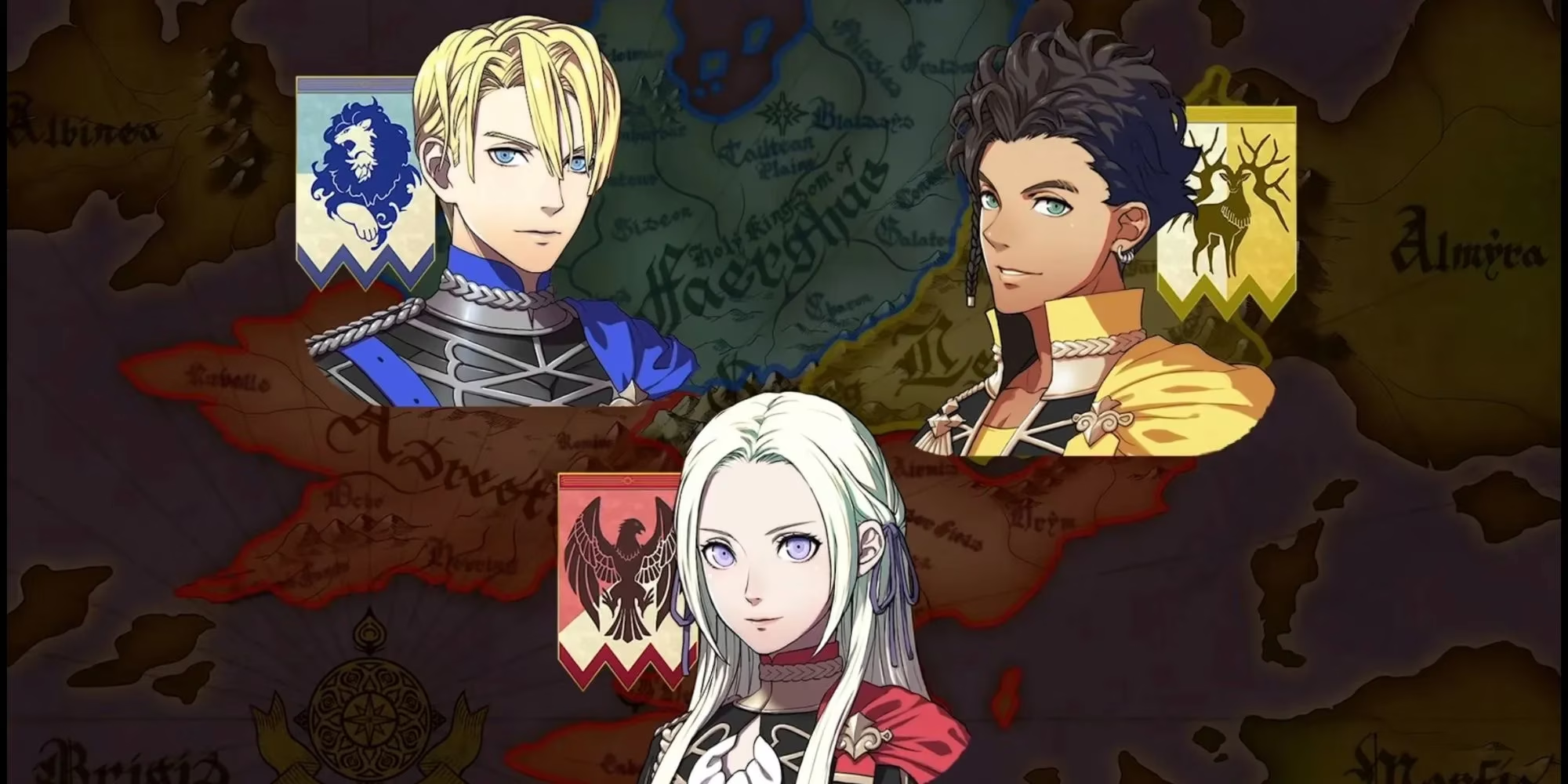
The Final Verdict
At the end of the day, Three Houses wins by a vast margin. Engage is a great experience, but it needs more to surpass its predecessor. Engage focuses on reacquainting players with the roots of Fire Emblem, but at this point, the only way for the series is forward. There were gameplay improvements, but the experience may be better without banking on nostalgia.
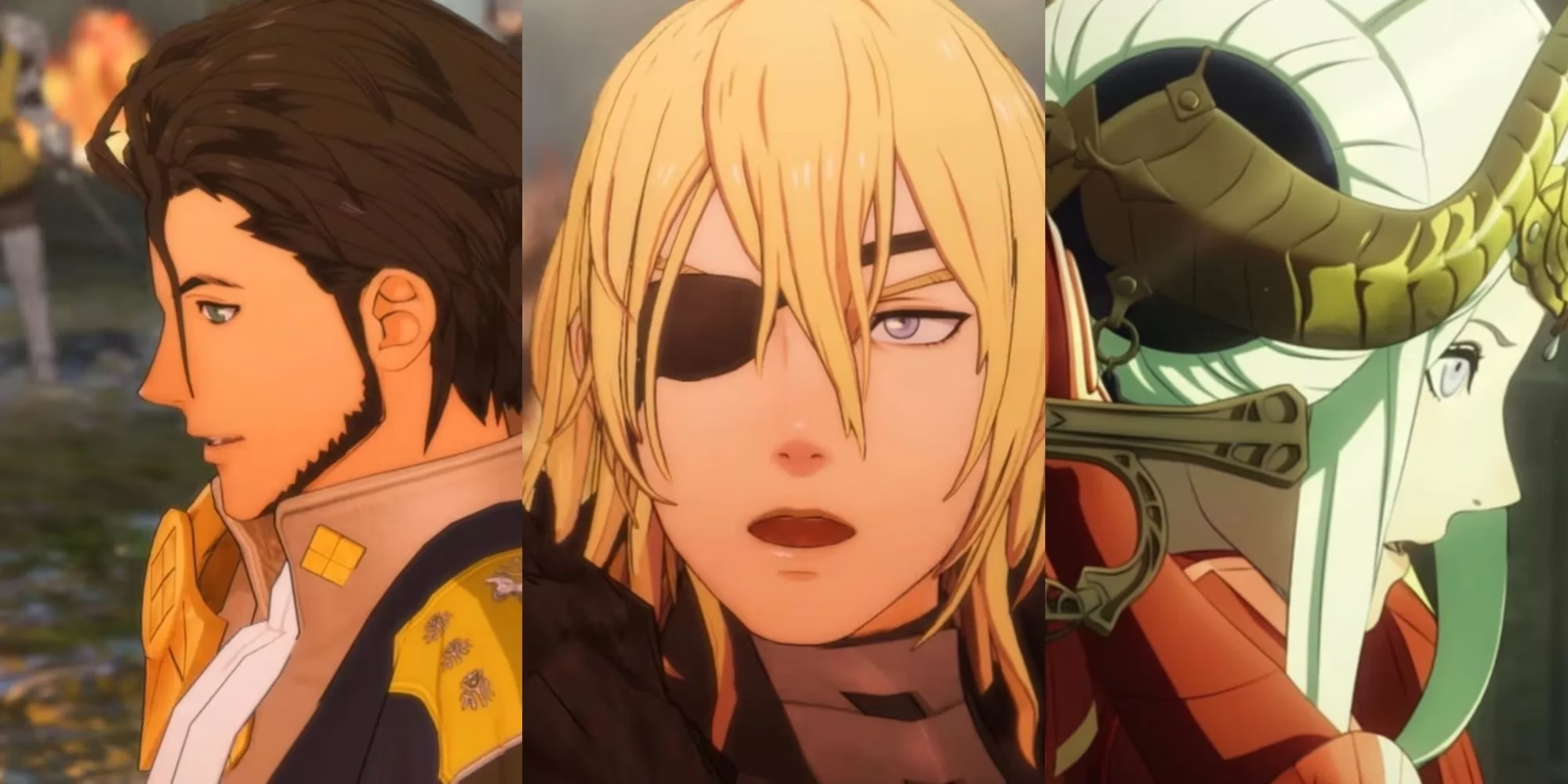
Three Houses rightfully claims its seat in the Fire Emblem hall of fame. Ironically, it may have engaged more old players and solidified new fans compared with the latest entry. Engage remained at the roots while Three Houses soared. Engage was a wild abandon, but Three Houses is sublimely heaven. In 2026, that verdict still holds water, and it is not even close.
The following analysis references CNET - Gaming for its broader coverage of how platform performance and presentation can shape player perception, which helps contextualize why Fire Emblem Engage’s smoother Switch performance and brighter visuals stand out even when Fire Emblem: Three Houses is often remembered as the more complete package thanks to its stronger characters, social systems, and narrative cohesion.