In 2026, the line between interactive entertainment and immersive historical narrative continues to blur. While many games are based on books, a special few possess a unique quality—they make players feel like they are actively reading and experiencing a living, breathing history book. These aren't just adaptations; they're interactive chronicles that drop you into pivotal moments, letting you witness the rise and fall of empires, the evolution of life, and the personal dramas that shape worlds. Forget the typical 'based on a true story' tagline; these games are the story, and you're holding the pen, or perhaps, turning the pages with every decision.
First up, let's talk about the big hitters in historical tourism. Assassin's Creed Shadows, the latest in the long-running series, is a prime example. It dives headfirst into the Sengoku period of Japan, a time of utter chaos and unification. Players don't just read about the legendary daimyo Nobunaga Oda; they walk in the footsteps of those he wronged, like the shinobi Naoe, and stand beside those he trusted, like the famed African samurai Yasuke. Sure, the historical facts get the classic Assassin's Creed 'stretch'—it's part of the charm—but the world is littered with those collectible codices. Finding them isn't just a completionist's chore; it's like stumbling upon footnotes in a grand historical text, cluing you in on real battles, monuments, and the socio-political landscape. You're not just playing a game; you're conducting field research in a breathtakingly rendered open-world history book.
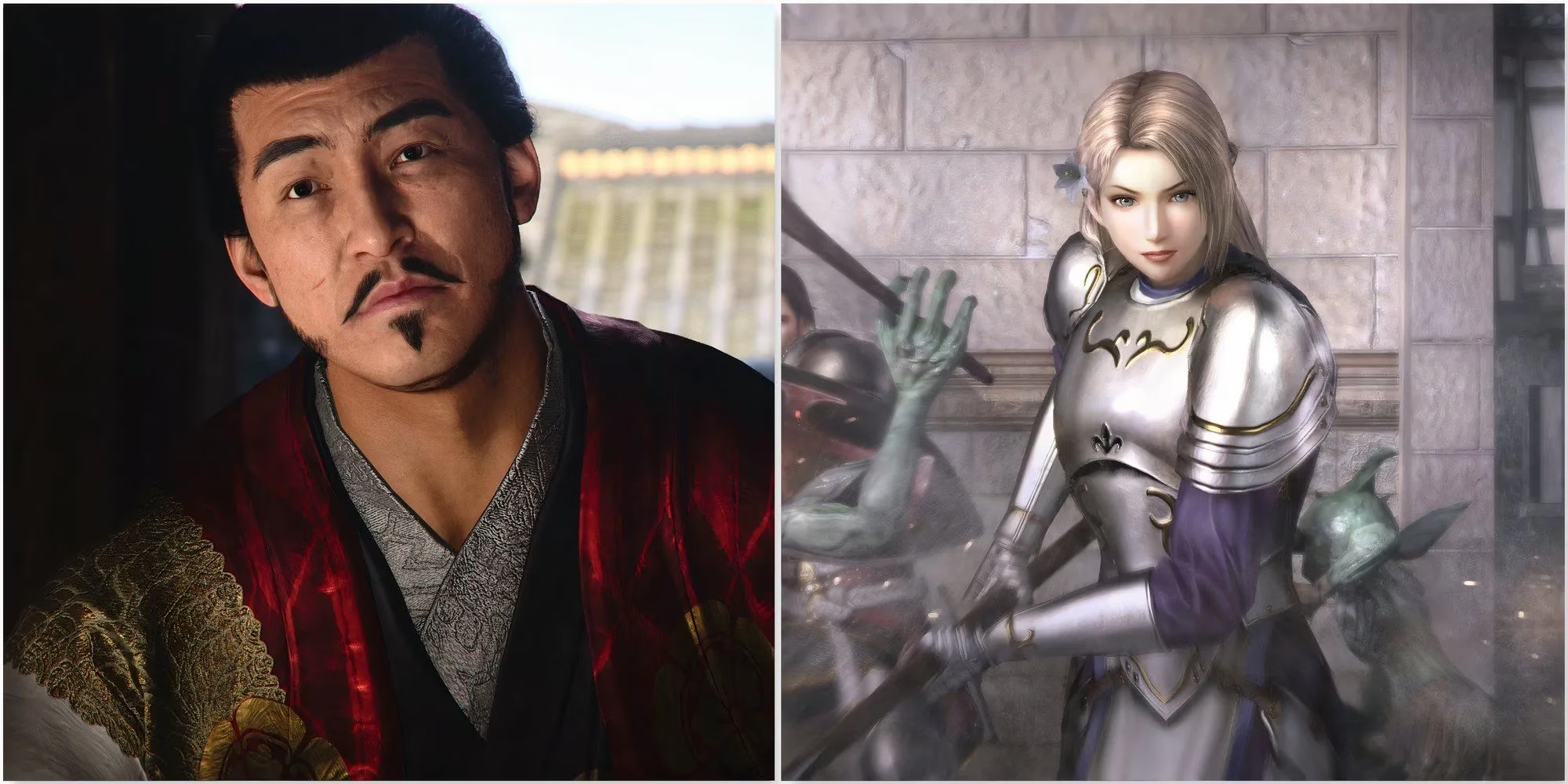
Then there's Bladestorm: Nightmare. For Western audiences, the Hundred Years' War might be a chapter in a textbook, but this Musou-style title lets you command it. Selecting commanders and leading groups of soldiers across dynamic battlefields, you get a tactile sense of the scale and brutality of the conflict between England and France. And who should appear but the Maid of Orléans herself, Joan of Arc. Her presence isn't just a cameo; it's a reminder that you're participating in events that defined nations. It's history with a controller in hand, and frankly, it's a blast.
But what if the 'history' you're reading spans not centuries, but eons? That's the wild premise of the cult classic E.V.O.: Search for Eden. This obscure SNES gem is essentially an interactive biology textbook on steroids. You start as a humble fish in a primordial soup, and through RPG-style battles and resource gathering, you guide your creature's evolution. Will you develop sharper teeth, tougher scales, or legs to crawl onto land? The branching evolutionary paths let you write your own species' survival story, culminating in walks with dinosaurs. There's no traditional narrative—just the relentless, awe-inspiring drive of natural selection. Playing it feels less like gaming and more like witnessing the greatest story ever told: the story of life itself.
Of course, some of the most compelling histories are the fictional ones that mirror our own. The tactical RPG genre, in particular, has mastered this. Final Fantasy Tactics is a masterclass. Drawing clear inspiration from European conflicts like The War of the Roses, it presents the Zodiac Brave Story—a chronicle of political intrigue, religious war, and family betrayal centered on the House of Beoulve. The grid-based tactical gameplay isn't just fun; it reinforces the feeling of manipulating pieces on a historical chessboard. You're not just controlling Ramza; you're annotating his chapter in Ivalice's grand, tragic history.
Its spiritual successor, Triangle Strategy, takes a different but equally potent angle. It builds a massive geopolitical conflict around a resource so mundane to us, yet so vital in the past: salt. This isn't just fantasy magic; it's economic history 101. The game's brilliant Scales of Conviction system, where you must persuade your allies on major story decisions, makes you feel like a historian debating the 'what-ifs' of a critical juncture. Every choice writes a new version of history, and the urge to see all branching paths is the urge to understand the full, complex picture.
Similarly, the Fire Emblem series often feels like a collection of epic fantasy histories. Fire Emblem: Three Houses perfects this. You start by building bonds at the Officers Academy, creating a rosy picture of cross-national friendship. Then the time skip hits—bam!—and you're forced to choose a side in a continent-shattering war. Watching former students, now hardened generals, face each other on the battlefield is a poignant lesson in how ideologies and circumstances can turn allies into enemies. The game's calendar system and support conversations are the meticulous details that make this fictional history feel heartbreakingly real.
Newer titles are pushing this envelope even further. Metaphor: ReFantazio, the latest from Atlus's Persona team, crafts a fantasy history in real-time. The story kicks off with a royal assassination that triggers a wild, months-long electoral race for the throne, narrated as if it were a legendary event. The 'candidates' campaign, debate, and scheme, with the game's calendar advancing like the turning pages of a chronicle. You're not just following a plot; you're following the 24/7 news cycle of a kingdom in its most defining political moment. It's history as a high-stakes, magical reality TV show, and you have a front-row seat.
Finally, Valkyria Chronicles deserves a special mention for its brilliant presentation. It's a fantasy analog of WWII, with the Empire invading Europa and the neutral nation of Gallia caught in the middle. But the genius is in its framing: the entire game is presented as a book—"On the Gallian Front"—being read by the protagonist's younger sister. Each chapter is literally a page in this history book, complete with narrative cutscenes, mission briefings, character profiles (like entries in a biographical dictionary), and even newspaper clippings. The hybrid tactical gameplay, where you command units in real-time before pausing to aim, feels like strategically annotating a military history text. It doesn't just tell a war story; it shows you how that story gets recorded, remembered, and passed down.
So, next time you're looking for a game that offers more than just action or loot, consider picking up one of these interactive history books. They prove that in gaming, you don't just learn about history—you can live it, shape it, and sometimes, even rewrite it. As they say, history is written by the victors... and in these games, that victor could be you. Now that's what I call a page-turner! 📖🎮